
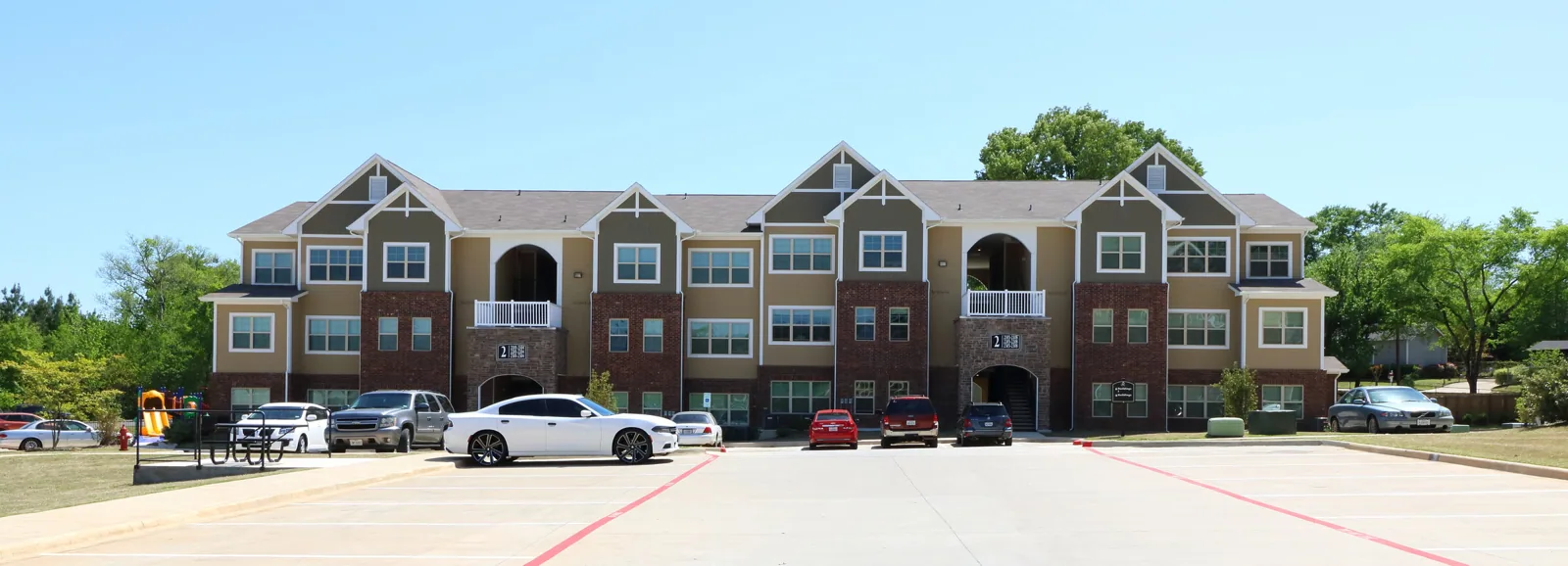
A Whitehouse commercial roof package needs a clear line between permit coordination and roof-condition decisions. The city’s development office reviews commercial permits and inspections, while planning, zoning, and land use form part of its development coordination. Those steps can affect when a roof scope is ready for release, but they do not identify what is on a particular building. We begin with assembly records, reported leaks, access rules, and the decision date, then map the roof zones that need inspection or repair.
On a Whitehouse schedule, Tyler's normal July average high of 94.5°F provides calendar context; only a roof-level reading can clear an adhesion-sensitive task. Spring and autumn storms in the region can include hail and damaging wind, so we also set a closeout condition before a section is exposed. A Tyler-area roof review records each portfolio building’s assembly, access period, and open tests on its own marked plan.
Permit review and roof scope
When a commercial project needs a permit or inspection, we identify the roofing documents, assembly details, and proposed work boundary that support the application. The city review process can require coordination with other project records, so the general contractor should set the approval path before material is ordered or removal begins. We keep the roofing scope specific: existing system, proposed repair or replacement, insulation and edge details, drainage, and any test that remains open. A roof due-diligence survey can help establish the condition record before a purchase or capital decision.
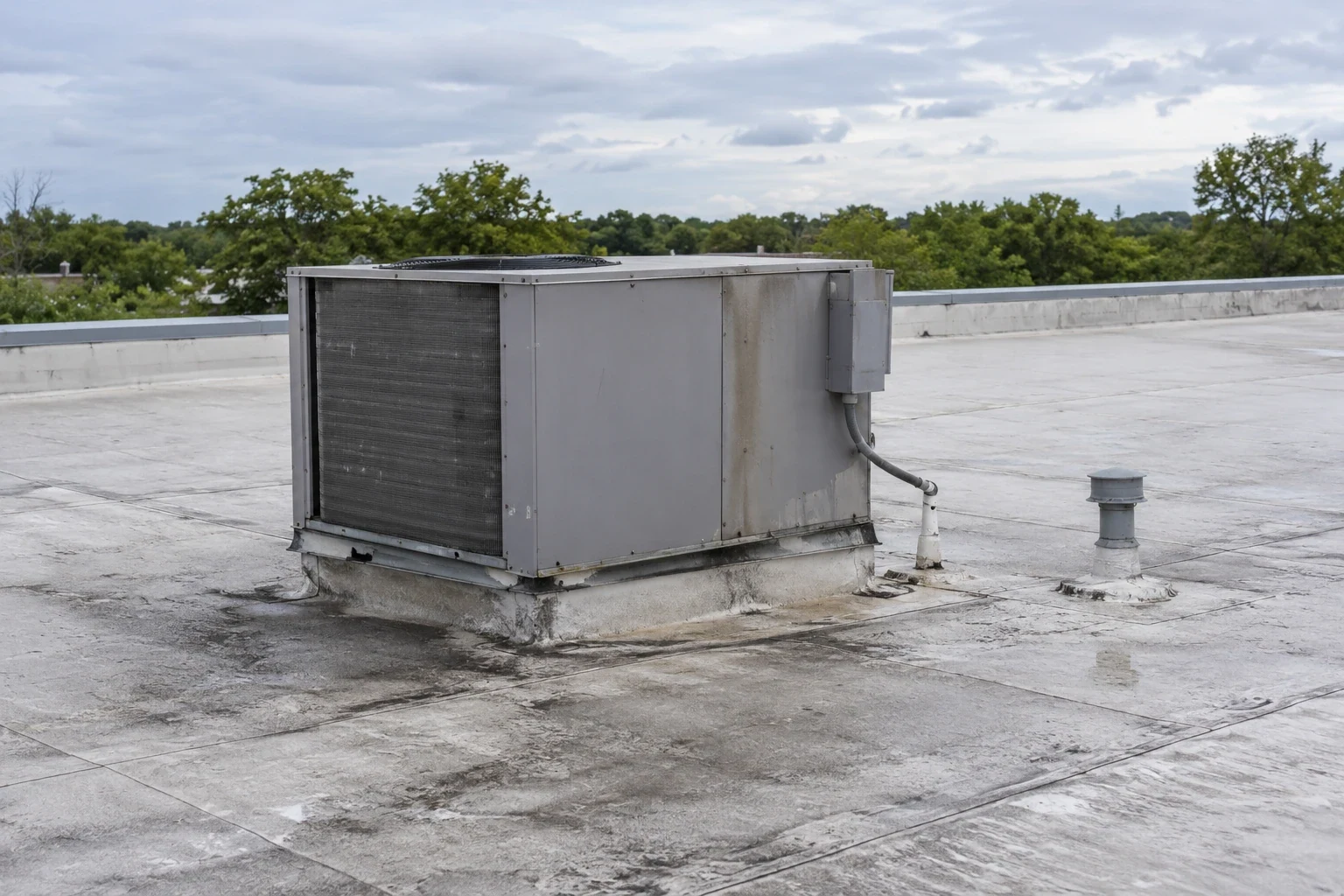
At the roof, our first walk checks seams, flashings, curbs, penetrations, drains, edges, and previous repairs. We connect each observation to a roof zone and note access limits or areas that could not be inspected. A commercial inspection sets the field baseline, and a condition report with photographs carries the findings to the decision team. If a concealed layer could change the scope, we mark a proposed test point and wait for approval before opening the assembly.
Heat readings and seasonal sequence
A Whitehouse repair can have a shaded curb and a sunlit field ready at different times. Each detail receives a preparation check before bonding begins. Before a bond-dependent operation, the crew checks the temperature and moisture at the work area against the selected product instructions. That reading becomes a release decision in the daily plan; if it falls outside the permitted window, the crew holds the affected step and uses only an already-authorized task elsewhere. The closeout identifies what remains protected and which condition must be rechecked.
Spring and autumn are the region's more active periods for severe thunderstorms that can include large hail and damaging wind. A local weather report starts a review, not a damage conclusion. We photograph observed membrane, flashing, edge, and drain conditions by roof zone, then note any area still concealed or not safely reached. A storm response scope can separate immediate water control from permanent repair and show the approval needed for the next step.

What the first roof walk checks
We follow each reported leak from the interior location to the roof plan, then inspect the likely route through seams, transitions, penetrations, and drainage. Water can travel between layers before it appears indoors, so the stain is not used as the repair boundary. A visual inspection documents what is exposed; an approved test or infrared survey may help answer a concealed-moisture question when the assembly and conditions support that method. We label the method and limit in the report so the owner knows what the result does and does not resolve.
For a puncture, we examine the membrane around the opening and the attachment or flashing nearby. For repeated seam separation, we check whether the bond problem is local or continues along a longer run. Drains and scuppers receive their own review because a blocked outlet and a low area require different corrections. A drainage repair can be sequenced before membrane work, while a flashing repair addresses the transition that allows water past an upstand or curb. We keep the work package tied to those distinct conditions.

Choosing a repair or larger scope
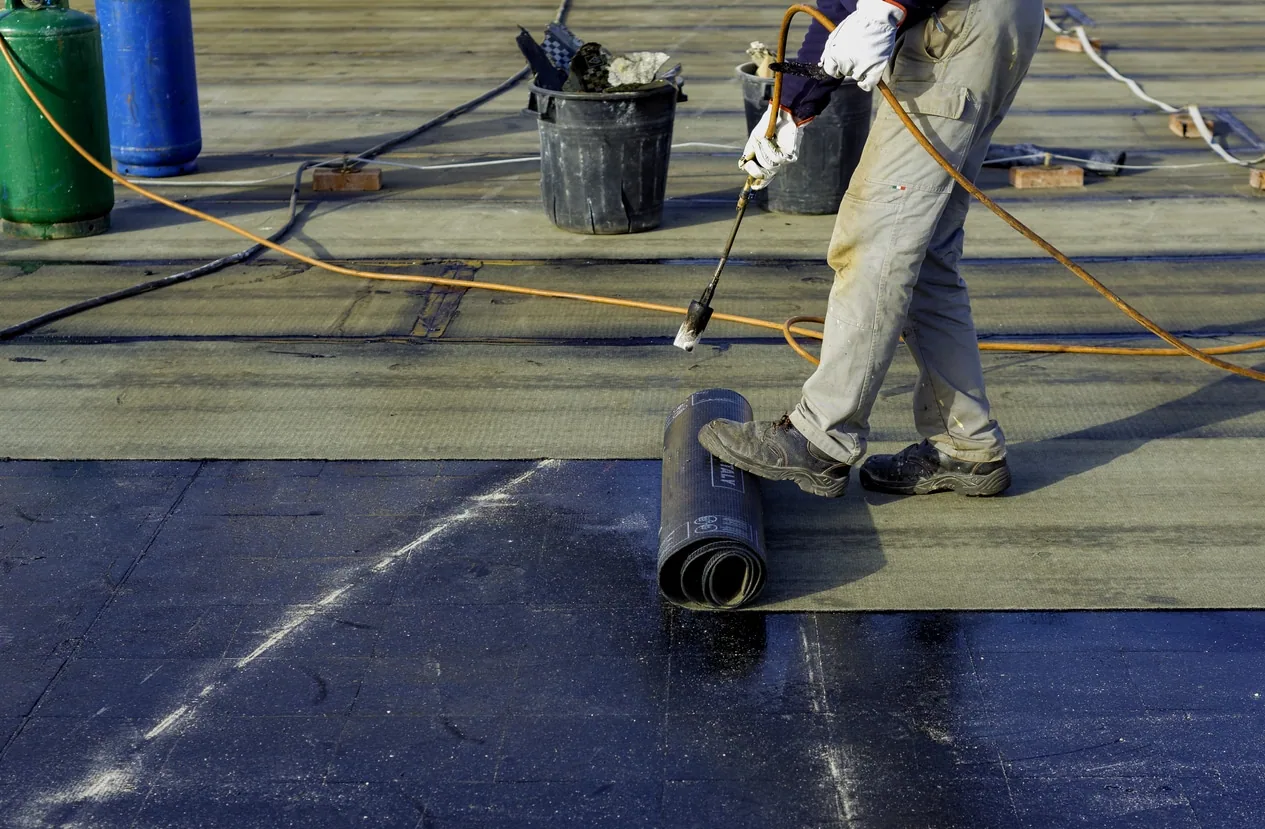
A contained defect with dry, stable surrounding material can support a repair. We remove only to the approved boundary, prepare the existing surface, install a compatible detail, and check the tie-in before closeout. If the assembly has wet insulation, broad loss of attachment, recurring openings, or a deck concern, a larger comparison may be more useful. A recover also depends on roof count, drainage, edge height, structural capacity, and system compatibility. We state which condition is confirmed and which test or approval would change that recommendation.
Cost and duration reflect the amount opened, insulation and deck work, number of roof details, access, material method, and the number of weather-sensitive shifts. Occupied operations can add shutdown, noise, or interior-protection windows to the sequence. A repair work package can remain separate from a replacement alternative. If renewal is justified, a replacement plan should show removal depth and new assembly decisions clearly instead of folding unknown conditions into a single allowance.
The release record for each zone
At the end of a shift, the closeout shows the last finished seam or flashing, the status of drains, and how each exposed section was protected. Photos attach to a roof plan, and any untested area remains identified for the next visit. The general contractor can see which zone is ready, which needs a quality check, and which awaits an owner decision. That record supports a clean crew handoff when site access, tenant activity, and other trades constrain the next work period.
A wider service program might include the Bullard service area or the Troup service area, but each location retains its own roof plan and access release. Within Whitehouse, the development review and the field condition remain separate inputs: approvals govern project steps, while inspection findings govern repair boundaries. Provide the building plan, roof records on hand, site contact, access window, reported issue, and date a decision is required; we can then return a scope with tests, approvals, and zone releases assigned.
Commercial Roofing Questions
Does city permit review determine whether a roof needs replacement?
No. Permit review addresses project requirements, while the repair decision comes from the roof assembly, condition, and approved tests. We document the existing system, affected zones, and proposed work so the general contractor can coordinate the roofing scope with the city review.
Can an inspection locate moisture below the membrane?
A visual walk records exposed conditions and indicators, but concealed moisture may require a selected test or survey. We identify where that result could change the scope, request approval, and include the method and limits in the report. The repair boundary follows the evidence available for that assembly.
What changes during Tyler’s hot season?
Adhesion-sensitive work receives an actual surface and substrate reading. Tyler’s normal July high averages 94.5°F. For Whitehouse work, the log identifies the product step, measured detail, and condition required for release. We follow product limits and shift the work window when measured conditions require it.
How should storm damage be handled before a permanent repair?
We first check safe access, active water, exposed material, and drainage, then establish a temporary closeout where needed. The condition is photographed by zone. Permanent repair is set after the membrane, flashing, and any affected layers are inspected, with concealed questions marked for approval and testing.
Which details should be included in a Whitehouse roofing request?
Include the roof plan, assembly information if available, recent leak or repair notes, access rules, operating schedule, and the date by which a decision is needed. We use that package to map the first walk, coordinate permits or inspections with the project team, and set the first roof-zone release.
Related Pages
Tyler
Tyler, TX

Commercial Roof Inspection
Tyler, TX
Commercial Roof Condition Reports
Tyler, TX
Storm Damage Roof Repair
Tyler, TX

Coordinate the first roof walk
Share the roof plan, assembly records, access window, current condition, and decision deadline. We will return a sequenced field plan with open tests and approval points marked for the general contractor.