

On a Tyler roof, a flashing repair can lose its adhesion window before the crew has finished preparing the transition. The city’s normal July high is 94.5°F, which makes actual surface and substrate readings part of scheduling for heat-sensitive materials. We map the failed curb, wall, pipe, or equipment detail first, then set a test point and hold point before closing the work. The general contractor receives a zone-specific sequence that accounts for the assembly and the access release.
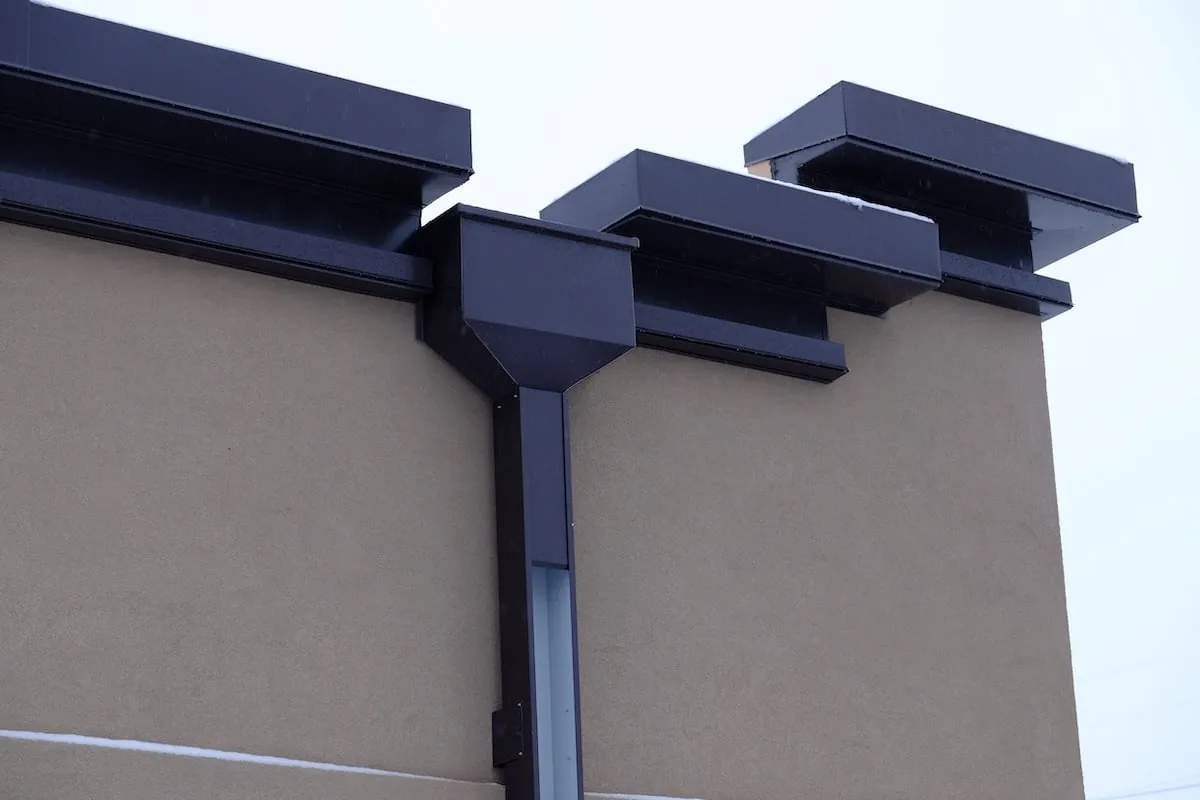
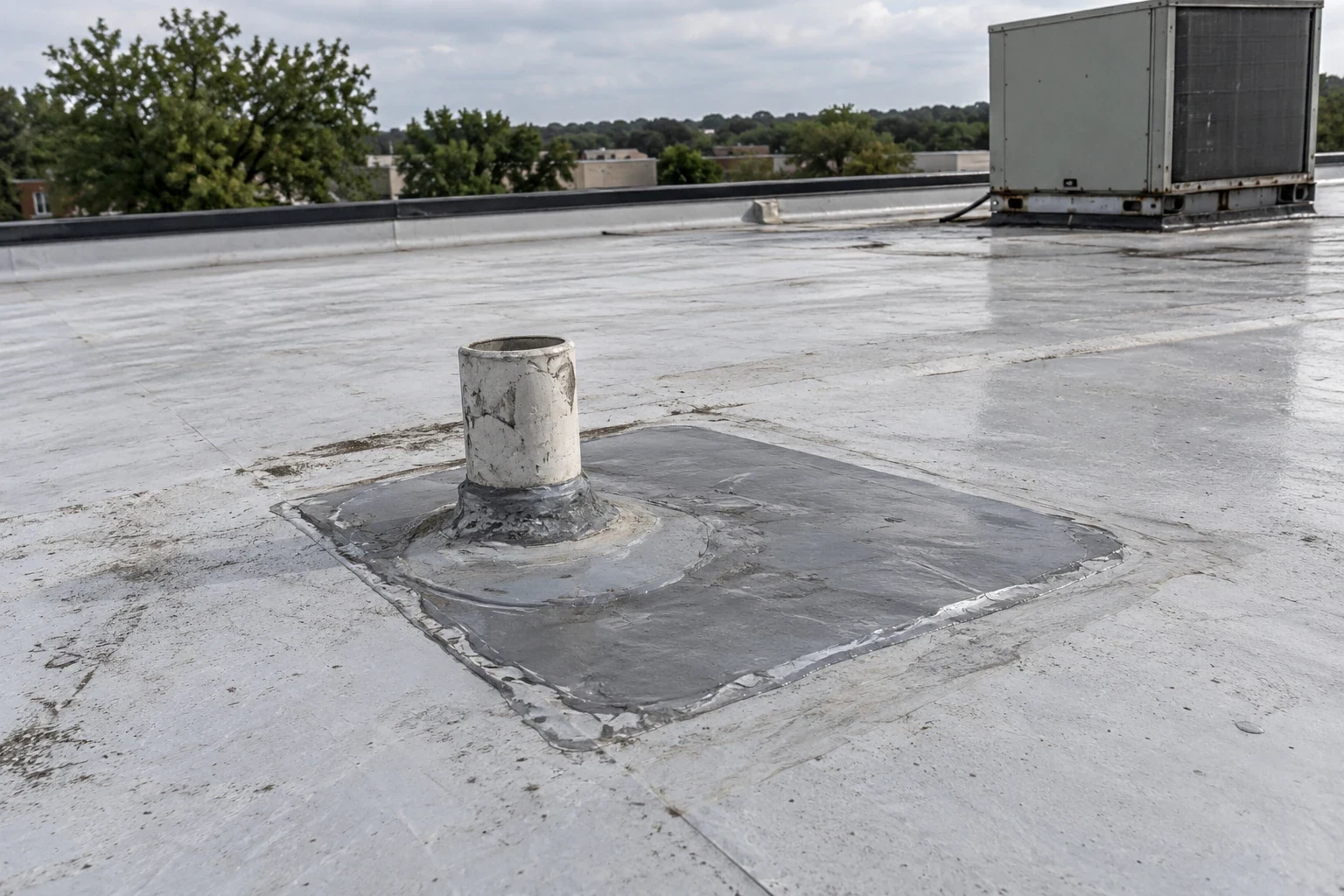
Flashing is the formed or applied connection between the roof field and a change in plane or a penetration. Water can enter at a split corner, loose termination, cracked sealant, deteriorated boot, or incompatible patch. We examine the full transition and the surrounding membrane rather than treating a bead at the visible gap as a completed repair. In the Tyler Midtown area, healthcare and education uses contribute to active building operations, while the Tyler Interstate Commerce Park brings a different staging context. Each property’s access and protection rules govern the work. A penetration flashing repair can be sequenced as its own work package.
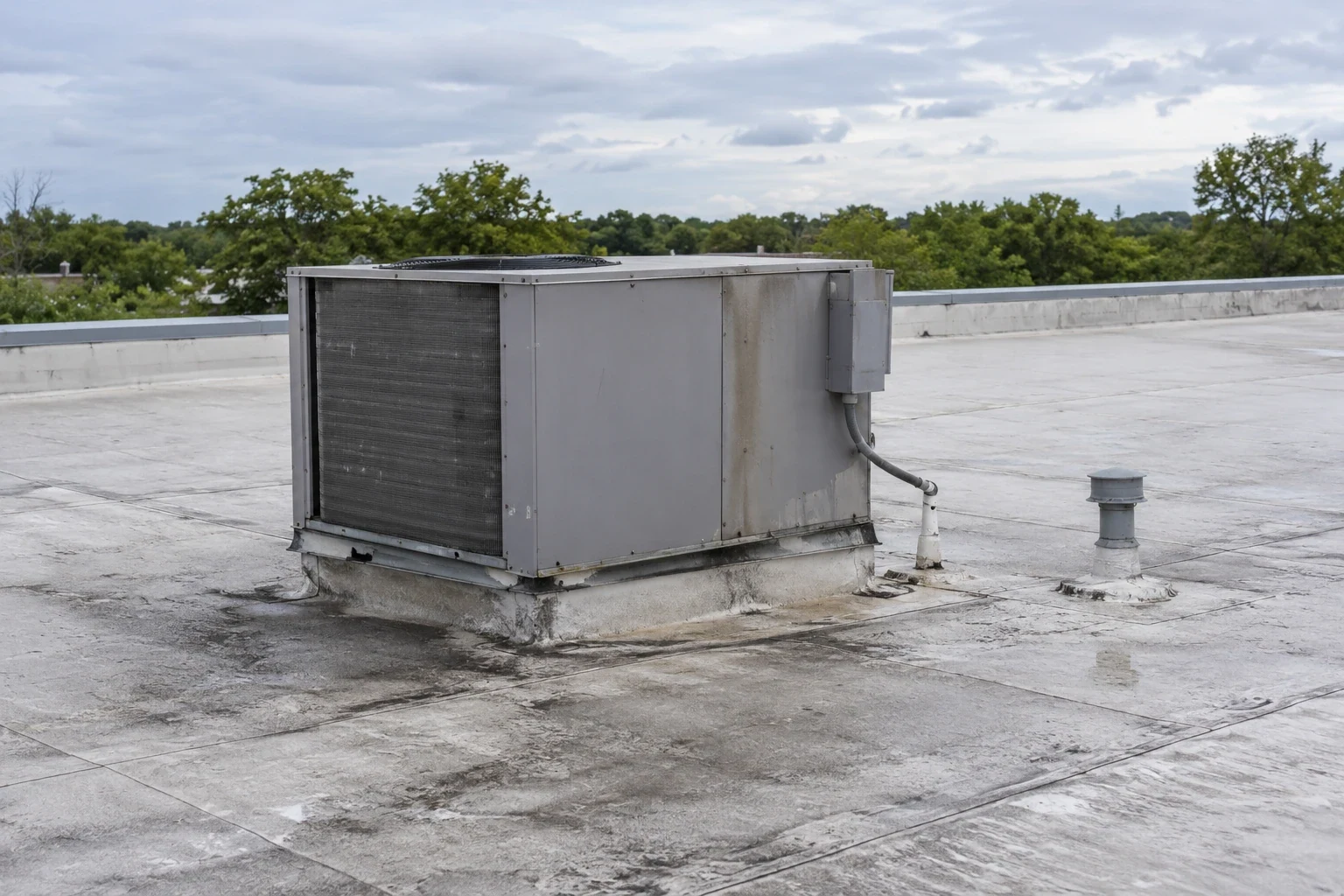
Transition and water entry
We follow the transition from the roof field to the wall, curb, pipe, skylight, or equipment support. The review looks for separated corners, open laps, cracked sealant, loose metal, membrane shrinkage, and water tracks below the detail. Interior staining helps focus the search, but it does not mark the entry point by itself. The field record ties photographs to a roof plan and notes whether the detail can be checked visually or needs a controlled test.
A flashing can appear intact while moisture travels under its base or behind the wall termination. We inspect adjacent seams, nearby penetrations, and the substrate where access permits. If the flashing is bonded to material that has lost adhesion, the repair boundary may need to reach sound membrane rather than stop at the visible crack. Seam separation and a puncture nearby remain separate conditions in the scope. The former Wisenbaker property is now Prosperity Park, acquired as a 281-acre site. Roof details still need site-specific inspection before any access or sequencing assumption is made.
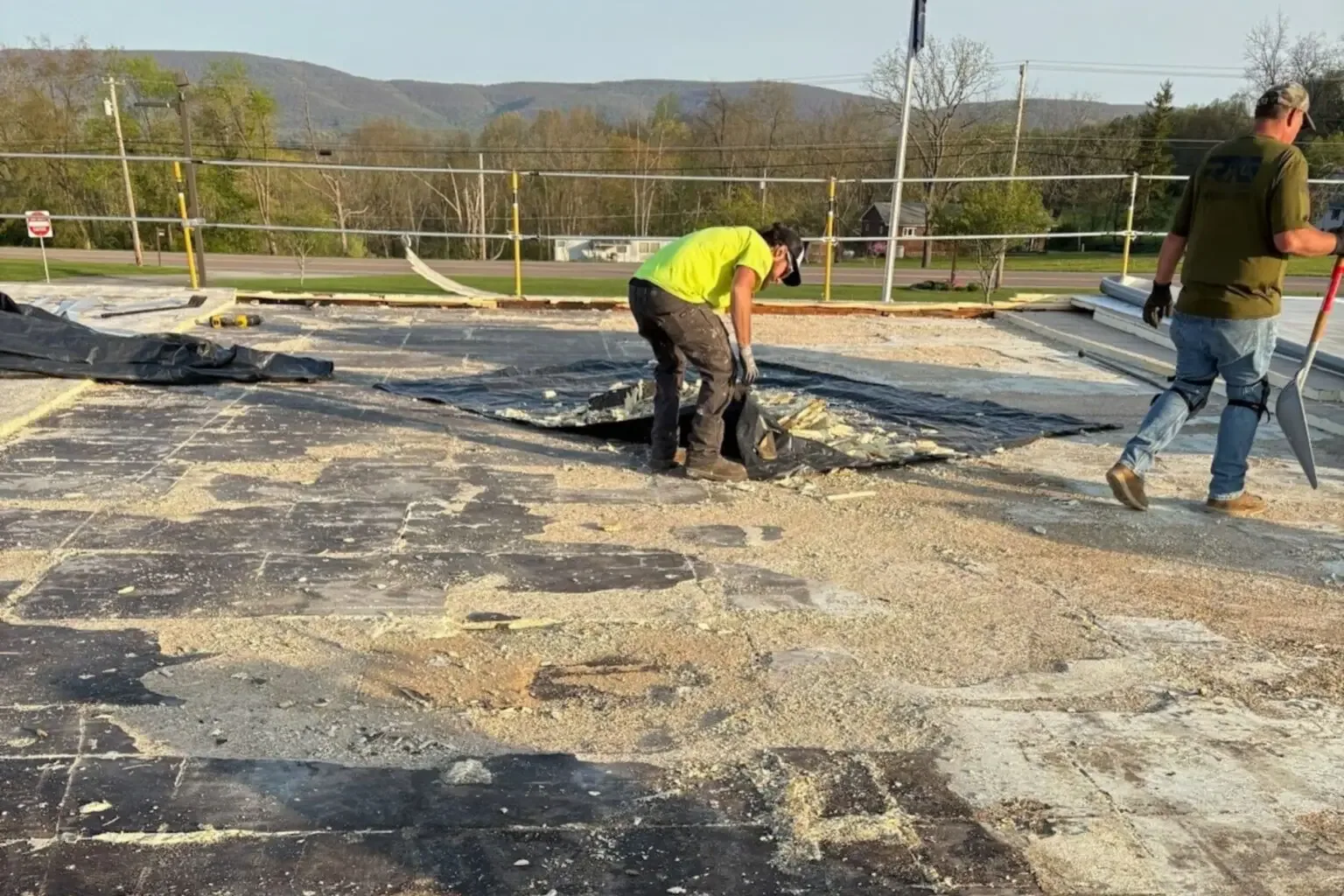
Assembly match and preparation
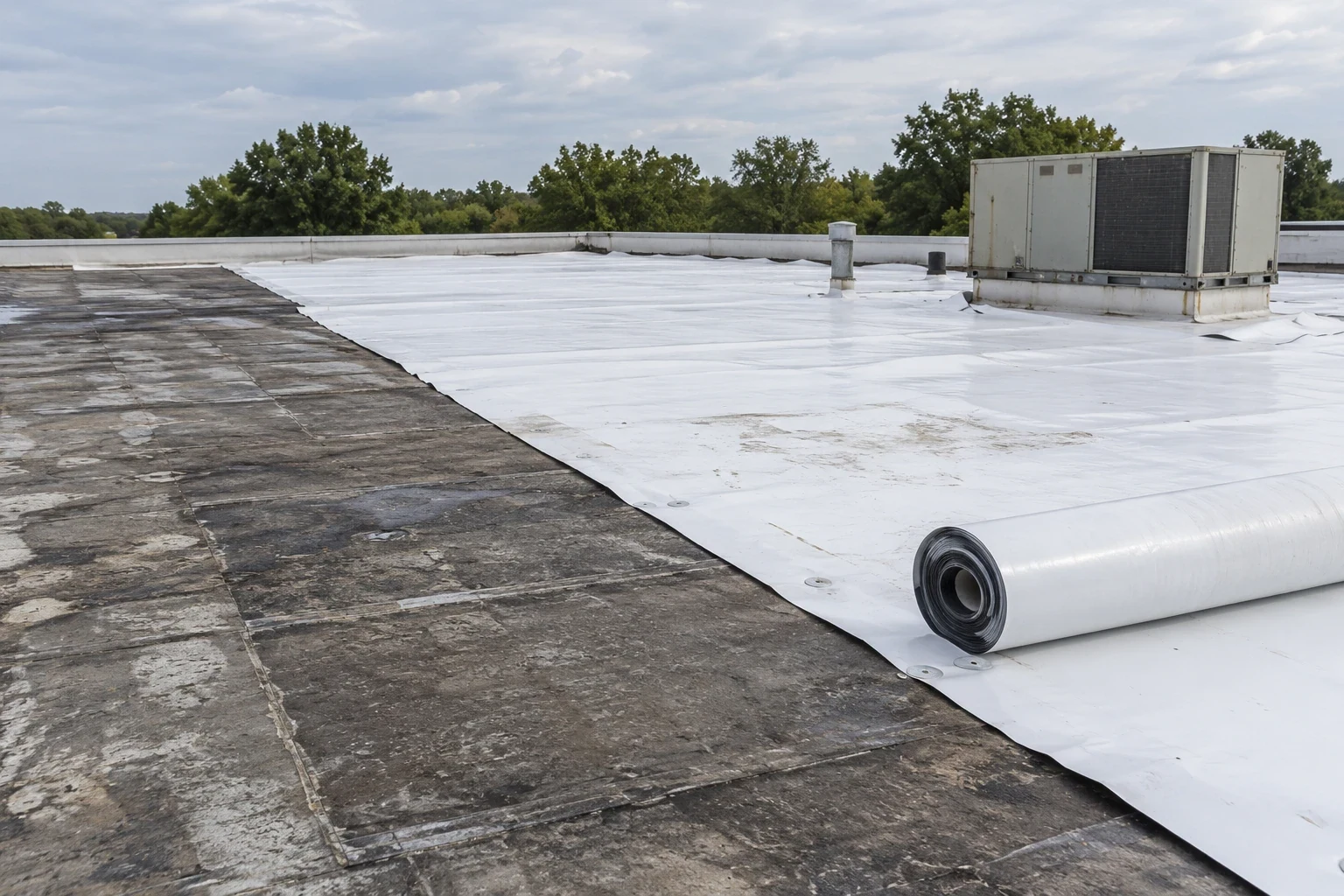
Repair materials have to suit the existing roof. A thermoplastic membrane may need a welded flashing detail; EPDM uses a different preparation and compatible accessory; modified bitumen and metal each require their own transition method. We identify the system from records and field observations, clean the work area, and remove material that prevents a reliable bond. The selected detail follows manufacturer instructions for preparation and weather conditions. We record the product and surface condition so the next crew can verify the same starting point.
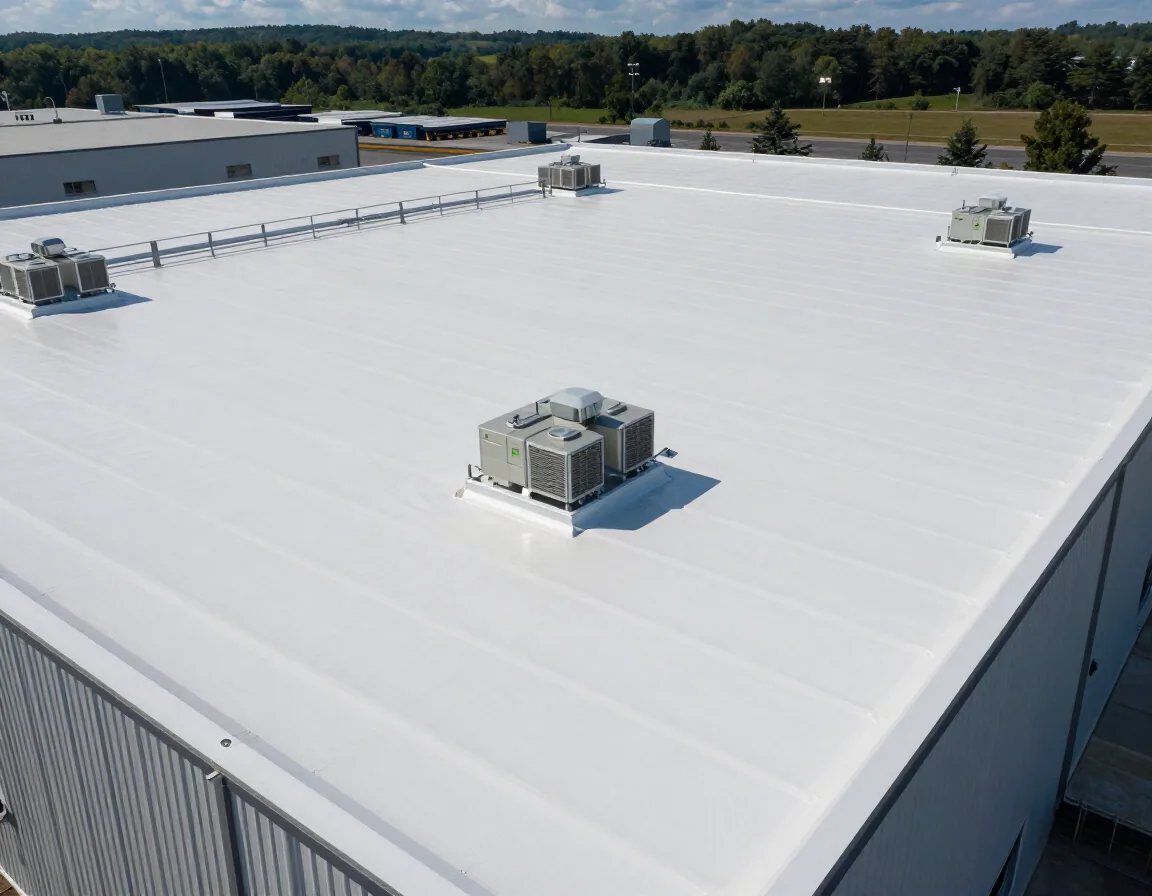
When records are incomplete, a small inspection opening or adhesion test may be needed before selecting the permanent detail. We mark the proposed test location and permission point, then photograph the layers and close the opening after review. This is especially useful around older repairs that combine sealants or incompatible materials. The EPDM assembly or PVC system changes the tie-in, so the work package identifies the roof type before material delivery. Our inspection service can map neighboring transitions if several details show similar movement.
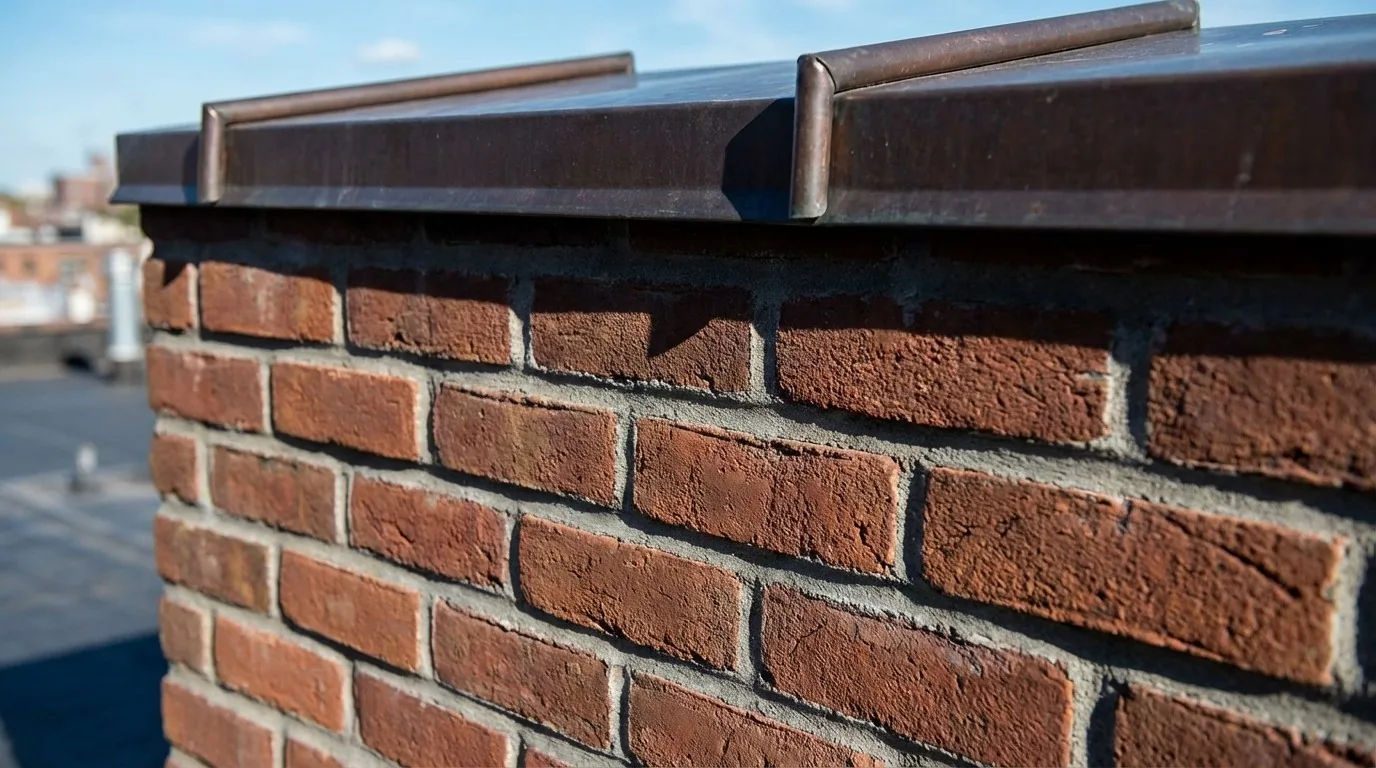
Heat window and test points
Tyler’s July climate normal supports planning around heat, but the actual roof surface determines the working condition. We take a substrate reading, follow the selected primer or adhesive instructions, and check whether the surface is dry enough for preparation. High temperature can change open time and material handling. The crew marks each hold point, including cleaning, primer, placement, and inspection, so a later shift does not inherit an undocumented step.
The four-state severe-weather region that includes Texas sees its most common storm activity in spring and autumn, with hail and damaging wind among the hazards. A nearby storm may change the opening, add debris, or interrupt work, so exposed sections need a defined closeout condition. We protect the transition and preserve drainage before leaving the roof. If the weather delay crosses an adhesion window, we recheck the surface and repeat the required preparation rather than relying on a prior reading. The storm repair process can handle temporary protection while a permanent flashing scope remains under review.
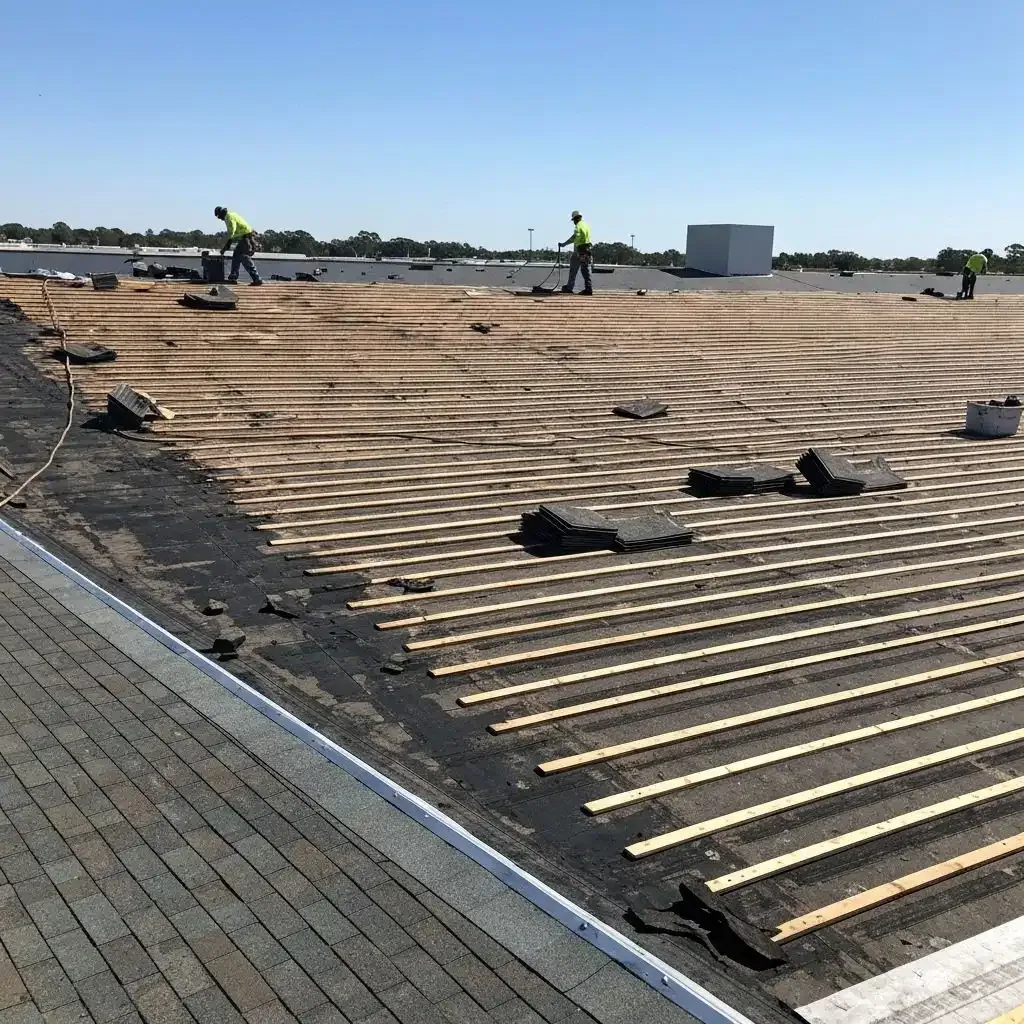
Occupied building coordination
Flashing work can sit above a production line, clinic, classroom, office, or tenant entrance. Before mobilization, we confirm whether the area below needs containment, whether equipment must be shut down, and how materials reach the roof. Midtown’s role as a healthcare and education hub means an occupied project may need controlled entrances, patient-area protection, and a scheduled roof-access window. Those operating details come from the facility contact and construction plan, not from the district label.
The roof-zone release identifies the ladder or hatch, staging area, protected interior, and handoff contact. A curb serving active mechanical equipment may require a shutdown window and a trade partner’s sign-off before the flashing can be removed. The crew then keeps the opening limited to the approved package and records any concealed condition before asking to expand. The general contractor can align the roof task with mechanical and interior trades without mixing their approvals.
Detail closeout and scope choice
Closeout captures the original defect, repair boundary, preparation steps, installed detail, photographs, and test results. We check the repaired transition for continuous contact and confirm that water can still reach its intended drain path. The report also identifies any adjacent material left for further testing. If a substrate reading or adhesion test falls outside the approved conditions, that finding stays open for owner review rather than being hidden in a general completion note.
Cost and schedule reflect the number of transitions, height and access, material choice, removal depth, weather window, interior protection, and approval time. Several isolated failures can remain repair work; repeated loss of adhesion across a roof zone may justify a broader restoration or replacement comparison. A photo-supported condition record can track the detail on later visits. For a project near the Tyler Midtown area, we return the zone map, open tests, access release, and decision deadline so the next trade handoff has a specific status.
Commercial Roofing Questions
Can a new sealant bead repair a leaking curb?
Only when the existing detail and substrate are suitable for that repair. We inspect the termination, corners, membrane bond, and water path before selecting a material. A bead over loose or incompatible material can leave the underlying transition open.
How do you decide where the flashing repair ends?
The boundary reaches sound material that can support the chosen tie-in. We inspect the adjacent membrane and substrate, then use a test point if adhesion or concealed damage remains uncertain. The report shows confirmed work separately from any proposed extension.
What if the roof system is not identified in the records?
We compare visible membrane and detail characteristics with available project records. If that does not establish compatibility, we propose a controlled test or small opening and mark the approval point. Material selection follows the observed assembly and product instructions.
Can flashing work proceed during a hot Tyler afternoon?
Some materials have temperature and open-time limits. We use a substrate reading and product requirements to set the work window; the July normal high is background context only. The crew records the conditions at preparation and verifies them again if work pauses.
What will the closeout show?
It lists the transition repaired, preparation and material, photographs, testing, drainage check, and any adjacent condition left for review. We mark the roof-zone release and any access or trade approval still needed. The general contractor can use that record to plan related work.

Related Pages
Commercial Roof Seam Failure Repair
Tyler, TX
EPDM Roofing
Tyler, TX
Release the flashing detail
Send the roof plan, assembly records, access window, current condition, and decision deadline. We will return a work package with the transition, preparation steps, test points, and crew handoff marked.