
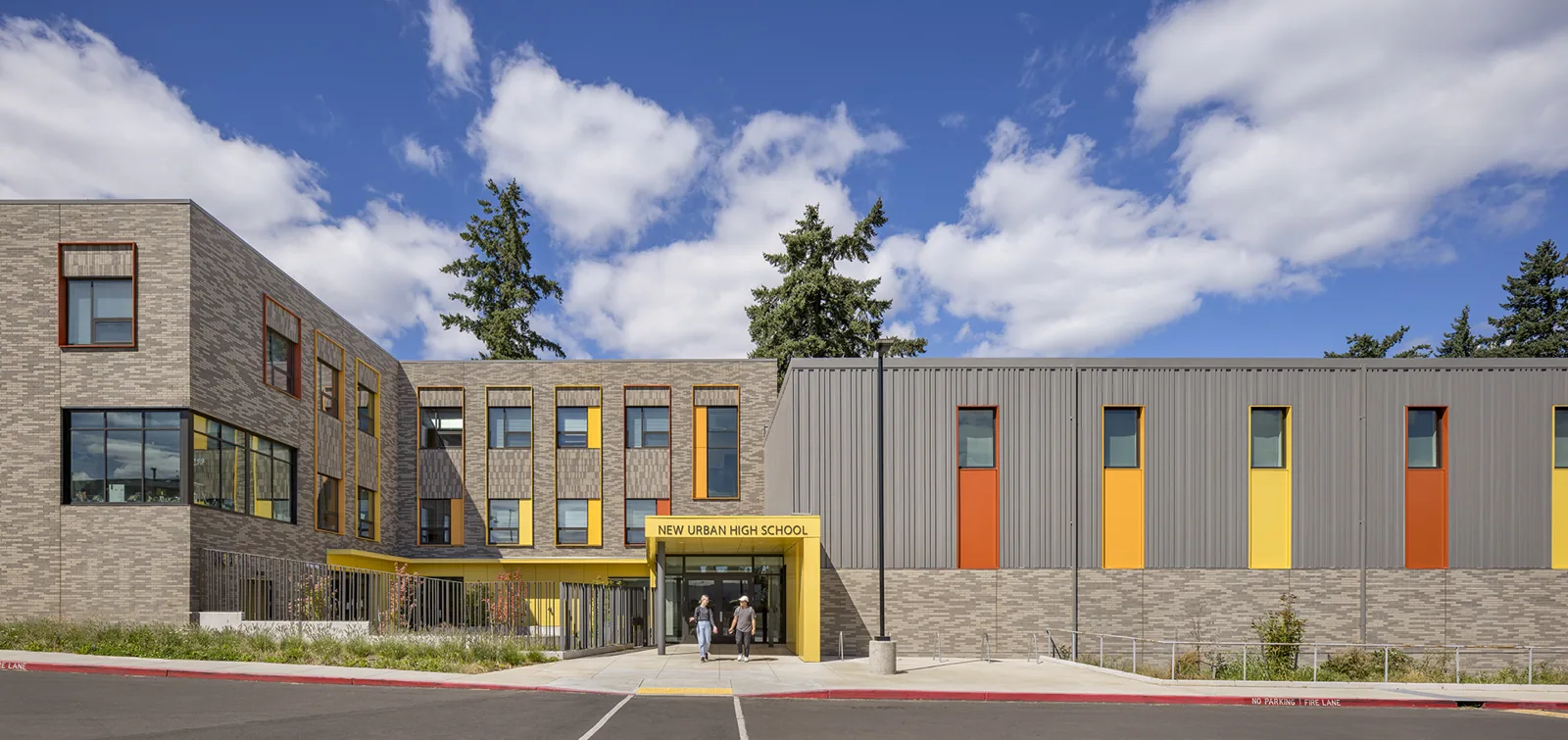
Tyler’s summer heat can narrow the work window for roof details that need adhesive or coating preparation. The normal July high is 94.5°F, but we measure the substrate at the active zone before deciding whether the product can be installed. School work adds a calendar and access boundary: students, staff, deliveries, and campus events may use the same paths below the roof. We ask for the roof plan, known leak locations, school schedule, restricted areas, and the district contact who can release each work zone.
Tyler’s Midtown planning area continues to function as a healthcare and education hub, while the North End plan includes commercial development, infrastructure, and the broader Texas College District. District buildings still need separate roof records because assembly, condition, and access differ from site to site. We mark findings by roof zone, photograph defects, and identify any test that could change the repair boundary. A Tyler Midtown roof review starts with site-specific conditions and the operating schedule.
School calendar and work windows
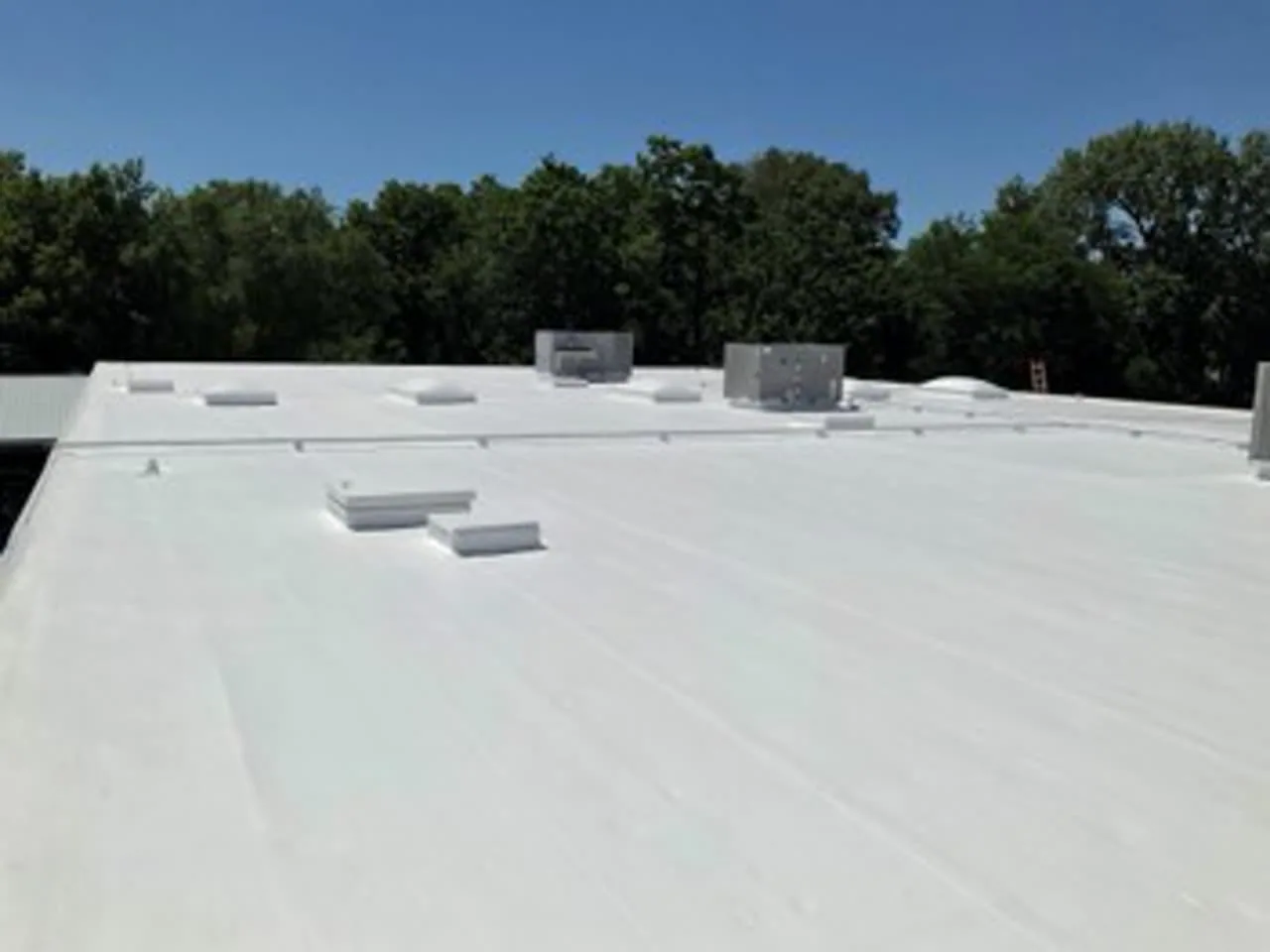
Summer break, teacher workdays, testing periods, athletic events, and facility rentals can each change access. We compare the proposed work period with the campus calendar and note when a room, courtyard, parking lane, or bus route must remain available. Roofing above a school wing can proceed in separate zones if the district approves the barrier, noise, and material route. A zone is not released until the facility contact confirms that the route and protection meet the site’s current needs.
When the work extends past a school return date, the plan should identify what will be complete, what remains under protection, and who can authorize the next phase. The general contractor coordination plan lists daily start and stop conditions, material staging, and the exposed-section closeout. A phased reroof sequence can keep designated rooms in service while work advances through approved roof areas. Weather delays are recorded with the revised access period rather than treated as an informal calendar shift.
Campus protection and roof access
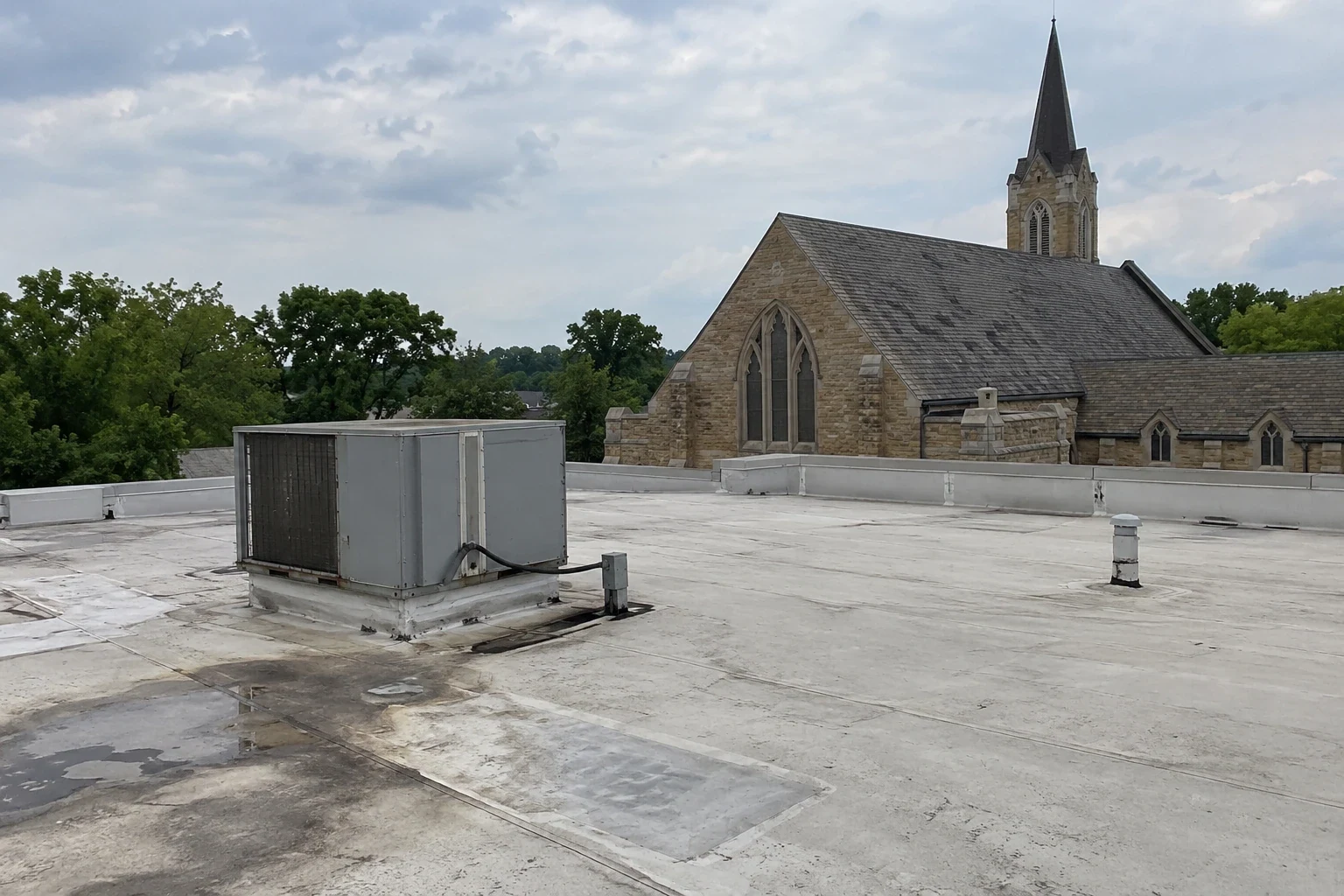
A school campus can have controlled entrances, bus circulation, playgrounds, kitchens, and after-hours activities below a roof zone. The district identifies required clearances and the crew confirms the roof entry, ladder location, fall-protection setup, and any escort requirement. We keep tools and materials within the released work area and agree on how the space below will be protected. If the active route changes, the district contact can update the boundary before the crew continues.
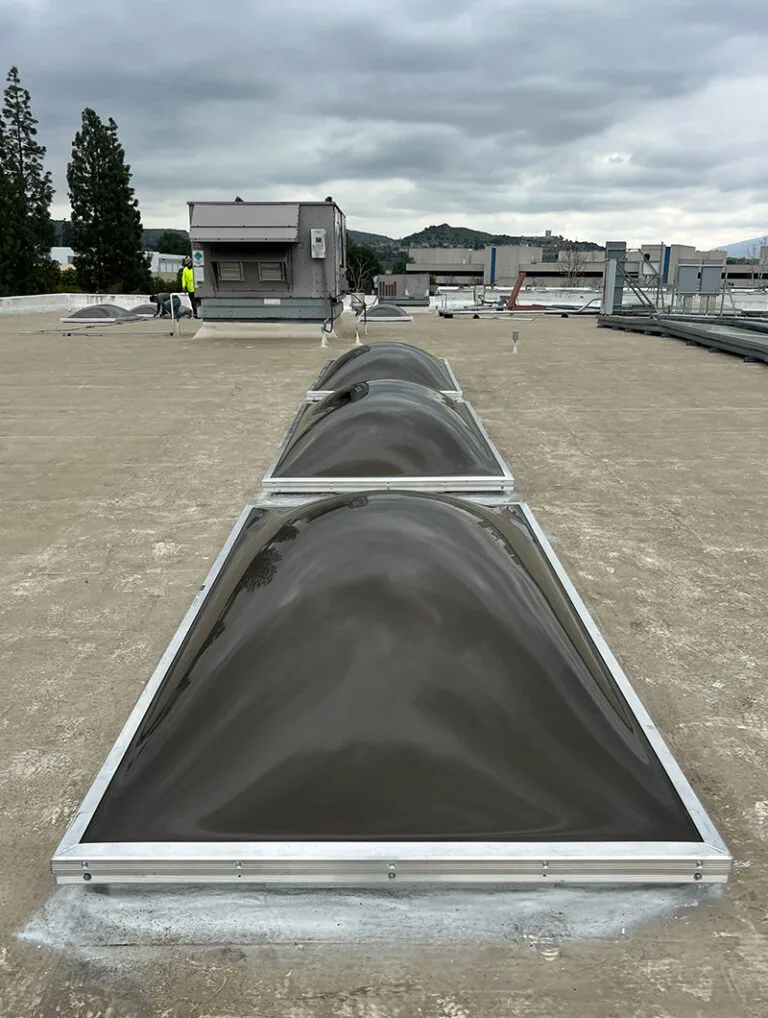
Roof penetrations and mechanical curbs need attention because a small flashing failure can send water toward classrooms or shared support areas. We inspect the membrane connection, curb condition, fasteners, and nearby drain path. A penetration and skylight detail review identifies the repair work and the interior protection needed. The report records where the observation occurred and which rooms or uses below the district asked us to protect during repair.
Leak paths and moisture checks
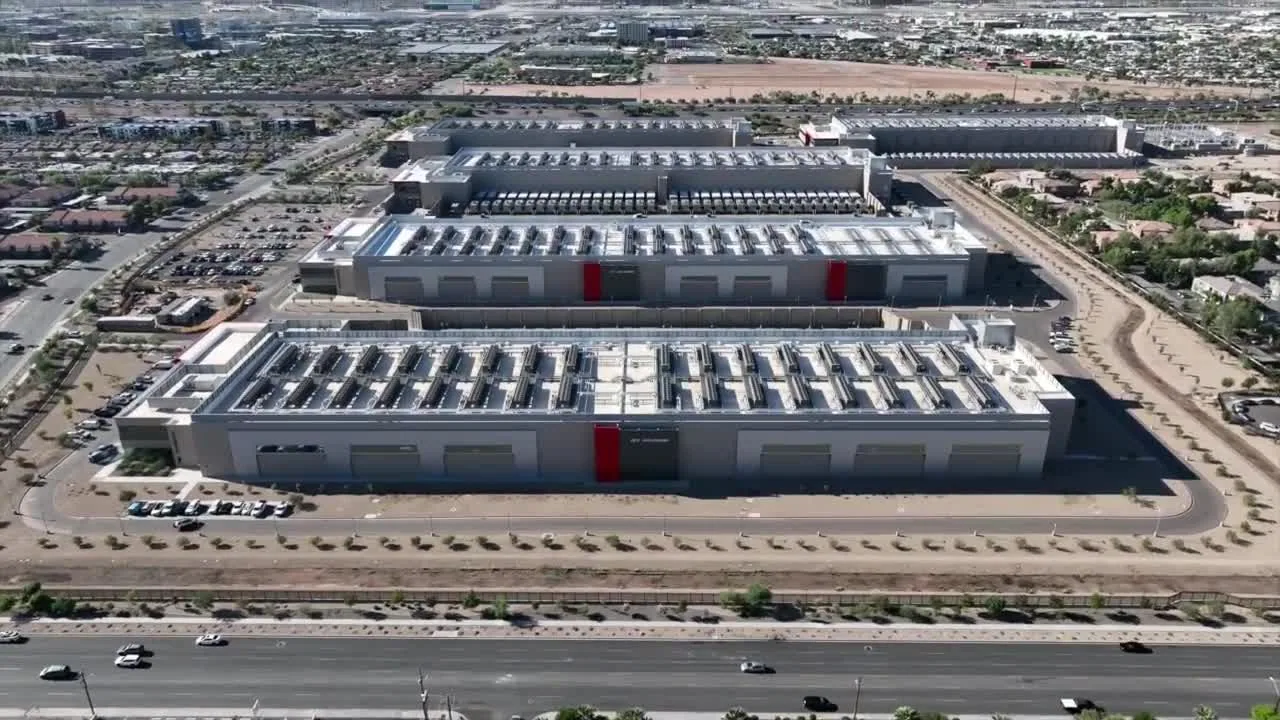
A ceiling stain near a classroom or gym is a signal to investigate the roof area, not a direct measurement of the opening above it. Water can move along deck flutes, insulation joints, joists, or piping before becoming visible. We compare the interior report with roof penetrations, seams, drains, edges, and transitions. Photographs connect the finding to the roof plan, and any condition that needs an opening or additional test remains marked as a hold point until authorized.
An infrared reading may help focus follow-up when the assembly suits the method. It does not establish a removal boundary on its own. We combine the pattern with surface observations and test cuts where a result changes whether insulation is kept or replaced. A moisture survey can help the district plan a targeted investigation, and the condition report states which areas were inspected and which remain untested for a later visit.
Tyler heat and storm preparation
July in Tyler has a normal average high of 94.5°F and a normal monthly mean of 84.4°F. Those numbers help frame a seasonal schedule; they are not a live roof reading. Before adhesive or coating work, we check actual surface and substrate conditions and compare them with the product requirements. If the work window closes, the crew secures the zone, protects openings, maintains drain paths, and records the next inspection point before leaving.
Regional severe thunderstorms can bring large hail and damaging winds, most often in spring and autumn. Tyler’s June 8, 2021 tornado record confirms local exposure. After a storm, we inspect edge metal, membrane seams, rooftop equipment, and drains, then photograph visible conditions by zone. A tornado damage review can document observed openings and displaced details, while any insurance process follows its own scope and coverage decision. The school receives a record that separates current findings from prior maintenance concerns.
Repair options and approvals
A puncture, separated seam, or failed flashing can be addressed with a local repair when the surrounding assembly is sound and the connection is compatible. We identify the material, preparation, boundary, and check needed to close the repair. If a test opening exposes wet insulation or damaged cover board, we photograph the layers and measure the affected area for the district’s review. Work pauses at that hold point; additional removal waits for written direction tied to the finding.
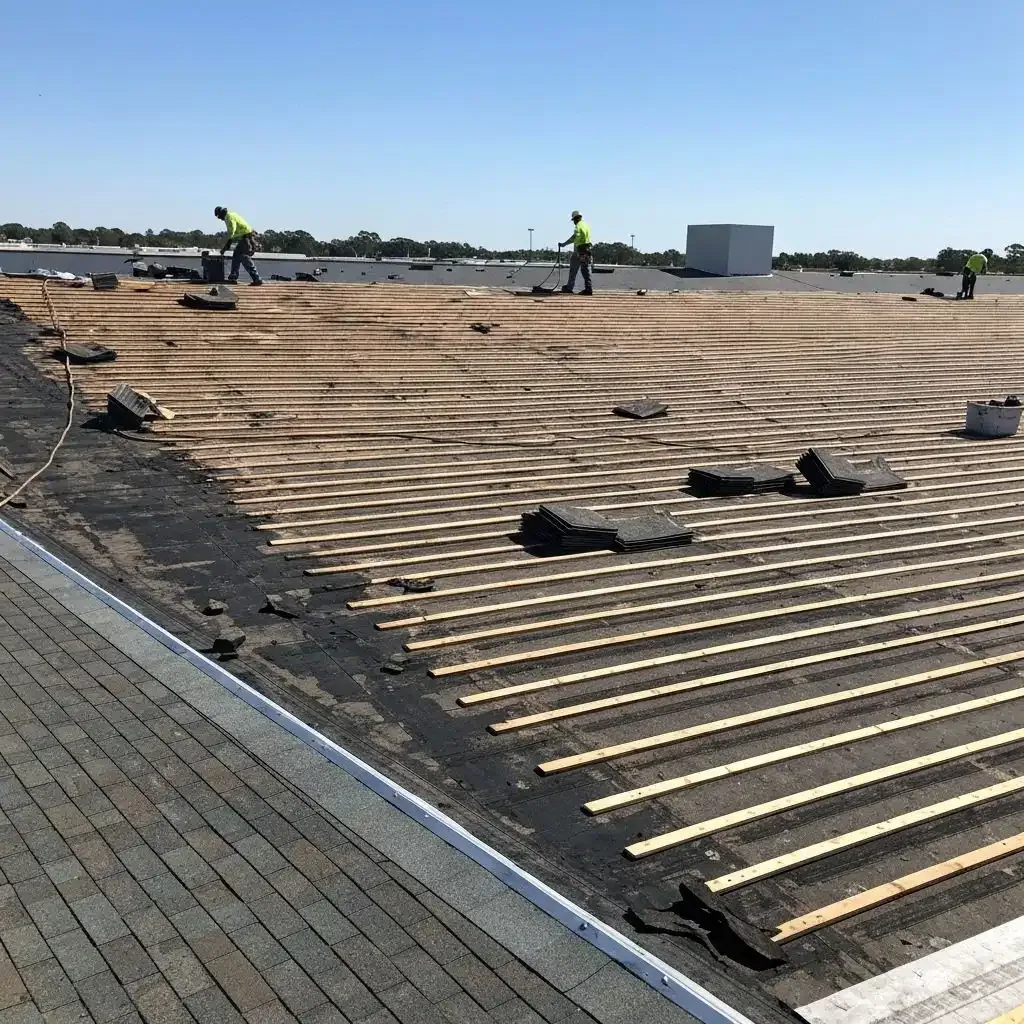
Repeated leaks, broad moisture, or deterioration at multiple transitions may lead to a recover or replacement review. A recover depends on moisture, attachment, compatibility, drainage, and system requirements. Replacement planning accounts for removal depth, insulation, deck work, edges, equipment, and the school calendar. We compare choices by roof zone and note which test or access release remains open. A replacement work package can then be scheduled against district approvals and safe campus access.
District records and next inspection
At the end of each work period, the district receives the completed zone, open observations, drain status, photographs, and any temporary protection still in place. We identify the contact who accepted the roof and interior area. If a weather delay interrupted work, the handoff describes the exposed boundary and the next safe release. That record helps a new crew start from the actual closeout rather than from a school calendar entry alone.
Tyler’s South Broadway Commercial Corridor carries commercial traffic and has received coordinated signal updates, while the East Grande Boulevard and Old Omen Road study addresses east and southeast travel connections. These are regional context for mobilization; campus routes, bus activity, and gate controls determine site access. A building portfolio record can retain each school’s completed repairs and follow-up needs. We return a sequenced plan that ties work to the calendar, roof zone, and district approval path.
Commercial Roofing Questions
Can roof work fit around classes and campus events?
The district calendar and campus access rules shape the work zone. We identify rooms, routes, events, material staging, and the person who can release each phase. A schedule change is carried into the closeout and next crew handoff.
How are classrooms protected during a leak investigation?
We record the interior location and coordinate protection with the district contact before working above it. Roof-side inspection follows nearby penetrations, seams, drains, and transitions. Any opening or test that changes the work boundary remains an approval point.
What does summer heat mean for school roof work?
Tyler’s July normal high is 94.5°F, so actual substrate temperature and product limits matter for bonding and coating. We schedule those operations within a suitable field window and secure the roof if weather delays the sequence. District access windows are updated with the next release.
What should a district request after a storm?
Ask for photographs, roof-zone locations, observed damage, drain and edge checks, temporary protection, and any follow-up test. We document visible conditions without turning the storm report into a coverage determination. The district can use the record to set repair approvals and campus access.
How do you prioritize repairs across several schools?
We compare active water entry, safety or equipment concerns, assembly condition, and access windows by building. Each site retains its own inspection findings and proposed work. The district can then align urgent repair with scheduled maintenance and longer-range capital decisions.
Related Pages
Midtown
Tyler, TX
Occupied Building Reroofing
Tyler, TX
Align the roof release with the school calendar
Send roof plans, active leak locations, the campus calendar, access requirements, and district approval contacts. We will return a zone-based work sequence with heat windows, classroom protection, and open tests identified.