
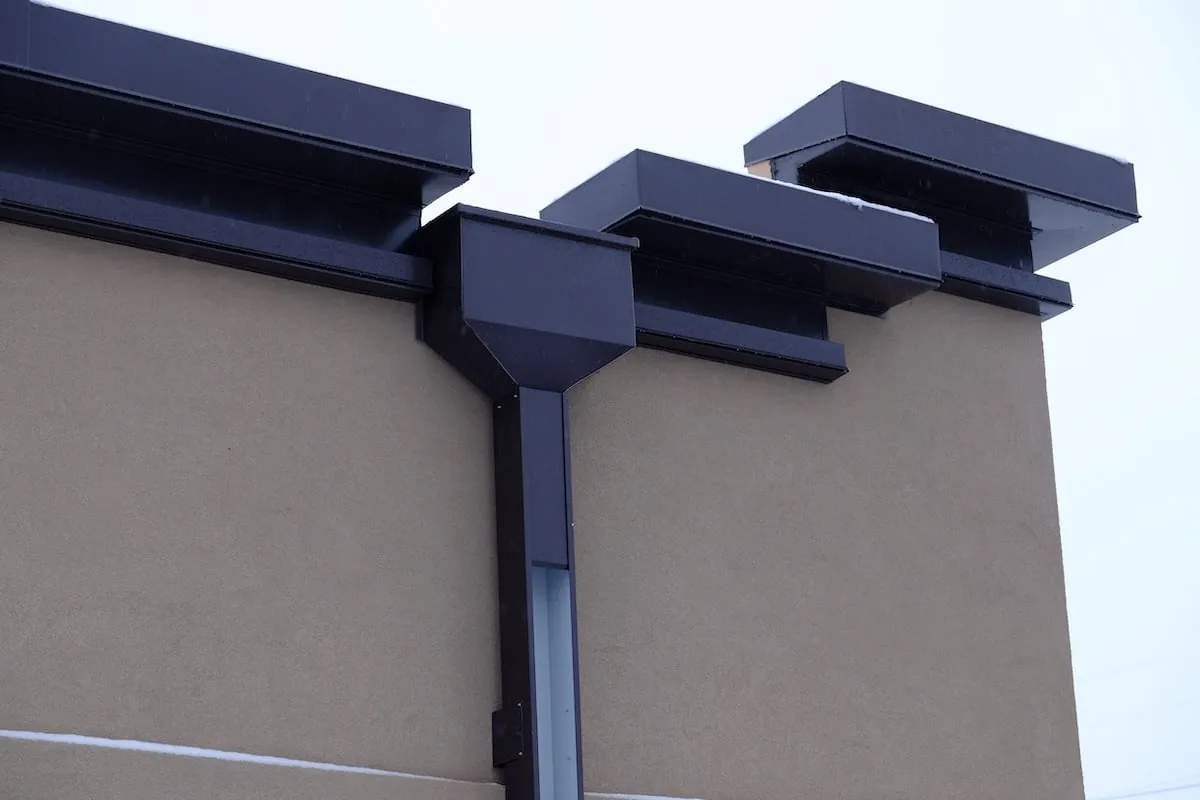
A roof drain problem may begin at the inlet, the bowl, a leader, or a roof area that does not carry water toward the outlet. After rainfall in Tyler, a blocked drain path needs to be distinguished from a low spot or failed connection. Regional spring and autumn severe storms can also bring hail and damaging wind. We locate the water route, inspect each accessible point, and mark the findings on a roof-zone sketch before opening or replacing a component.
Near the Tyler Interstate Commerce Park, a property may have loading and yard activity that affects access to exterior leaders; in the Tyler Midtown Area, roof work can require coordination around occupied operations. Those local contexts shape the access release, while the roof plan and field inspection define the drainage scope. A hands-on roof inspection checks adjacent seams and flashings so a leak at the outlet is not assigned to the drain without evidence.
Flow path and outlet review
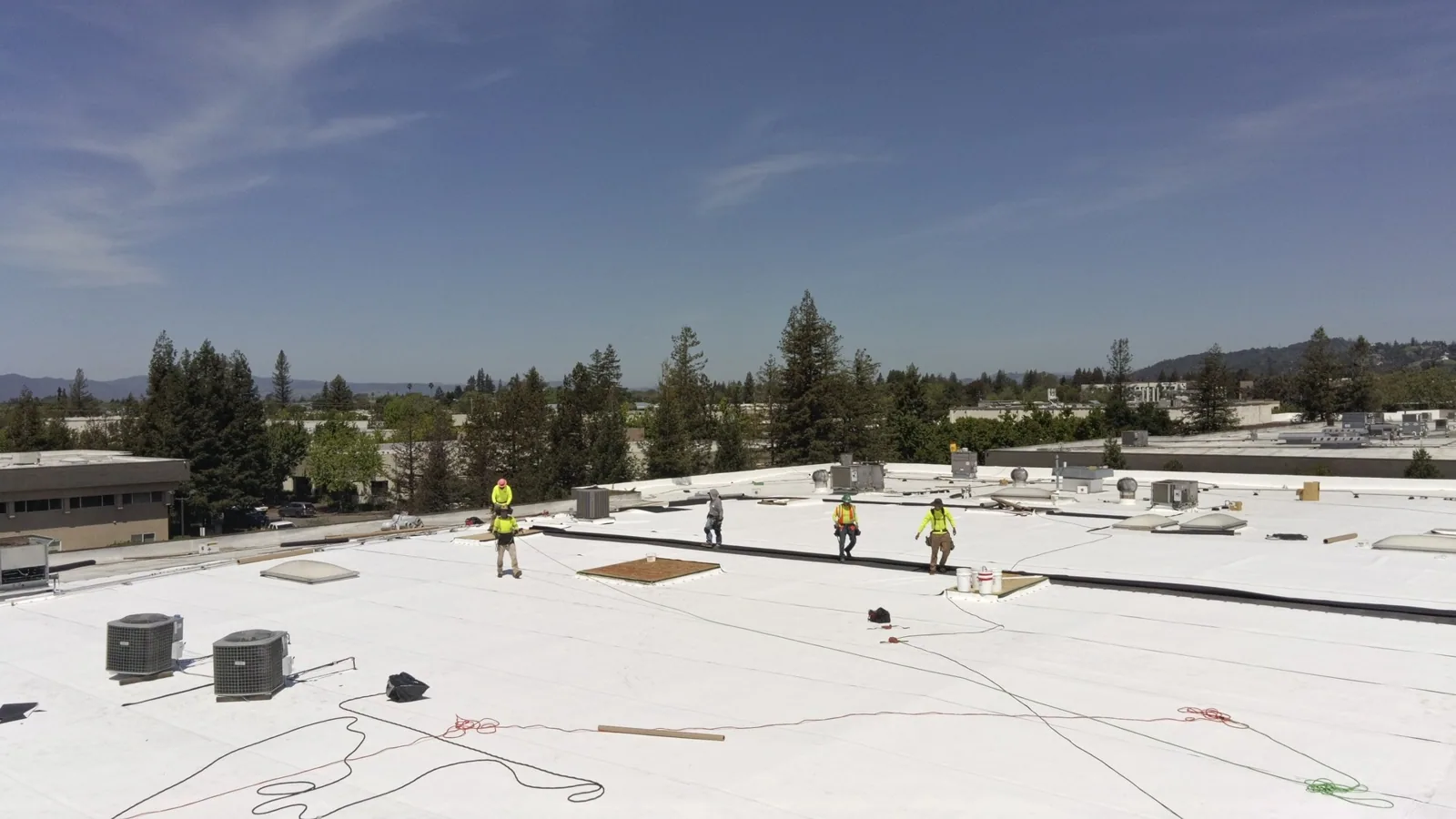
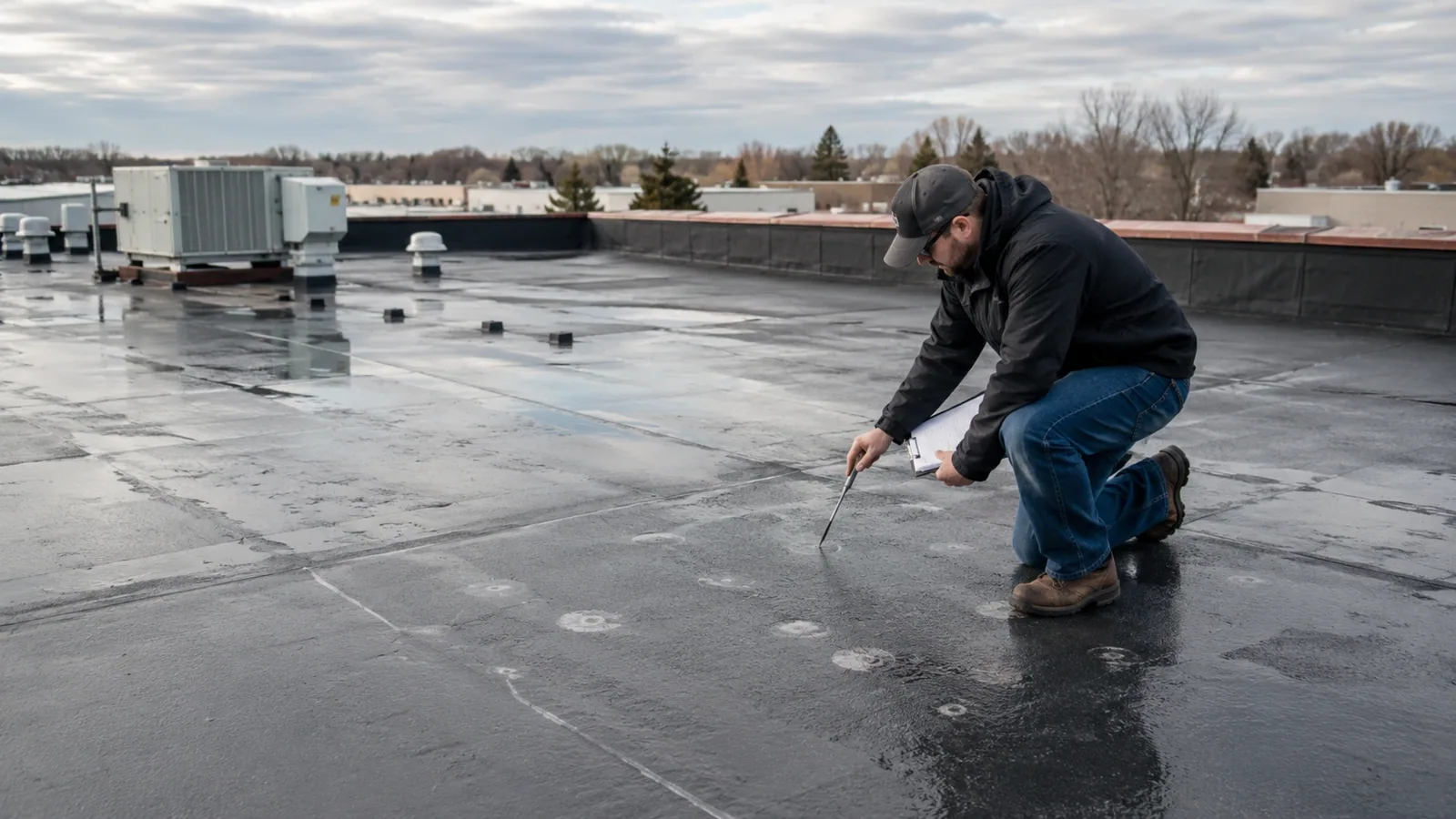
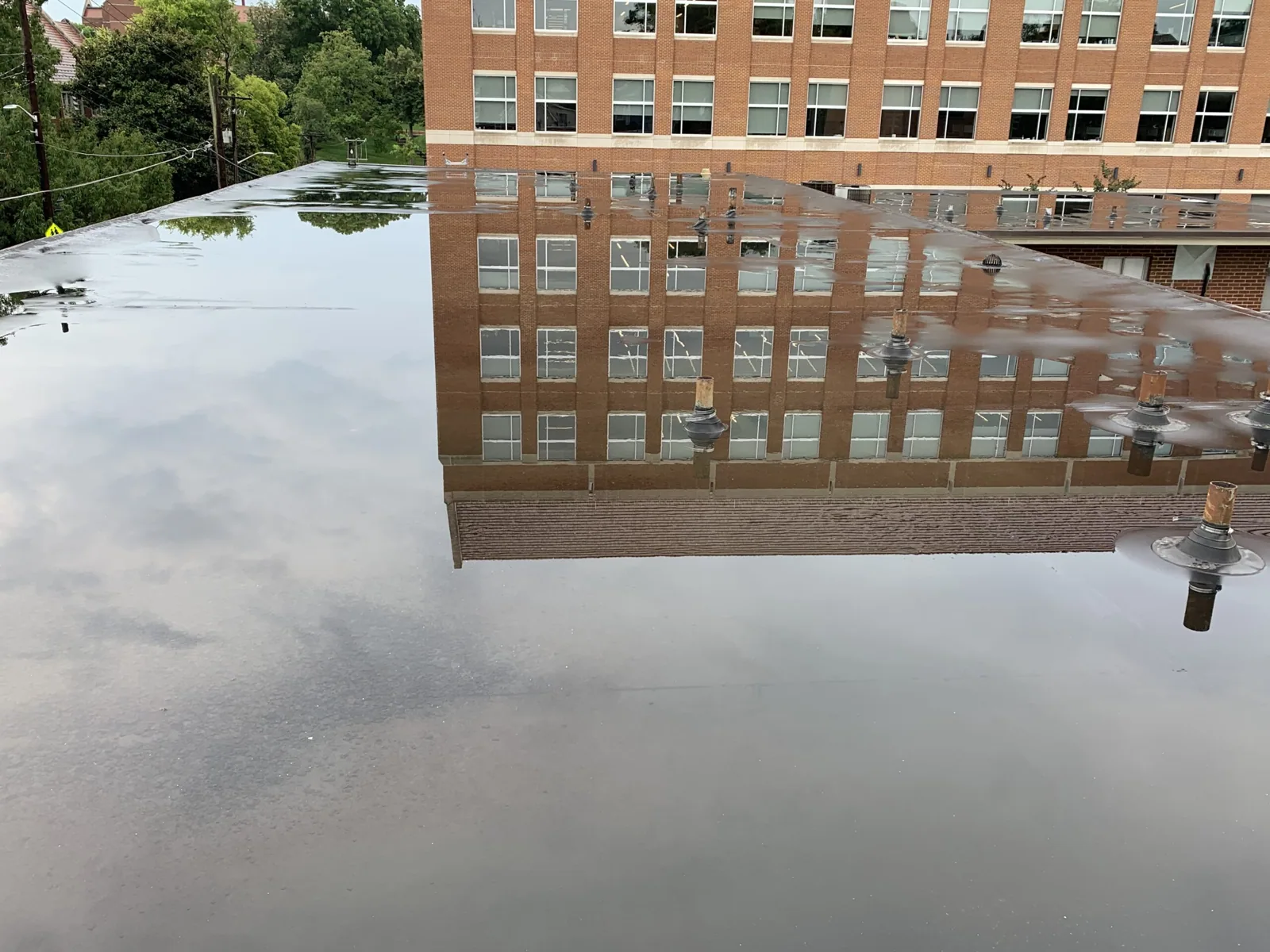
We follow the path from roof surface to drain or scupper and note debris, strainers, ponding, damaged bowls, loose clamps, separated leaders, and visible signs of blockage. If water has remained after rain, we record when the area was viewed and how much was present. A clear inlet with water still held in a depression suggests a different question than a drain packed with leaves or packaging. The written finding states which condition was observed and what should be tested next.
Scuppers need a clear opening, sound attachment, and an exterior discharge route that carries water away from the wall. Through-wall outlets and overflow scuppers may involve concealed connections that require interior or exterior coordination. We verify the surrounding membrane, counterflashing, and edge detail before proposing repair. If the owner needs a wider drainage correction, a ponding-water review can map multiple low areas and determine whether changes to slope or drainage capacity should be priced.

Cleaning and inspection access
Routine debris removal is a defined task with a clear stop point. We confirm which drains can be safely reached, remove the material within the approved zone, and check that the visible outlet is open. The crew records the drain ID, condition before cleaning, material removed, and condition after. A clean strainer does not confirm the entire leader is clear, so we identify any downstream segment that could not be observed or tested.
At an operating facility, the drain route may pass near equipment, loading areas, or interior spaces that need protection. The general contractor’s work package should identify access panels, ceiling areas, shutdown needs, and any controlled discharge location. We sequence drain cleaning ahead of roof repairs when water movement could carry residue onto new seams or coatings. If a drain bowl is damaged, we isolate that repair from housekeeping so the owner can approve the correct material and tie-in detail.
Drain and scupper repairs
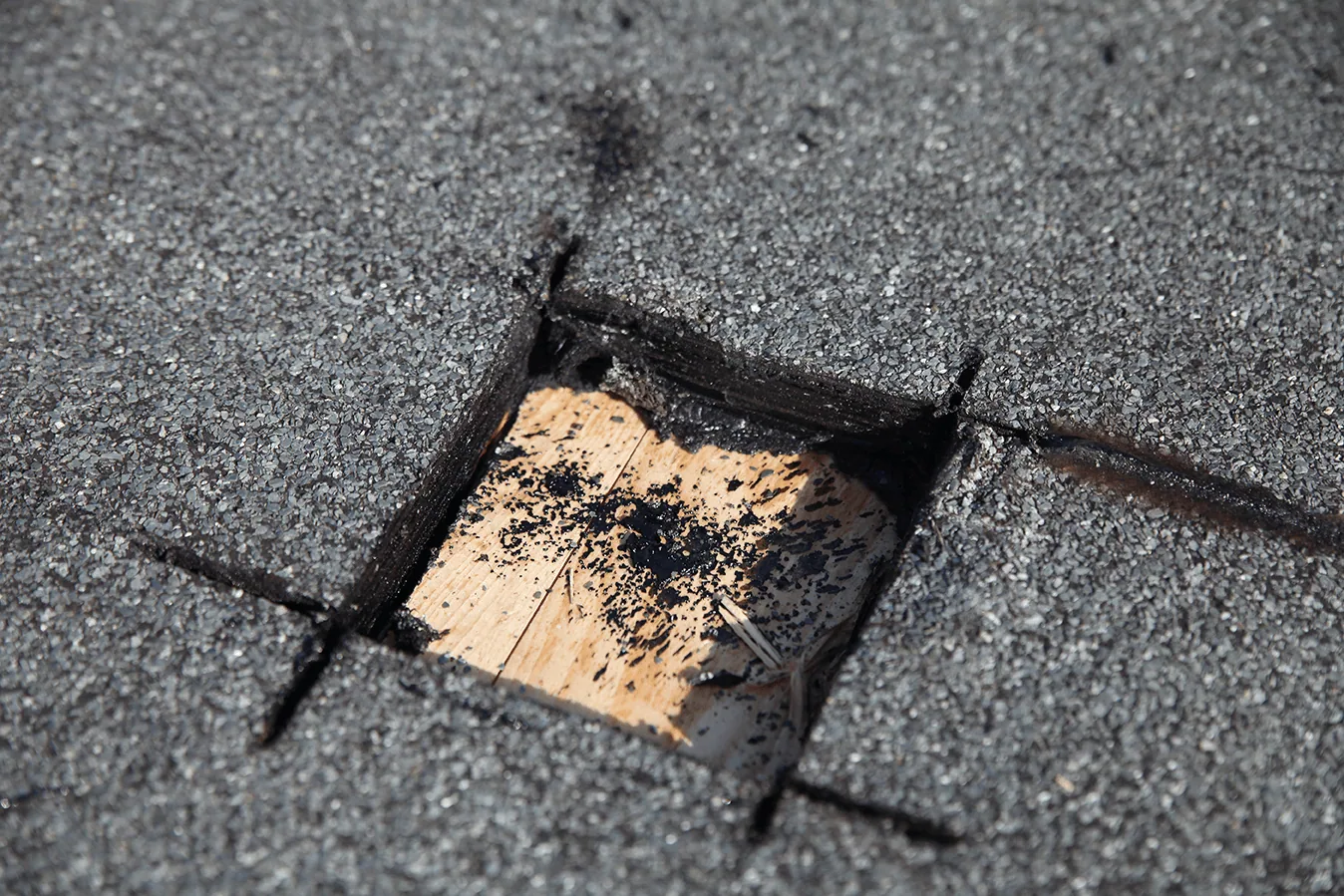
A repair may involve a drain flange, clamping ring, strainer, leader connection, scupper sleeve, or the membrane around the penetration. We check how the roof assembly terminates at the component and use a compatible detail for that system. Replacing the bowl without addressing a failed membrane tie-in can leave the leak path in place; coating over a loose fitting can restrict movement or access. The scope identifies which part is being repaired and what must remain accessible after closeout.
Heat affects adhesive and sealant operations. Tyler’s July normal high averages 94.5°F, but the roof surface is measured at the time of work. We note the substrate reading and observe the selected material’s temperature and cure requirements before releasing a connection or field membrane. A heat delay may shift a drain tie-in to another work window, so temporary water control and a secure exposed-section closeout should be included before the crew starts.
Overflow routes and storm exposure
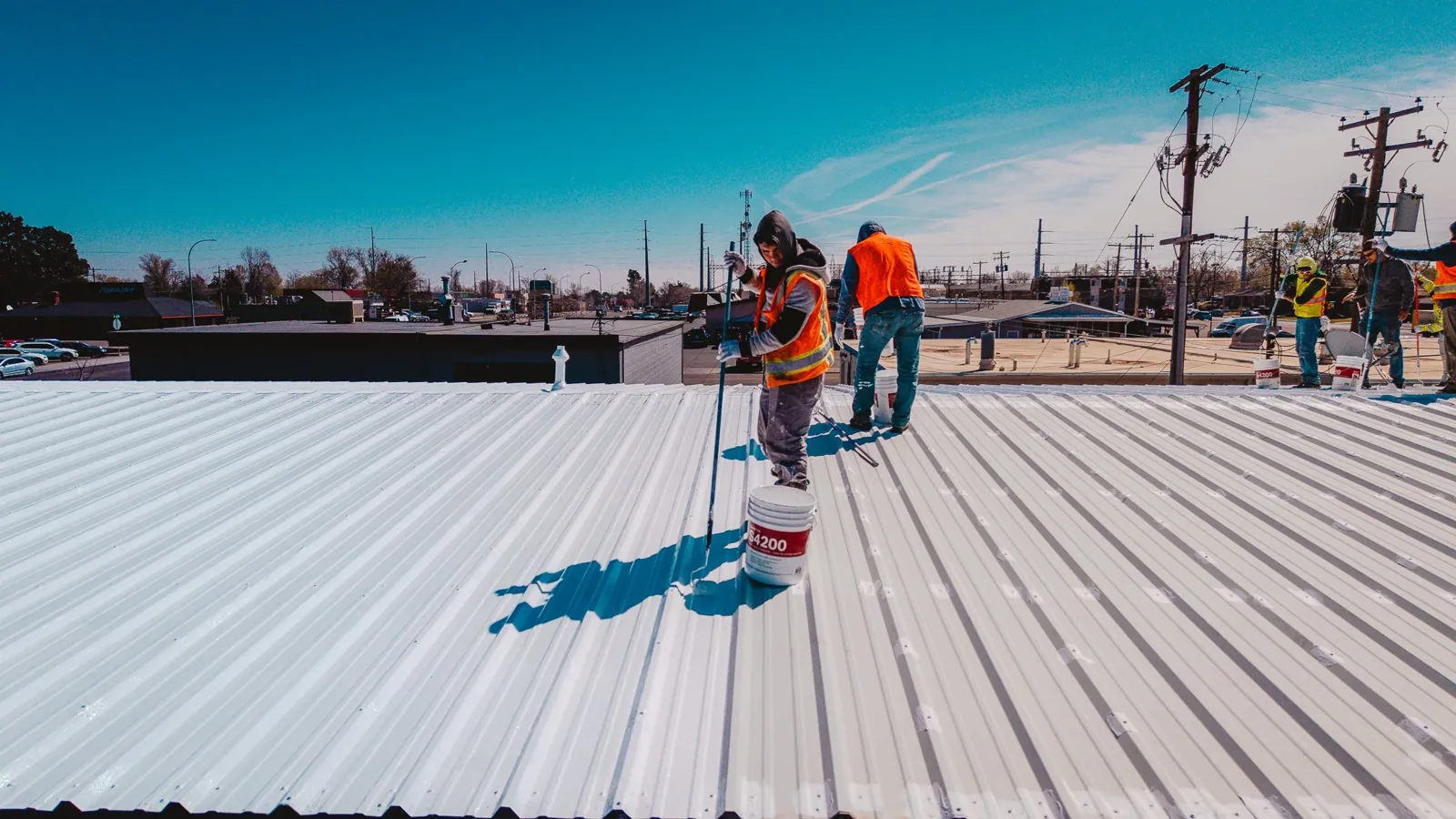
Overflow openings protect against water when the primary drainage route cannot keep up or becomes obstructed. We check whether an overflow route is present and visibly open, where it discharges, and whether water could reach a wall, entry, or sensitive area. We do not assume that an opening at the parapet is a working overflow without confirming its purpose and path. The owner receives a separate finding for the primary outlet, overflow, and the roof area feeding each one.
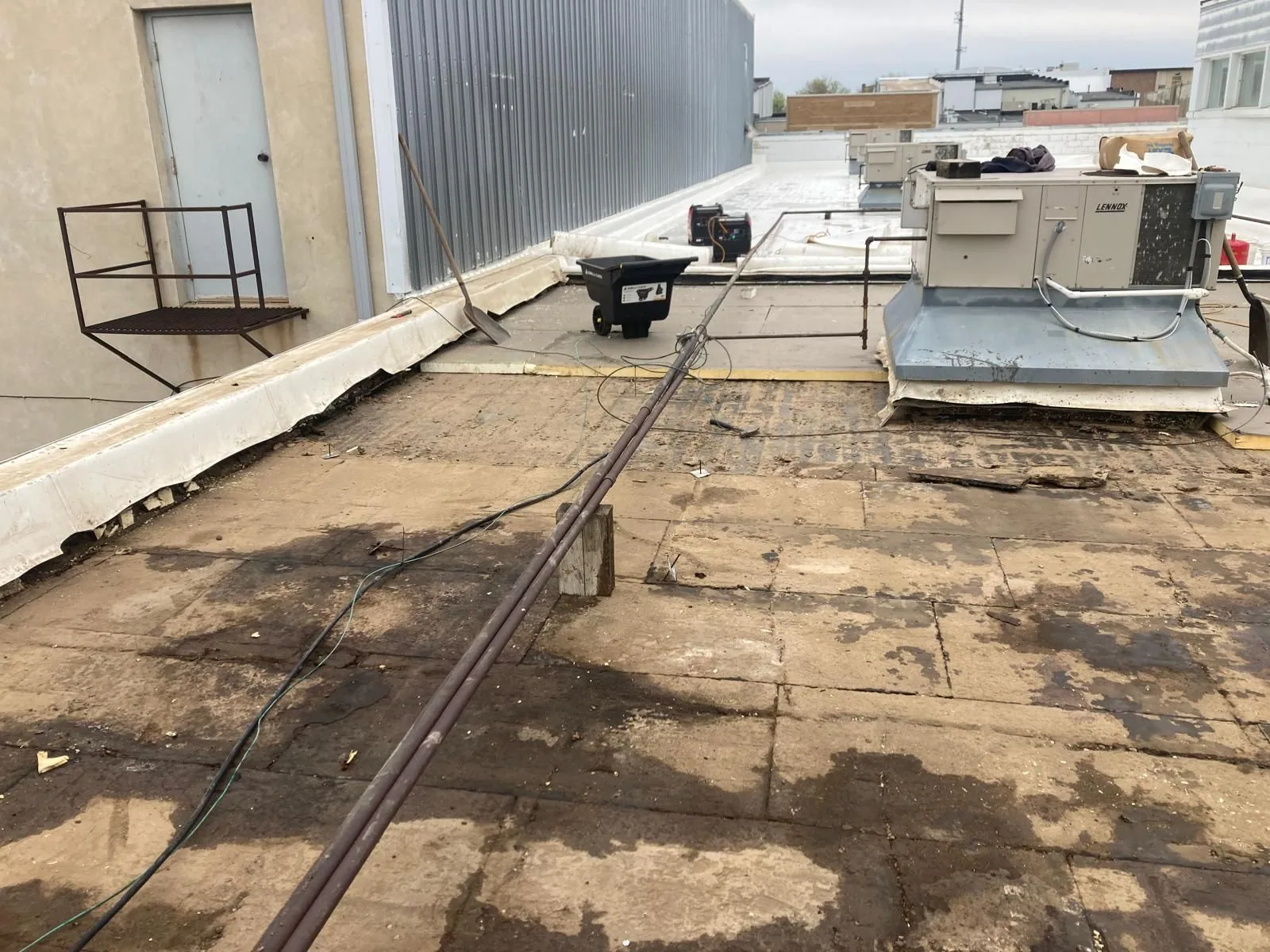
Hail and damaging wind are common severe-storm hazards in Texas, particularly in spring and fall. Wind-blown leaves, branches, and construction debris can compromise a drain path even when the outlet itself is intact. A post-storm visit should check both surface flow and damage around the drain or scupper perimeter. If hail or wind has affected adjacent membrane or edge metal, a storm repair assessment can coordinate that work with the outlet repair.
Repair sequence and water test
Before work begins, we agree on the drain or scupper ID, roof-zone boundary, interior protection, and the method for confirming flow. When water testing is appropriate, the team confirms the outlet route, interior access, and the amount of water that can be safely introduced. The test result is recorded with date, location, and observation. Any test that cannot be completed remains an open item rather than an assumed pass.
Drain work often shares a boundary with membrane, edge, or insulation repairs. We sequence removal, substrate review, component repair, membrane tie-in, and inspection before the next zone is released. Where a new roof layer changes elevation, drain height and the transition to existing leaders must be checked against the approved assembly. An insulation and cover-board scope may need to be resolved before setting the final drain level.
Drain records and crew release
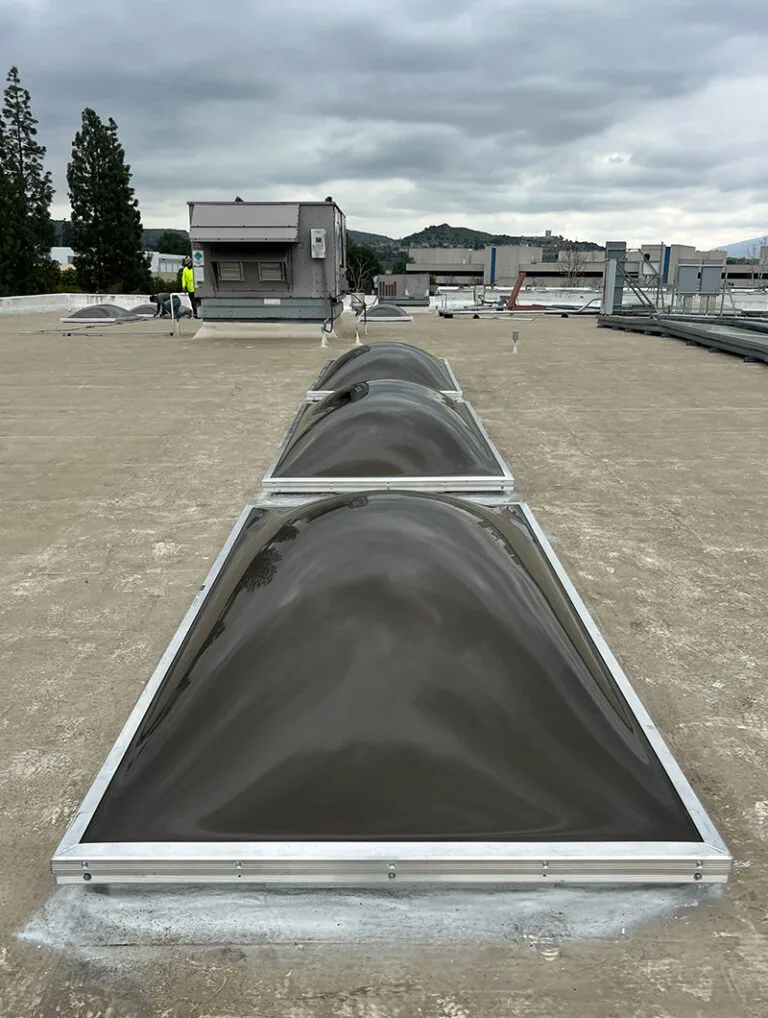
The closeout shows the roof-zone map, drain identifiers, debris removed, repairs completed, test results, and unresolved downstream questions. Photos should include the inlet, surrounding membrane, clamping or termination detail, and discharge point where accessible. The note also names any interior area opened or protected and who accepted the handoff. That record helps maintenance distinguish a repeat blockage from a repaired component or a low area that still holds water.
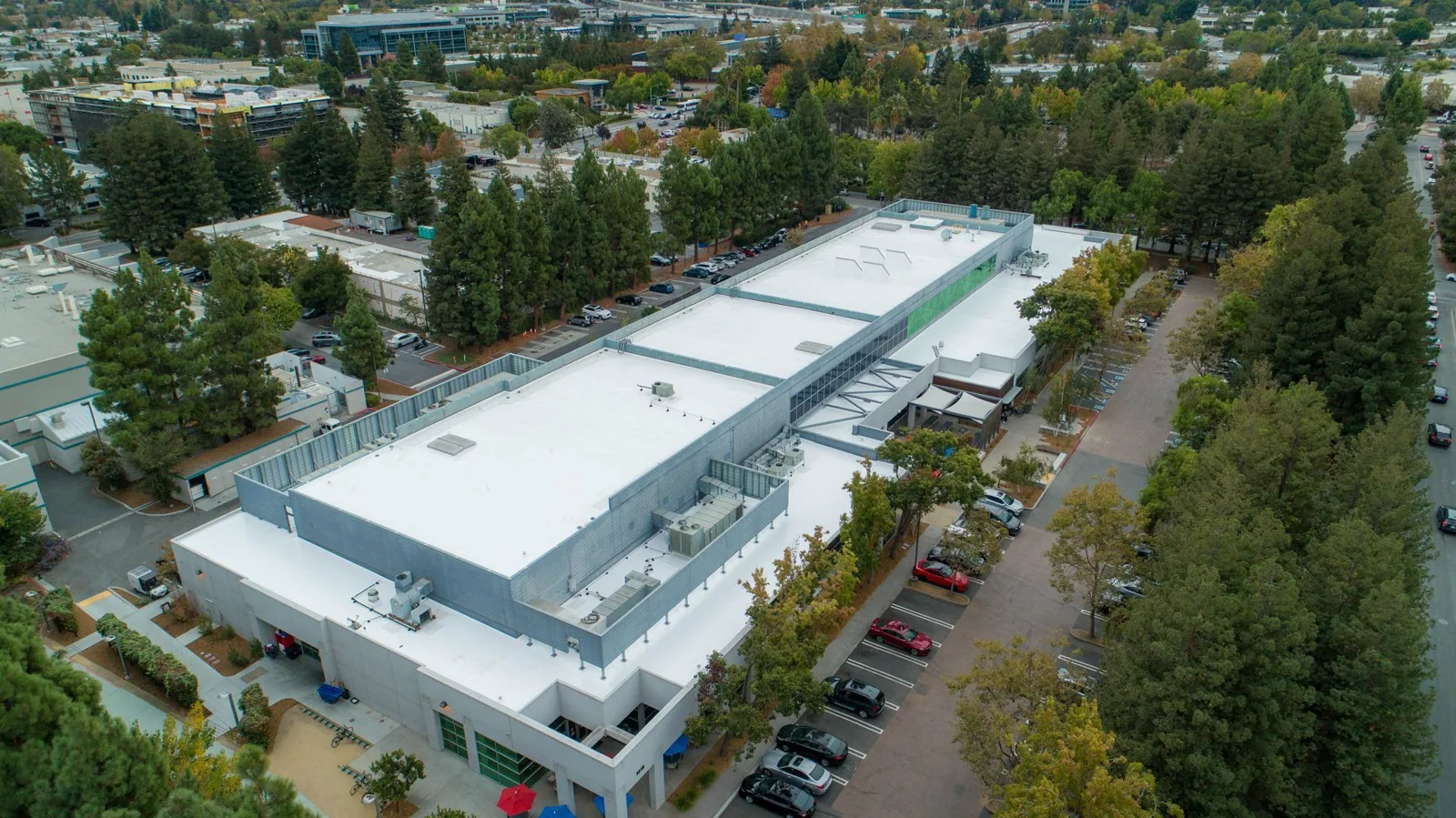
For South Broadway properties or other active commercial routes, the exterior work area may need a separate barricade or delivery window. We record the release period and the person who can authorize further testing. A maintenance visit can then set an inspection interval based on the actual debris and access observed, with a return visit after severe weather when the owner requests it. A Tyler roof-drain plan links the surface finding to the outlet and the follow-up decision.
Commercial Roofing Questions
How can we tell if a drain is clogged or the roof is holding water?
We check the inlet and visible outlet route, then map any water that remains on the roof after rain. A blocked strainer and a depression with an open outlet are different findings. The report notes the observation time and any follow-up test needed to determine the correction.
Should overflow scuppers be inspected with the primary drains?
Yes. We record each route separately, including its visible opening, discharge point, and condition at the wall. The inspection identifies whether the path is clear and whether it needs cleaning, a component repair, or further review of the drainage layout.
Can drain repairs be completed during hot weather?
The schedule follows actual substrate temperature and the selected products’ handling and cure requirements. Tyler’s July climate normal is only background context. We measure the roof at the work zone and release the connection repair when its preparation and installation conditions are suitable.
What if a repaired drain still has ponding nearby?
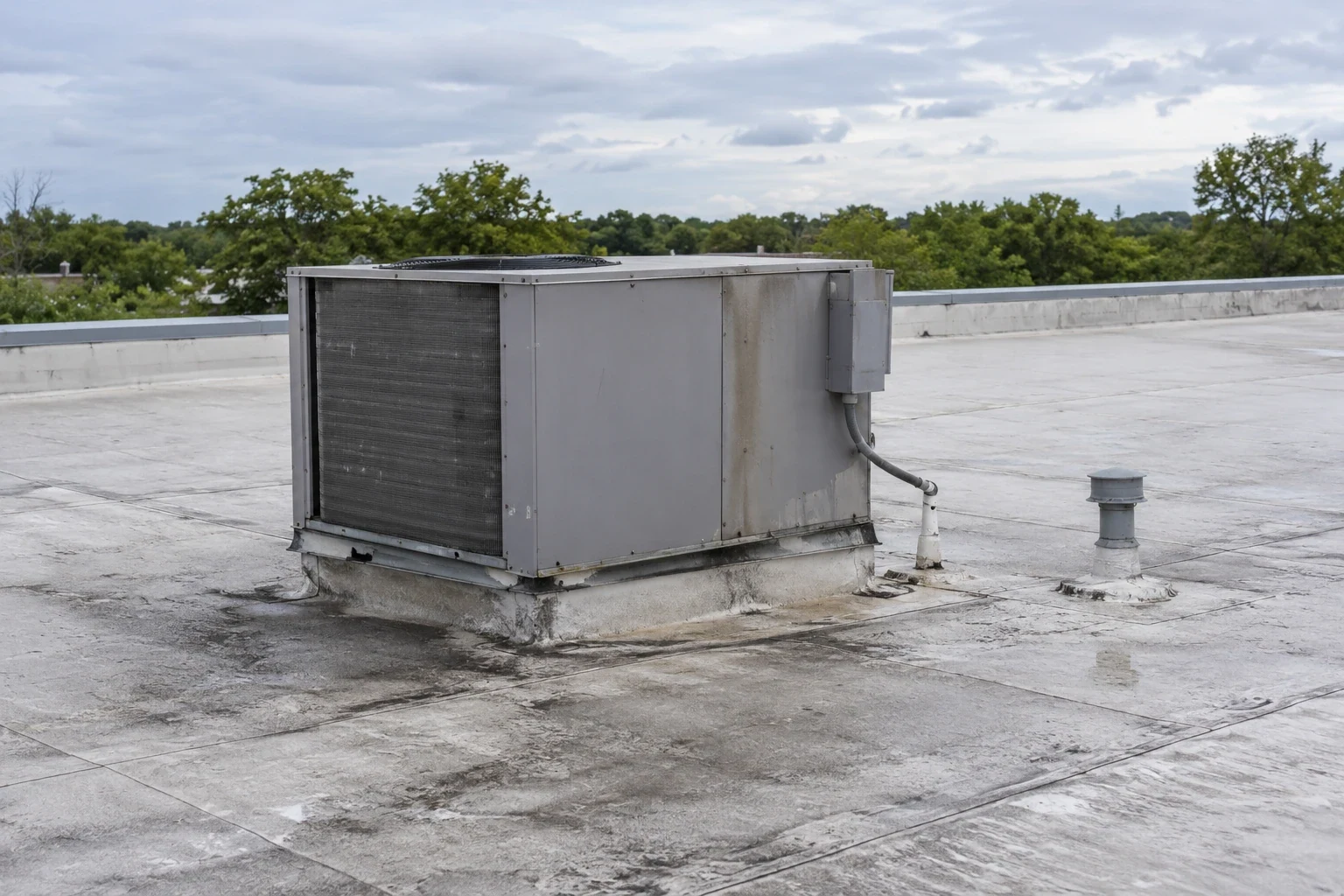
The repair may restore the outlet while leaving a separate low area or slope problem. We document the flow test and remaining water, then price a broader drainage evaluation if needed. The owner can review those findings before authorizing additional work.
What should the drain work record show?
It should identify each outlet, cleaning or component repair, membrane tie-in, water test, access limitation, and remaining question. Photos and a roof-zone sketch connect the work to the field location. We also note who accepted the closeout and when the next inspection is planned.

Related Pages
Commercial Roof Inspection
Tyler, TX
Ponding Water Roof Repair
Tyler, TX
Storm Damage Roof Repair
Tyler, TX

Map the drain path
Provide the roof plan, drain locations, leak notes, interior access requirements, and work window. We will return an outlet-by-outlet scope with flow checks, repair details, and separate closeout points.