
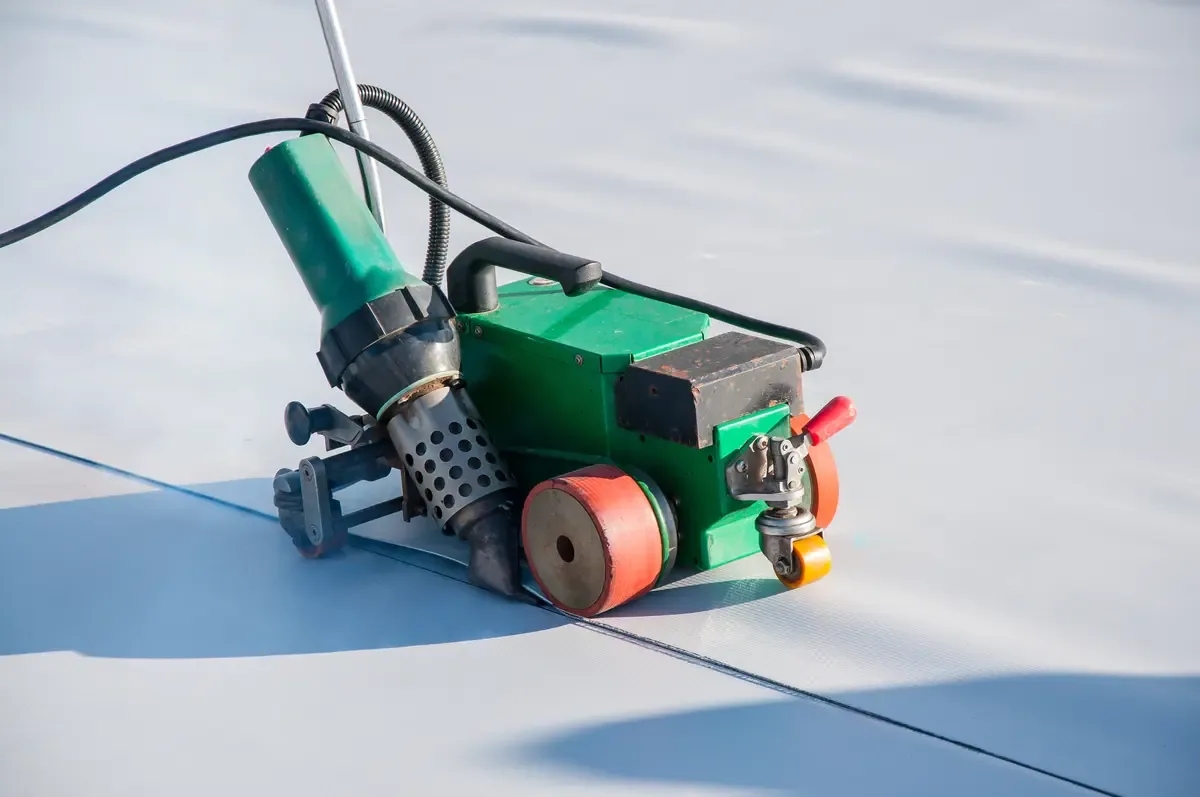
A Tyler July heat window can shorten the time for hot-air welding before the crew releases the next roof zone. South Broadway Commercial Corridor and Tyler Interstate Commerce Park have different routes and operating settings, so access follows the property plan. The normal July high averages 94.5°F, but the roof surface still needs its own reading. Where a drain receives kitchen or process discharge, we map the route from equipment to outlet and check compatibility before approving a detail. The work package ties that exposure finding to seam preparation, drainage review, and the general contractor’s access release.
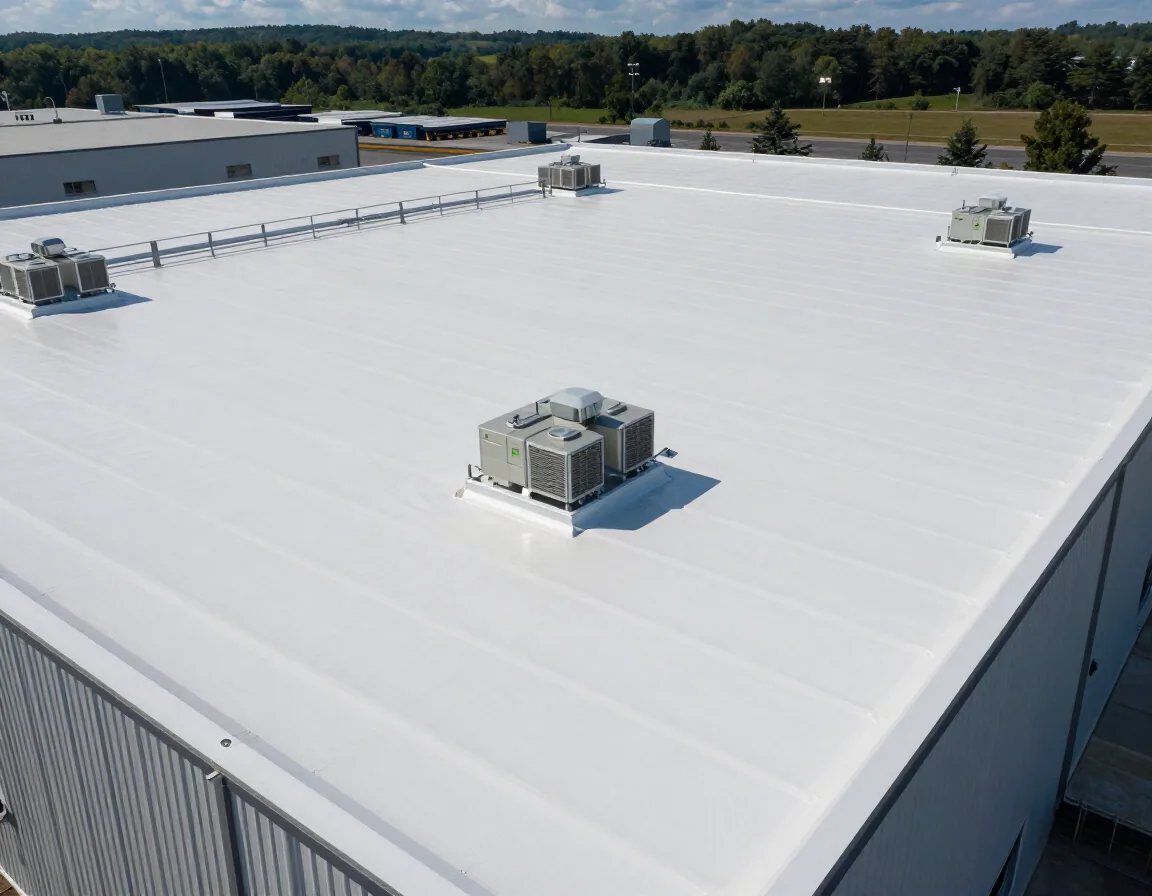
PVC is a thermoplastic single-ply membrane with heat-welded seams. The system may suit roofs where grease, oils, or other chemicals require careful material review, but the product data and actual exposure determine compatibility. We identify the source, likely path, and collection point for any discharge, then confirm the proposed membrane, flashing, and drain detail. Where the current assembly is sound, localized repair can be compared with a larger replacement package.
Chemical and service exposure
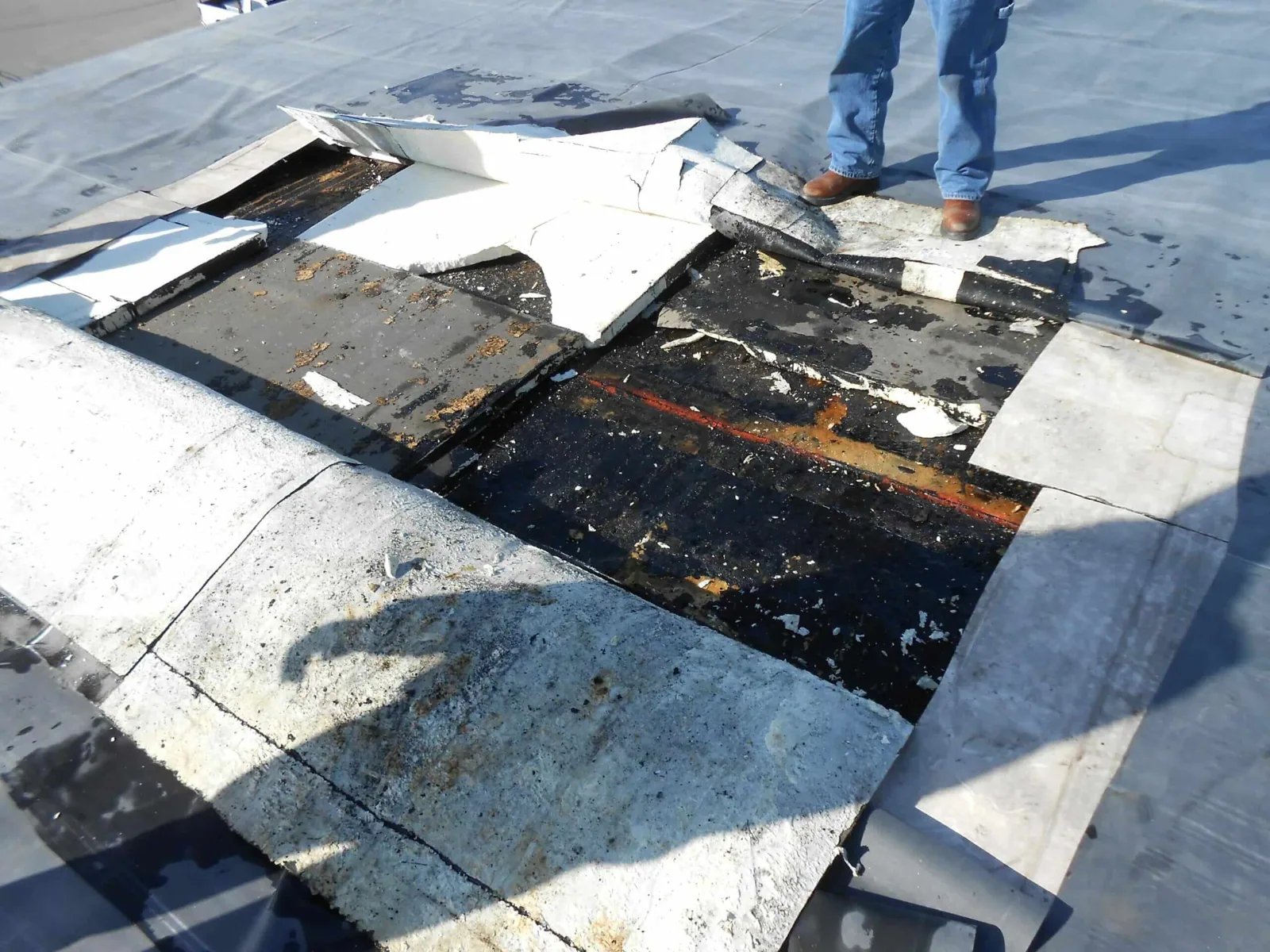
Commercial kitchens, process equipment, and exhaust systems can leave residues that affect a membrane or its seams. We trace the discharge path from the equipment curb to the low point, examine staining and surface change, and compare the observed material with the proposed PVC system’s published compatibility guidance. A roof name or building category does not establish the chemical present. When the source is unclear, the work package keeps that as an open test or owner question rather than approving a detail on assumption.
During survey, we also check service routes, equipment clearances, exhaust outlets, and drain access. Residue should be collected and removed using methods appropriate to the roof material and site requirements. If the discharge has softened or discolored an existing sheet, we document the affected zone separately from normal weathering. A drain and scupper review can confirm whether contaminated water is moving through the intended path or collecting at a damaged outlet.
Seam preparation and welding
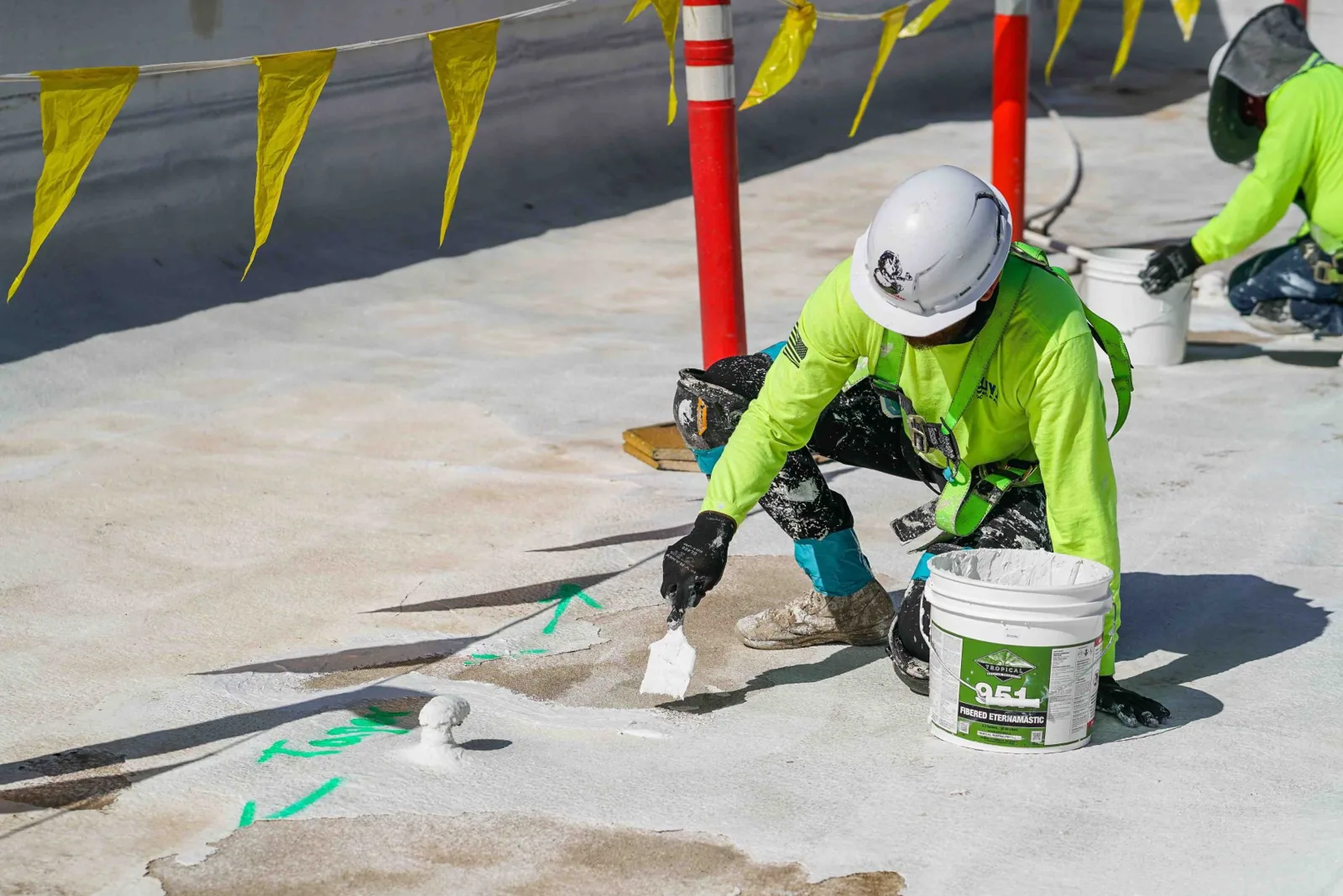
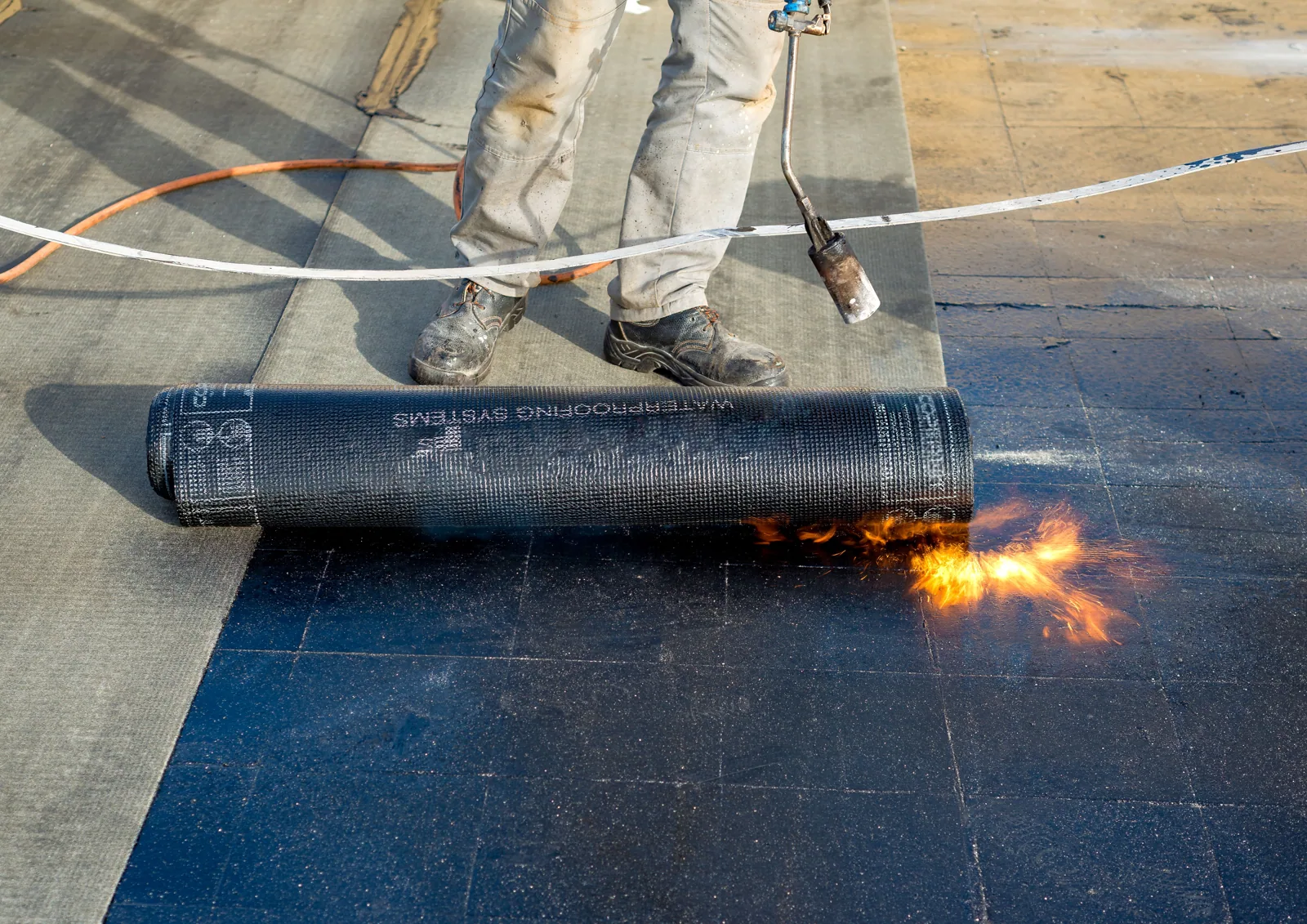
PVC seams depend on clean, dry surfaces and controlled hot-air welding. Dust, moisture, residue, changing tool speed, and a poor repair edge can interrupt the bond. The crew cleans and prepares the sheet as required, sets the welder for the actual material and conditions, then makes and checks a test weld where the plan calls for it. After cooling, a probe check can reveal an open edge before the next sheet hides the joint. We record the location, result, and correction.
Tyler’s July climate normal indicates a sustained summer heat period, but the station value does not describe a roof surface. We measure the substrate and follow system instructions for membrane, primer, and flashing products. Heat may change handling and welding speed, while a sudden shower or dusty wind can require a pause and new preparation. The daily work plan keeps the access release tied to the condition of the next area, not simply to the number of rolls staged on the roof.
Deck, insulation, and attachment
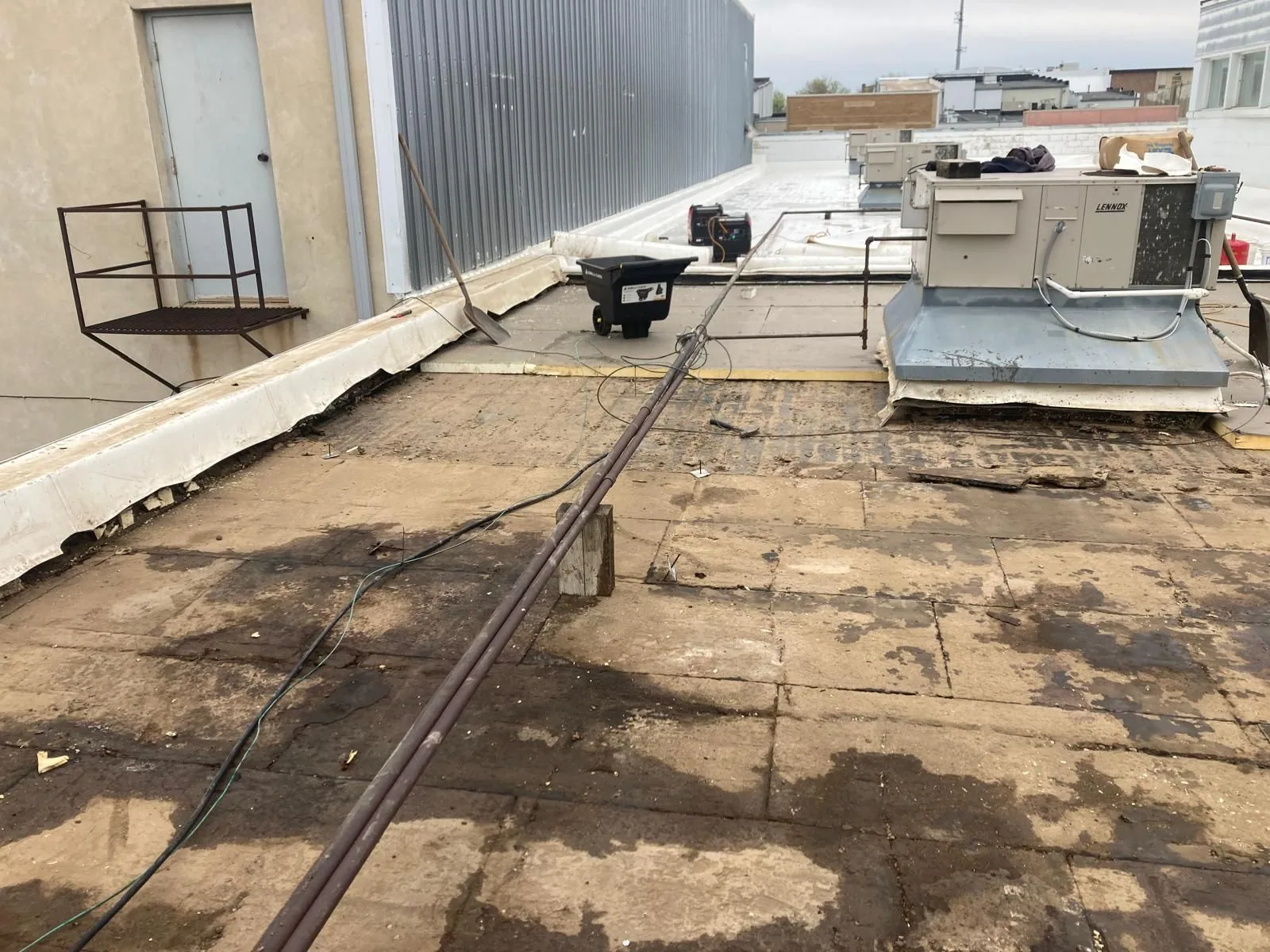
The membrane is only one part of the assembly. We inspect deck condition, existing layers, insulation, slope, perimeter attachment, and transitions to metal or masonry before comparing adhered and mechanically attached options. A weak deck, wet insulation, or irregular edge can change fastening, removal, and sequencing. Selective cuts or other agreed tests answer whether concealed material can stay. The findings are mapped by zone so that a sound area is not treated as proof that the full roof has the same condition.
In Tyler, plans from January 1, 2024 follow the 2021 IBC and IECC. On a PVC project, we carry the selected attachment and insulation details into design review, then confirm that chemical exposure, deck repairs, and edge conditions are resolved before material orders. The project designer and reviewer determine requirements for the individual building. A TPO assembly or KEE membrane may be compared where exposure and system requirements support it.
Flashing, drains, and ponding
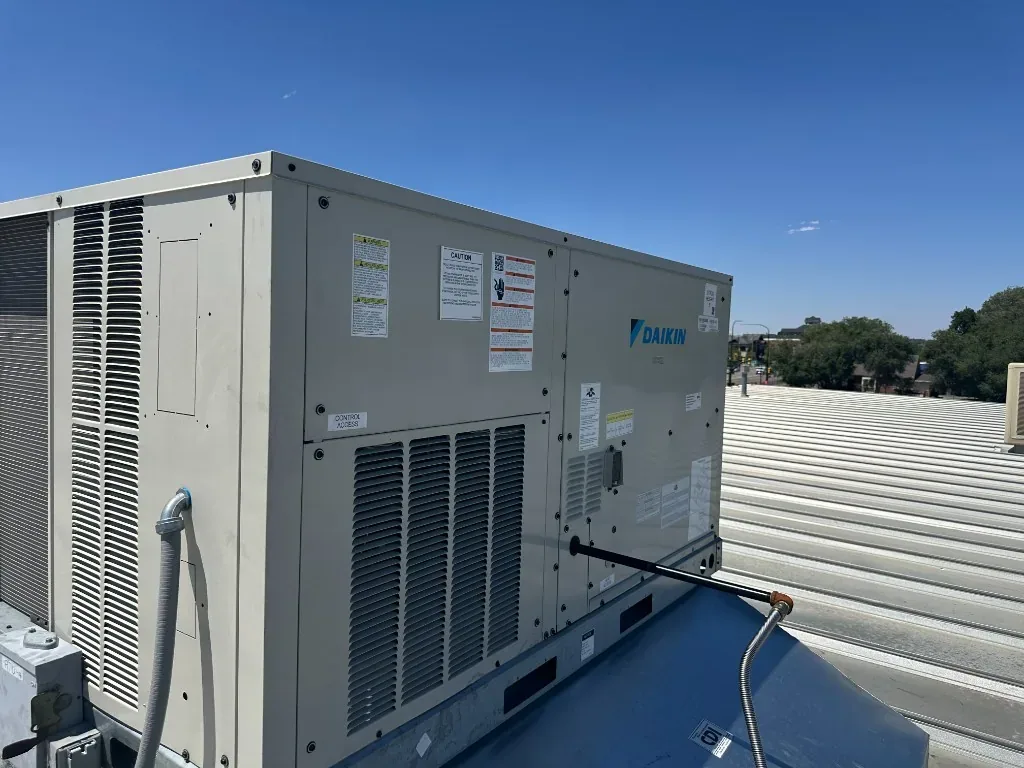
Changes in elevation, curbs, penetrations, expansion joints, and parapets need system-specific flashing. We verify that field membrane, flashing sheet, sealant, and accessories are compatible, then define how each transition will be terminated. A drain bowl needs a secure connection and an open strainer; a coating of residue or a compressed insert can interfere with flow. The inspection record names the detail and crew handoff, with a test point where a tie-in remains concealed.
Heavy spring and autumn storms in East Texas can bring hail and damaging wind, so the sequence includes temporary drainage and exposed-section closeout. We identify loose material, open edges, debris, and the route to each outlet before the crew leaves. If the work pauses, the plan marks how protection is secured and who checks the area before access resumes. For an existing membrane with visible movement or punctures, a seam-failure assessment can separate a local weld repair from conditions that extend beneath the sheet.
Inspection records and next work
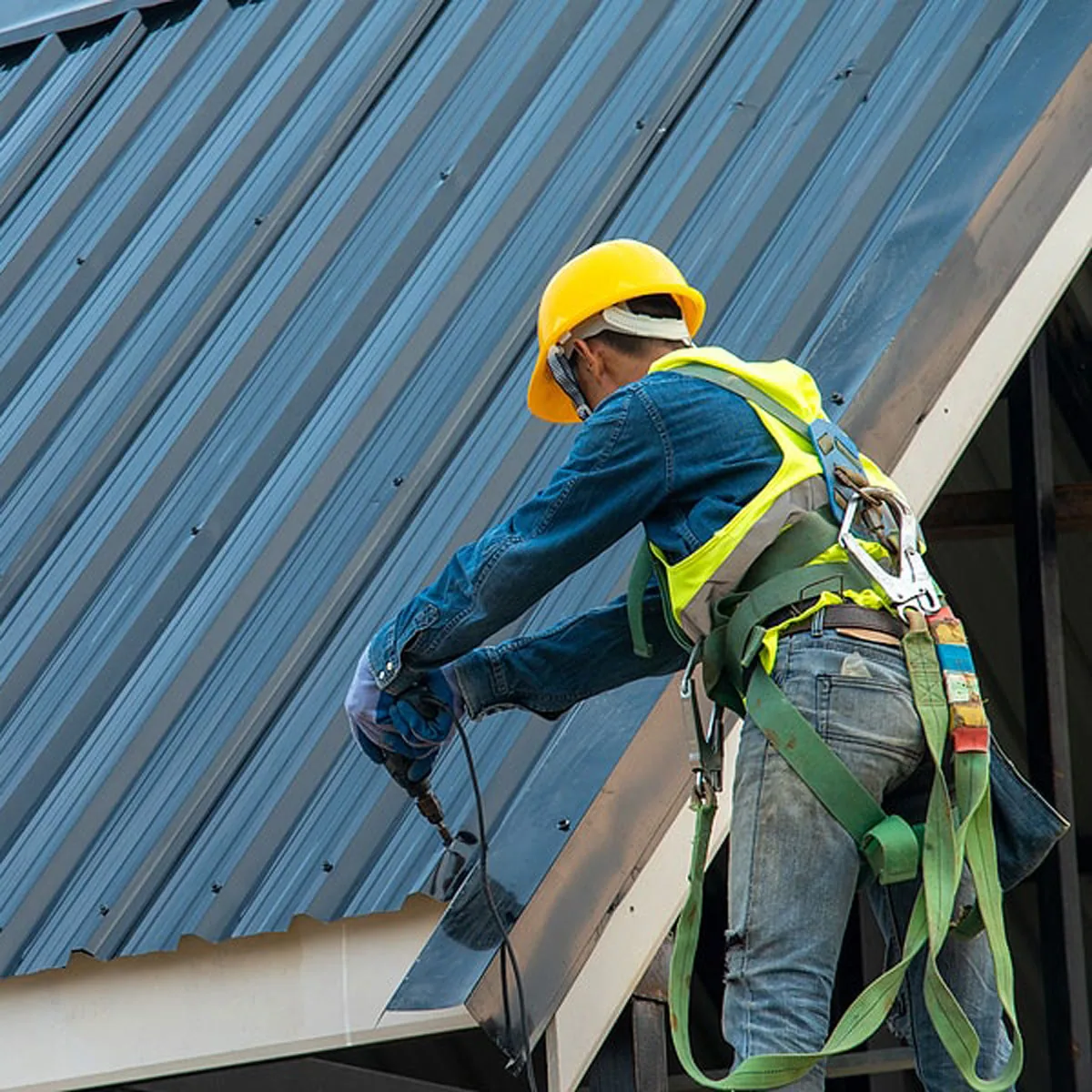
After installation or repair, the closeout map should show completed seams, flashing, drain work, tested transitions, and any excluded area. Photographs need roof-zone references so a future leak call can be compared with the same location. We list the PVC product and accessories included in the approved submittal, the repair materials used, and any test result still awaiting a decision. The owner or facility contact receives the access and maintenance items that affect later work.
Timing and cost vary with chemical exposure, substrate preparation, insulation replacement, attachment, access, number of details, and weather holds. We separate these drivers instead of burying uncertain deck work in one allowance. Downtown Tyler’s historic district spans about 19 blocks and 241 parcels across 68.5 acres. For a roof project there, we confirm the property’s actual approval and work-hour requirements before planning overhead work; the district’s scale does not prescribe a membrane assembly. An area roof inspection and written condition report can retain that record for phased planning.
Commercial Roofing Questions
When does PVC make sense near commercial exhaust?
PVC can be considered where oils or other chemicals may reach the roof, but the material and concentration need to match the selected product’s compatibility data. We trace the discharge route, inspect the membrane and drains, and record any open question about the source. A product choice follows that review.
How do you know a PVC seam is ready for the next roof zone?
We prepare the joint, establish the welder settings, and make a test weld when required by the project conditions. After it cools, the seam is checked using the specified method. The foreman records the point and corrects a failed area before releasing the next section.
Can a PVC membrane be installed during Tyler’s hot months?
The local July normal helps plan the season, while the substrate reading and product instructions control a particular operation. We check surface temperature and other stated limits before welding or using accessories. A heat window can shift the task order without changing the approved assembly.
What if the roof has an older membrane beneath it?
We identify the existing layers and assess moisture, attachment, deck condition, and compatibility before pricing a recover. Selective testing may be needed where concealed conditions would change the scope. If the assembly is unstable or wet, removal or correction may be more appropriate than adding a layer.
Which details should the PVC closeout identify?
The handoff should map seams, perimeter edges, drains, penetrations, repair boundaries, photographs, and the approved material record. We list open tests and any area excluded from the work, then assign the next release or inspection step. That makes later service specific to the installed assembly.
Related Pages
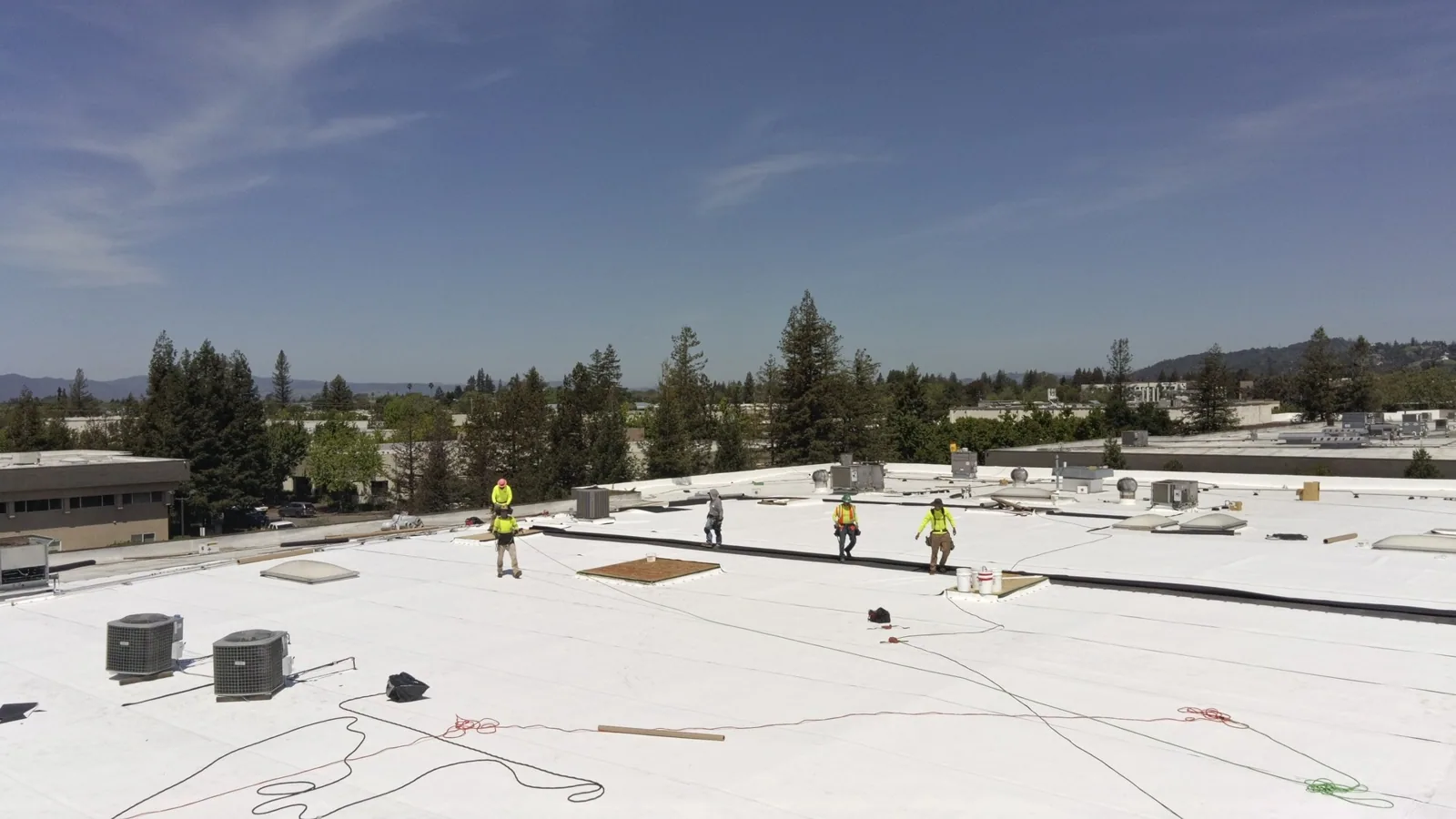
Commercial Roof Repair
Tyler, TX
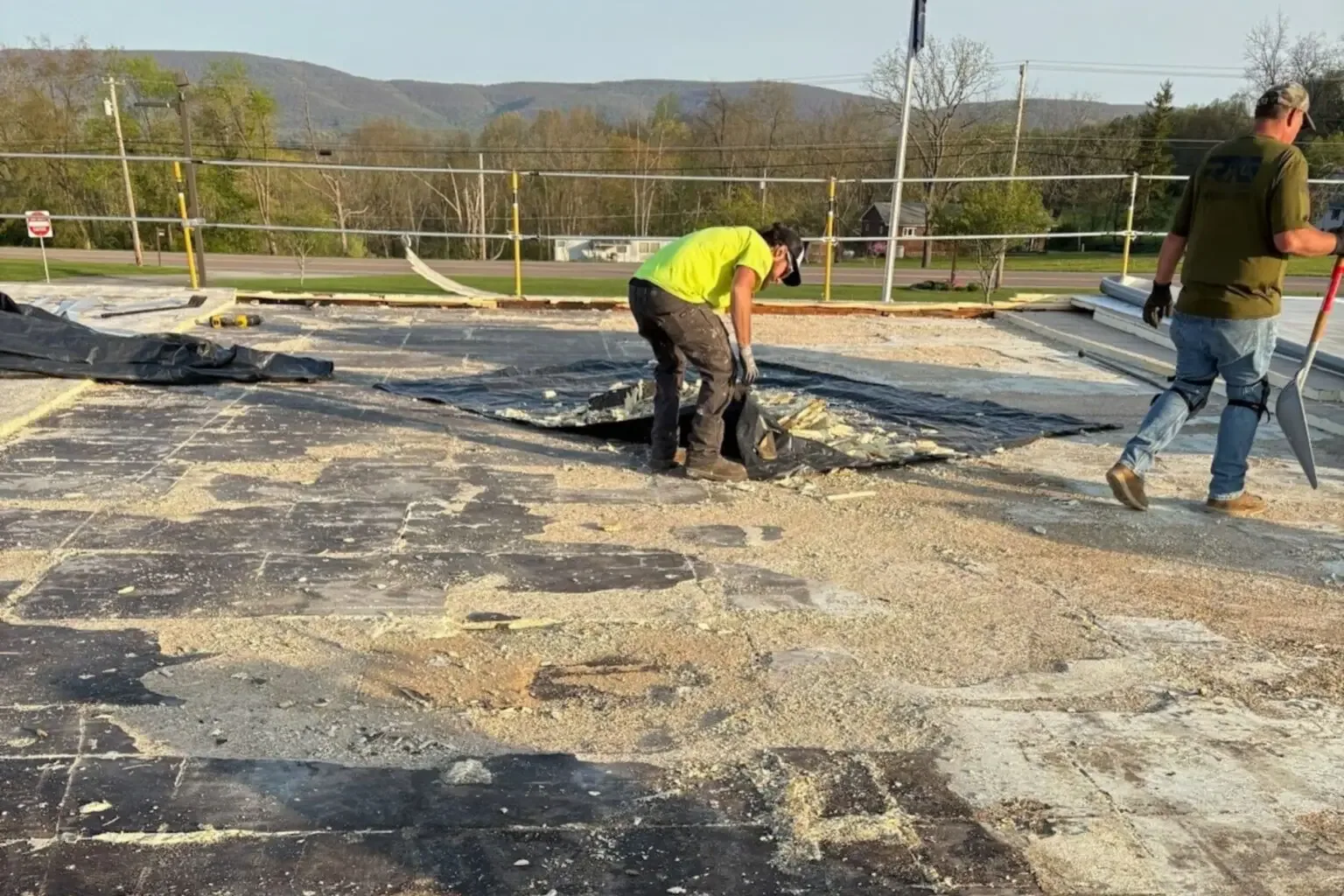
Commercial Roof Replacement
Tyler, TX
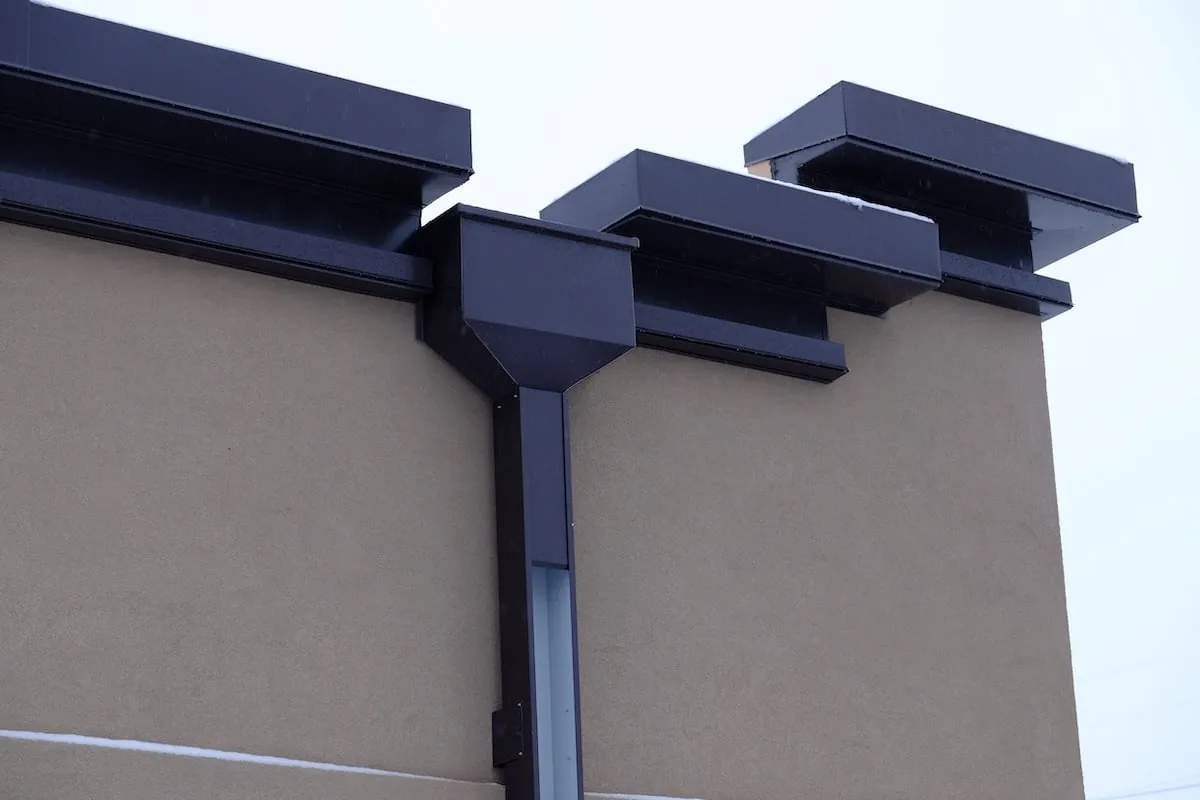
Commercial Roof Drains and Scuppers
Tyler, TX
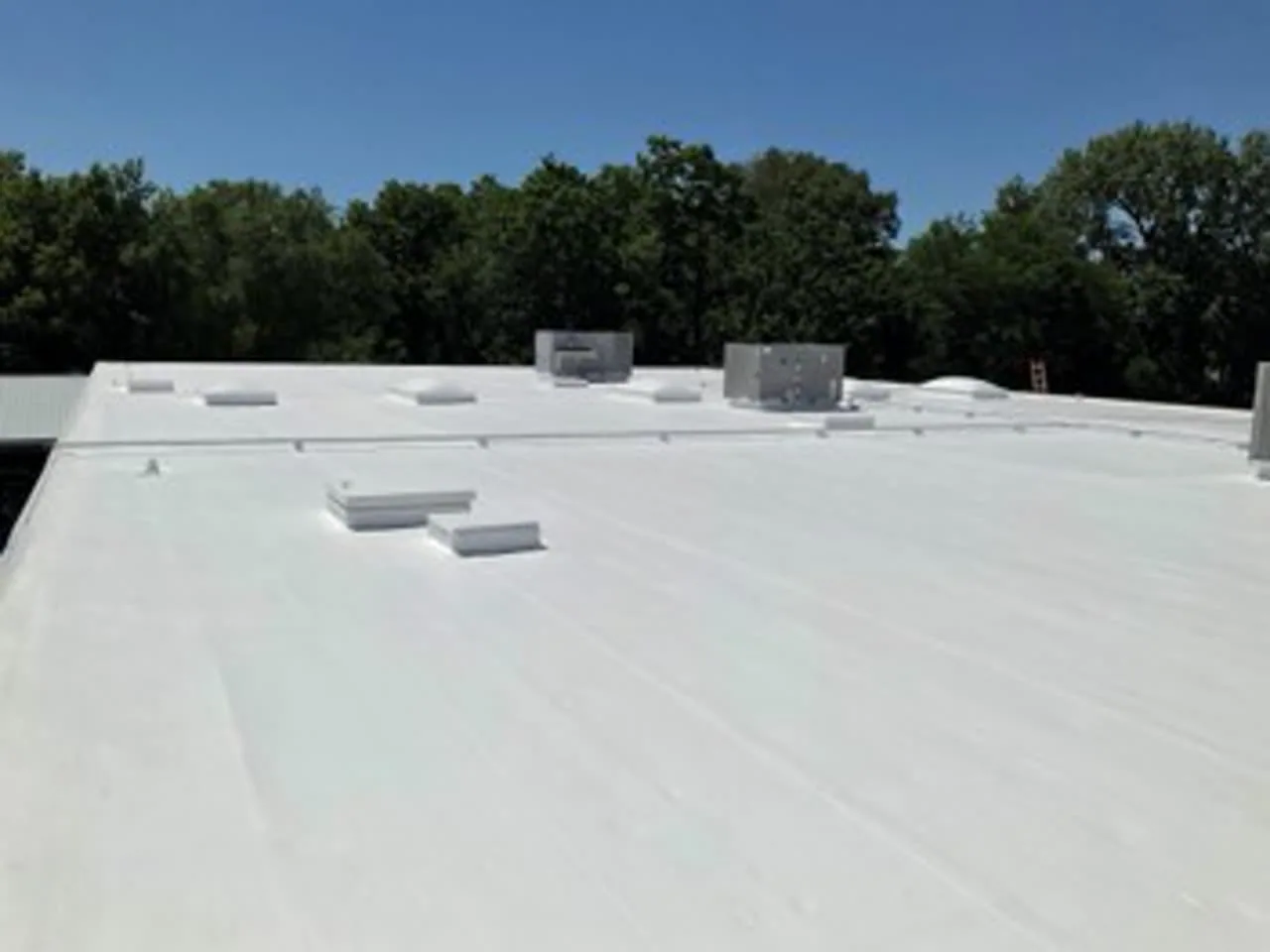
TPO Roofing
Tyler, TX
Set the PVC review and release
Provide the roof plan, assembly records, chemical or exhaust information, access window, and decision date. We will return a PVC work package with compatibility checks, test points, drain details, and roof-zone holds for the general contractor.