
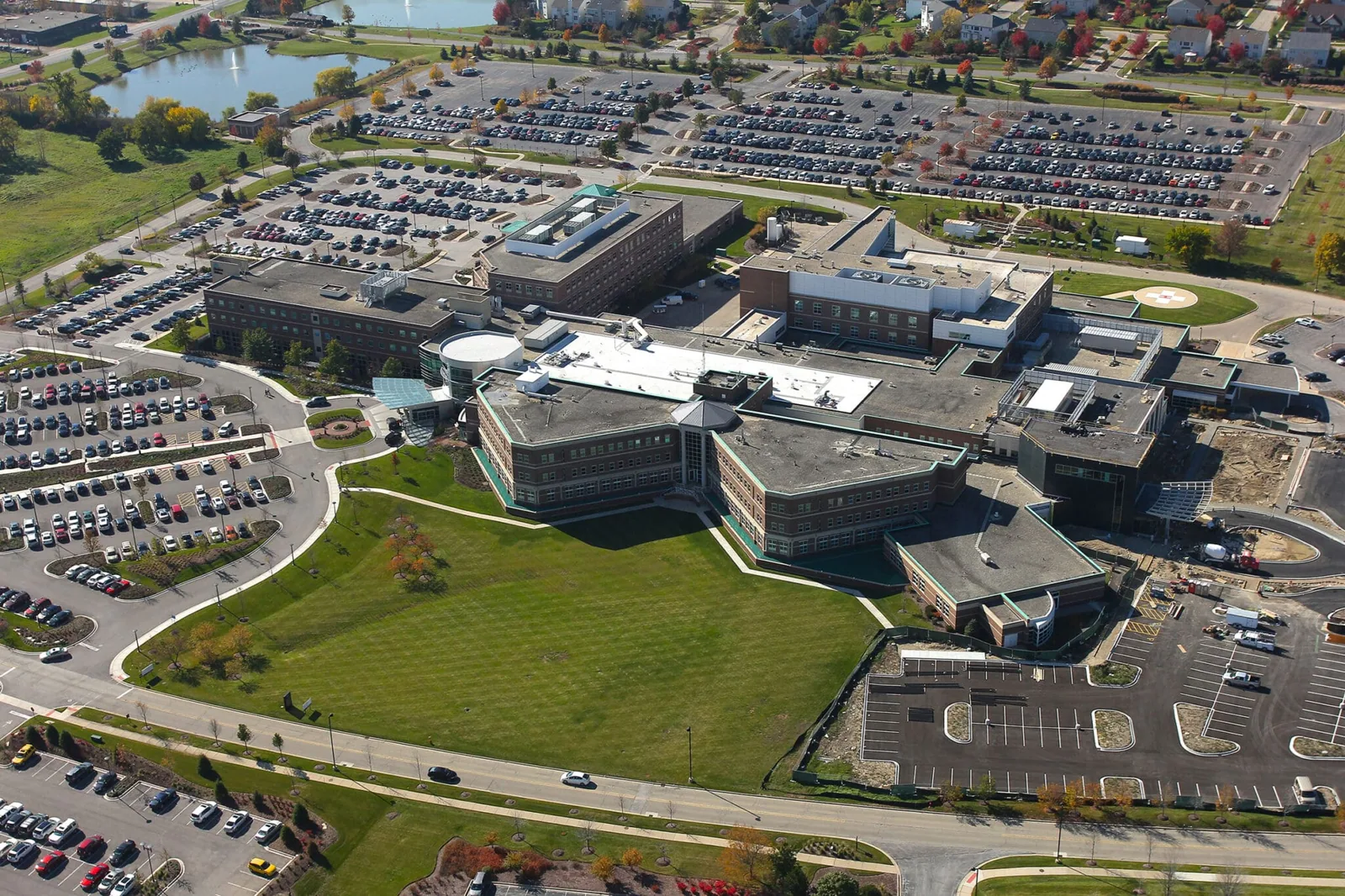
A July roof surface in Tyler can put a planned adhesive step on hold before work begins. The normal July high is 94.5°F, so the crew measures the substrate and checks product instructions at the selected zone. Hospital work starts with current roof drawings, leak reports, equipment areas, restricted routes, and the facilities contact who can release each boundary. Tyler Midtown Area supports healthcare and education uses, and South Broadway Commercial Corridor is a major local route; hospital access controls still come from the facility’s operating plan.
A hospital roof has membrane seams, parapets, drains, equipment curbs, exhausts, skylights, and service paths above occupied care spaces. We inspect a reported condition by zone and coordinate roof access with clinical operations, engineering, and any affected trade. No shutdown or room closure is assumed. A roof inspection records the current assembly and test needs. A medical-office roof and standard office roof need distinct access plans.

Clinical routes and work boundaries
Before mobilization, the hospital contact identifies patient entrances, ambulance routes, service deliveries, protected courtyards, and corridors that must remain available. We place these requirements on the site plan with material staging, lift setup, and the roof zones above. If overhead work affects an entrance or care area, the temporary boundary and release authority are named before the crew opens the assembly.
Work timing follows the selected repair, clinical schedule, access window, and weather. We coordinate noise, odors, dust, and ceiling access with facilities staff. A changed condition gets a location, photographs, and an approval request before the scope expands. Each area returns to use after the agreed check and release.
Mechanical systems and roof penetrations
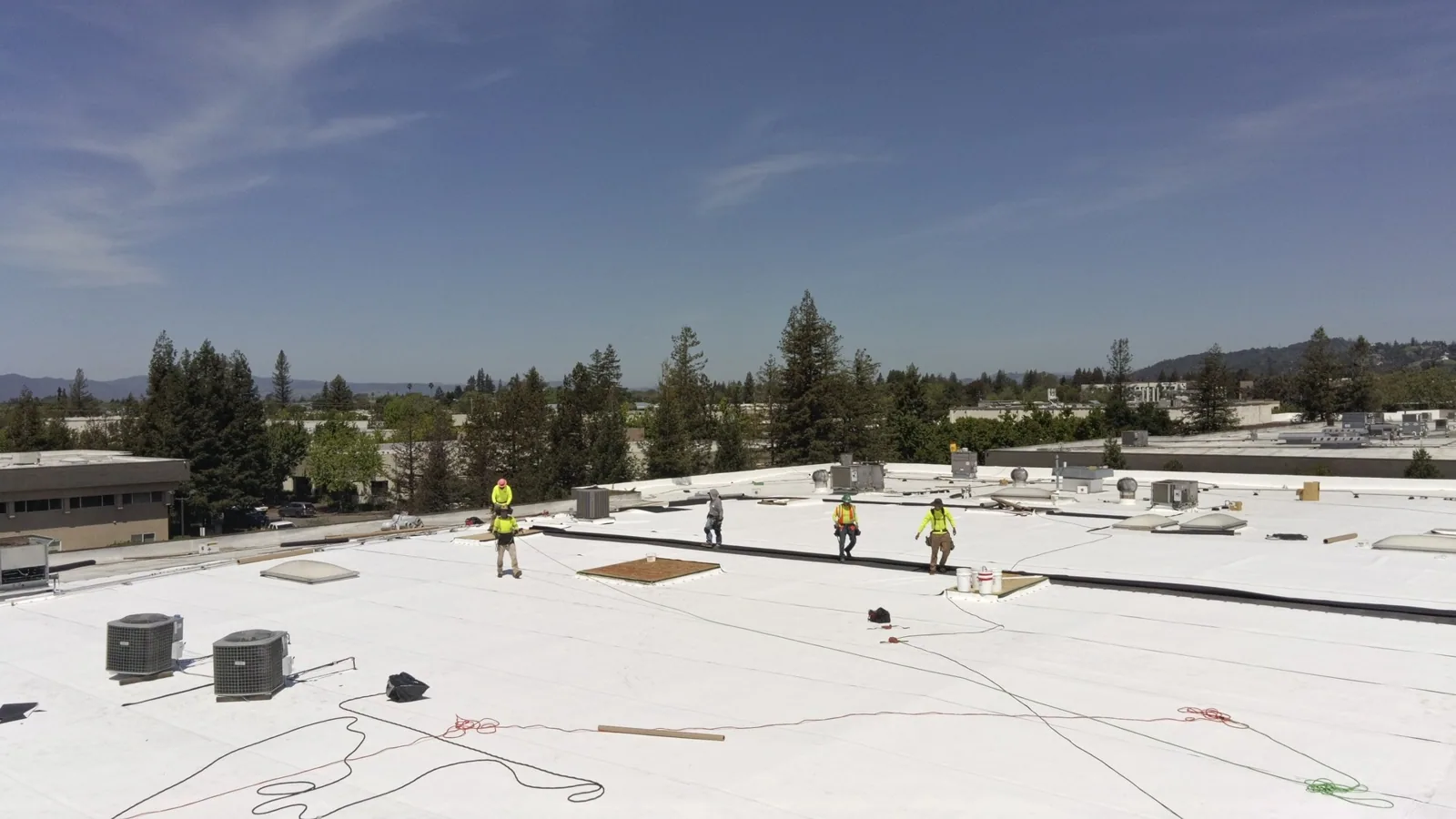
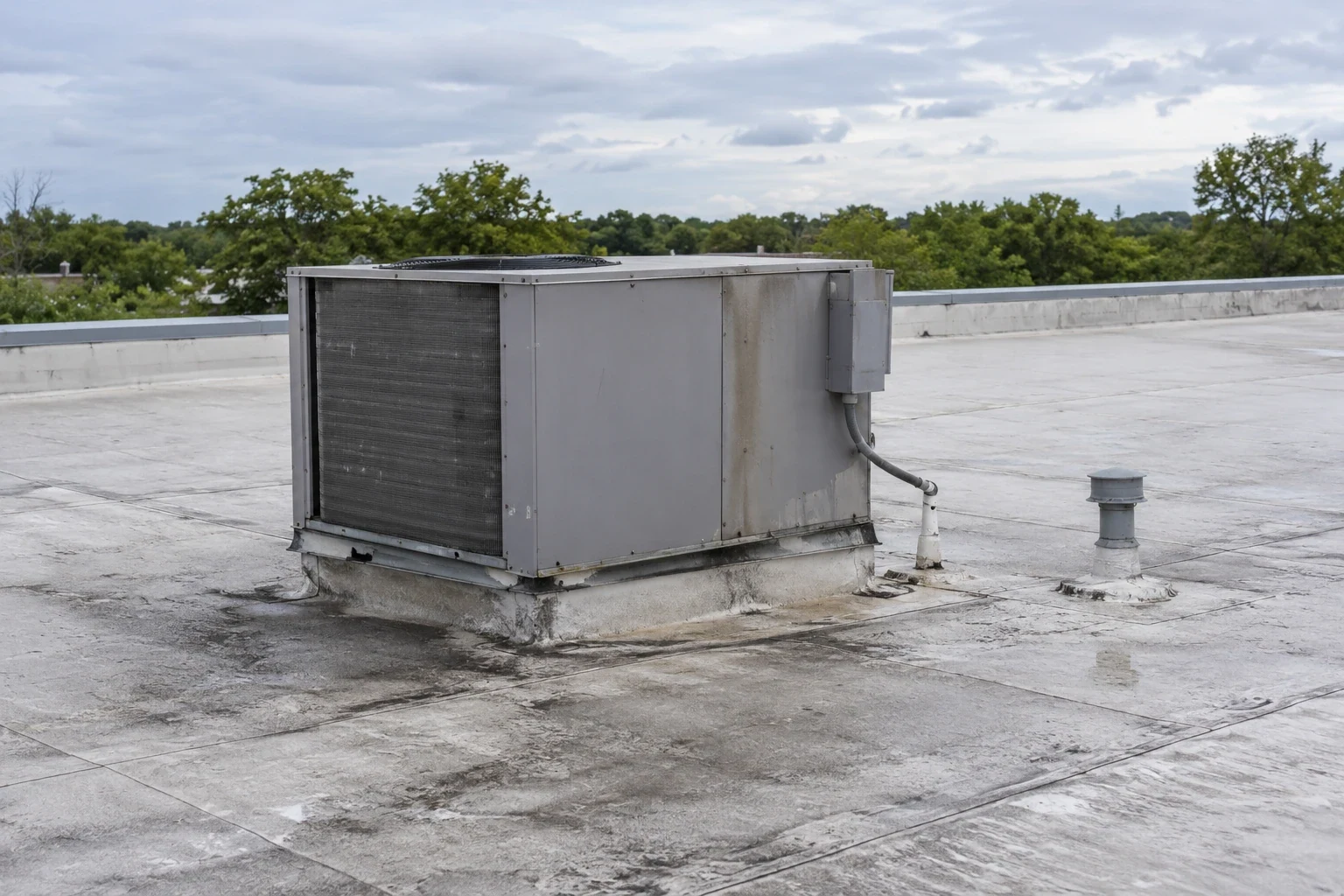
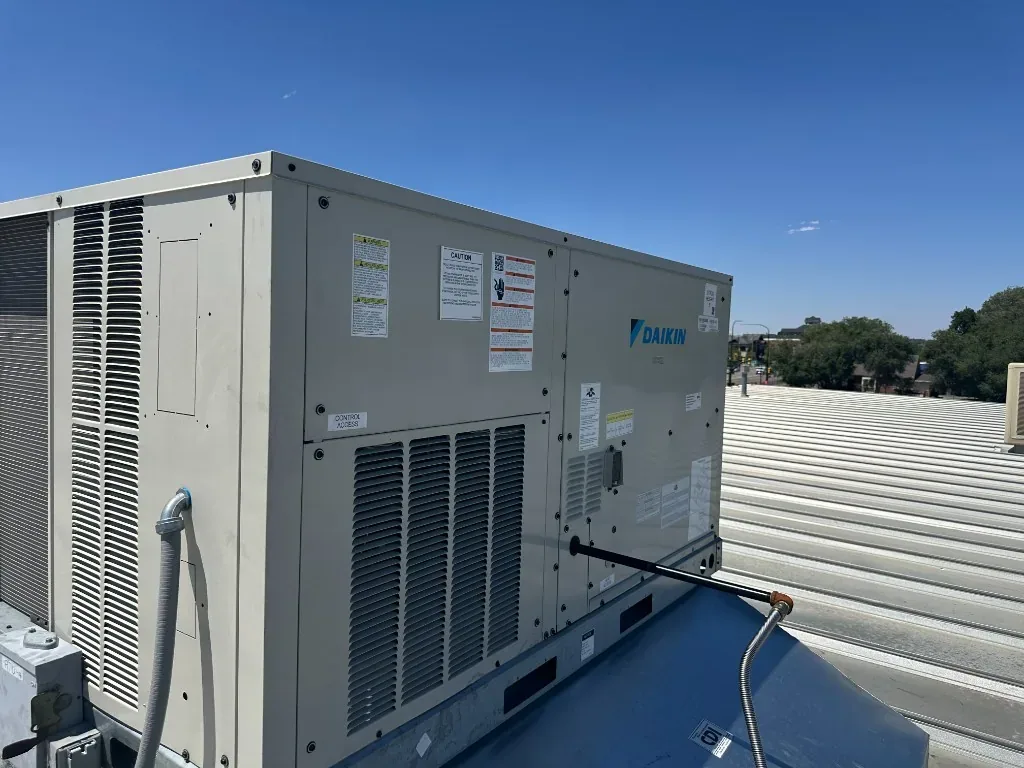
Air handlers, exhaust fans, medical-gas equipment, electrical conduits, and rooftop supports each create a transition through or above the roof. We inspect the curb, flashing, nearby membrane, and service path, then coordinate any technician access. Equipment operations and clearances come from the facility team. The roofing scope records whether the system remains active, which trade has the next handoff, and what detail must pass inspection before the unit area is released.
Unit service can disturb flashing or add a penetration. Roofing and mechanical scopes share a map so each open curb has an assigned closeout. A curb and support package can identify membrane work separately from equipment changes. When a technician needs access after the roof crew finishes, the work plan states the route and any protective covering required to preserve the completed detail.

Storm findings and immediate protection
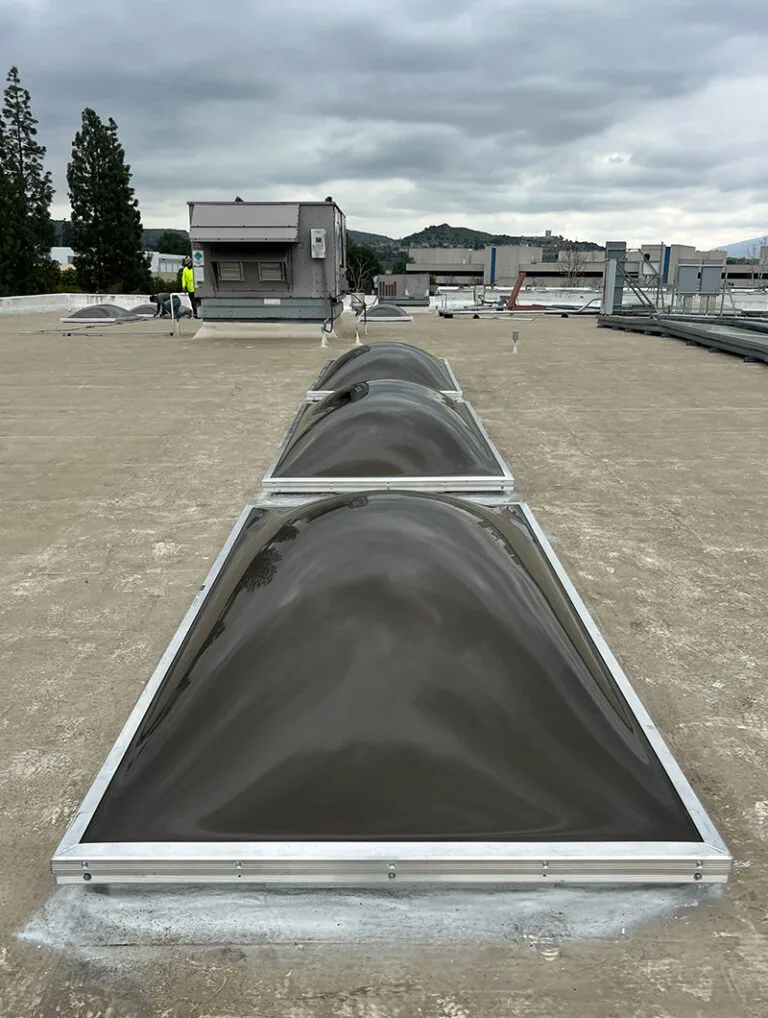
Spring and autumn thunderstorms around Tyler can bring large hail and damaging wind to a hospital campus roof. On a hospital roof after a reported storm, we check whether exposed edges shifted, equipment flashings loosened, skylights were struck, or drains became obstructed, then log each finding by zone. The report marks each finding and photographs its position so the hospital can prioritize affected zones. Tornadoes have occurred in Tyler, including June 2021; current findings define any repair scope.
When urgent water entry is reported, the crew first checks safe access, interior exposure, and the location of the opening. The facilities contact identifies the care spaces below and any access restriction before temporary protection begins. A temporary cover, clear drain, and interior safeguard each receive an owner and closeout note. The wind damage review can document a defined event-related condition, while a leak repair scope addresses the opening and follow-up verification. Weather delays require another exposed-section check before work resumes.
Drain paths and concealed moisture
Water above a patient room may enter far from the interior mark. We compare the report with nearby seams, drains, parapets, penetrations, and equipment transitions. A blocked outlet differs from a low area that remains wet after the drain is clear. The inspection records the drain path, overflow route, and any ceiling or wall observation that affects temporary protection.
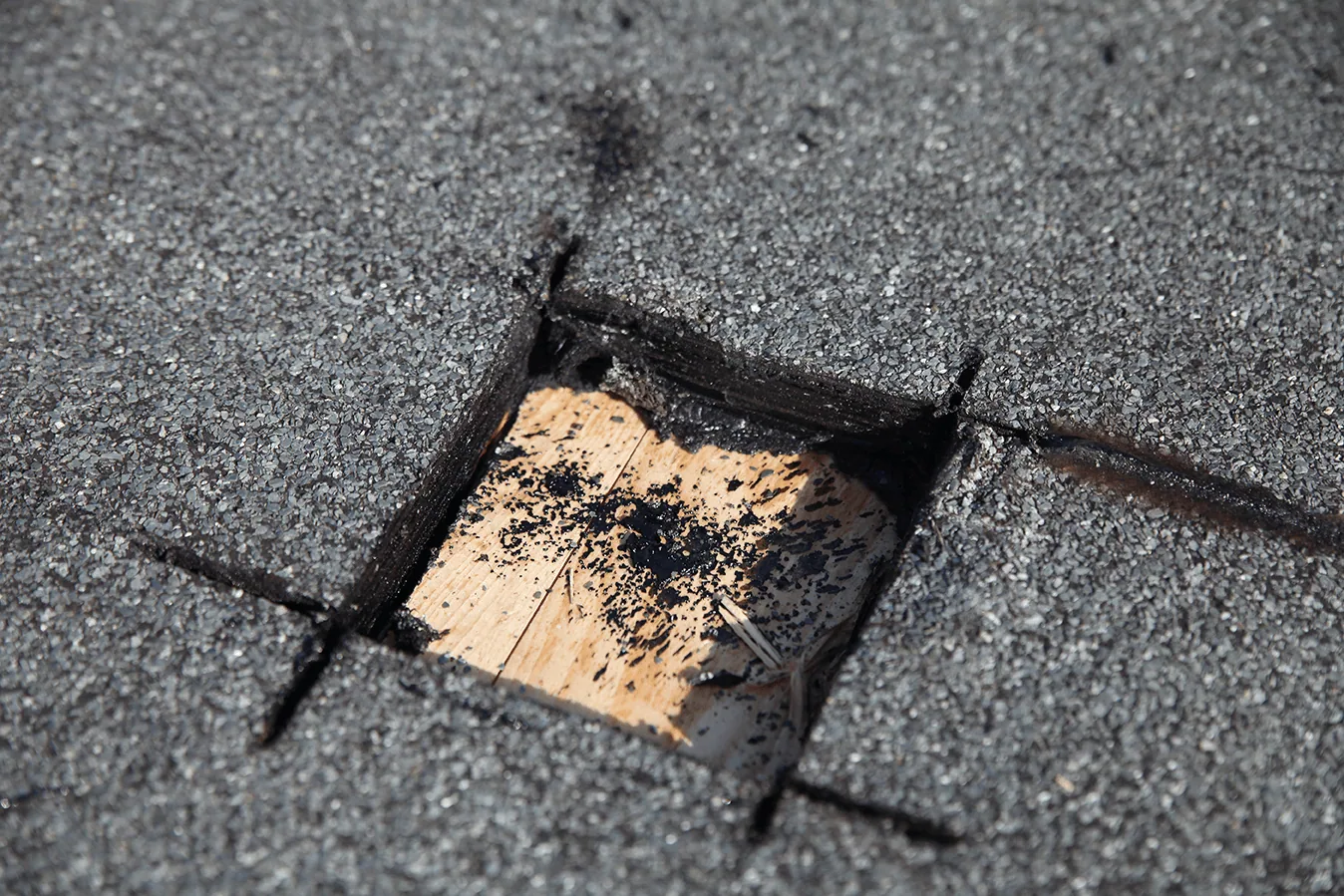
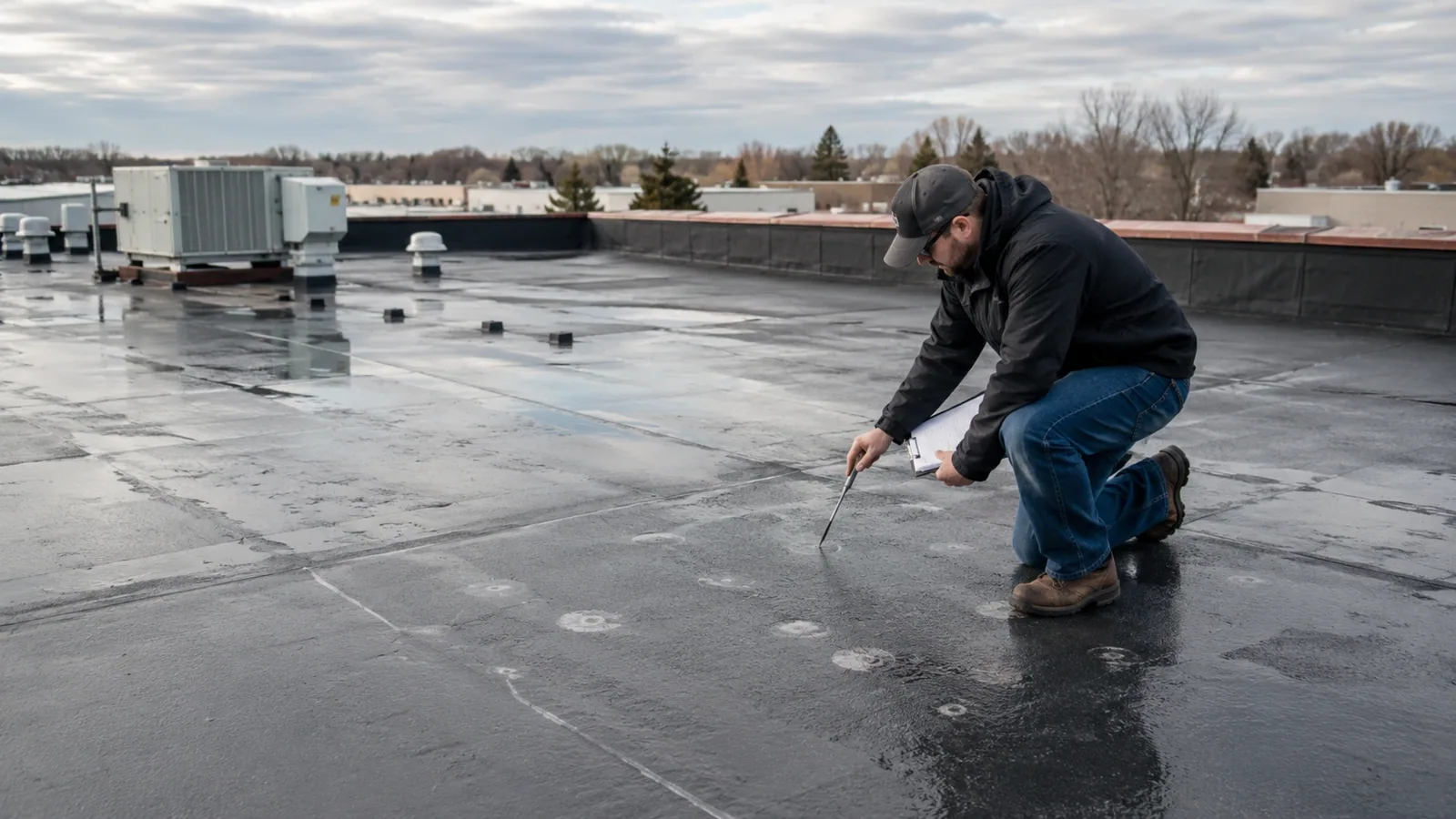
Infrared review can help select testing locations if surface and weather conditions support it. A selective cut provides evidence at one point and is repaired after inspection. We record the result, insulation condition, deck observations, and the boundary of any affected area. A moisture survey can guide that choice, and a drainage inspection can be a separate task. We avoid expanding a repair beyond what the observed material and agreed testing support.
Heat-sensitive installation sequence
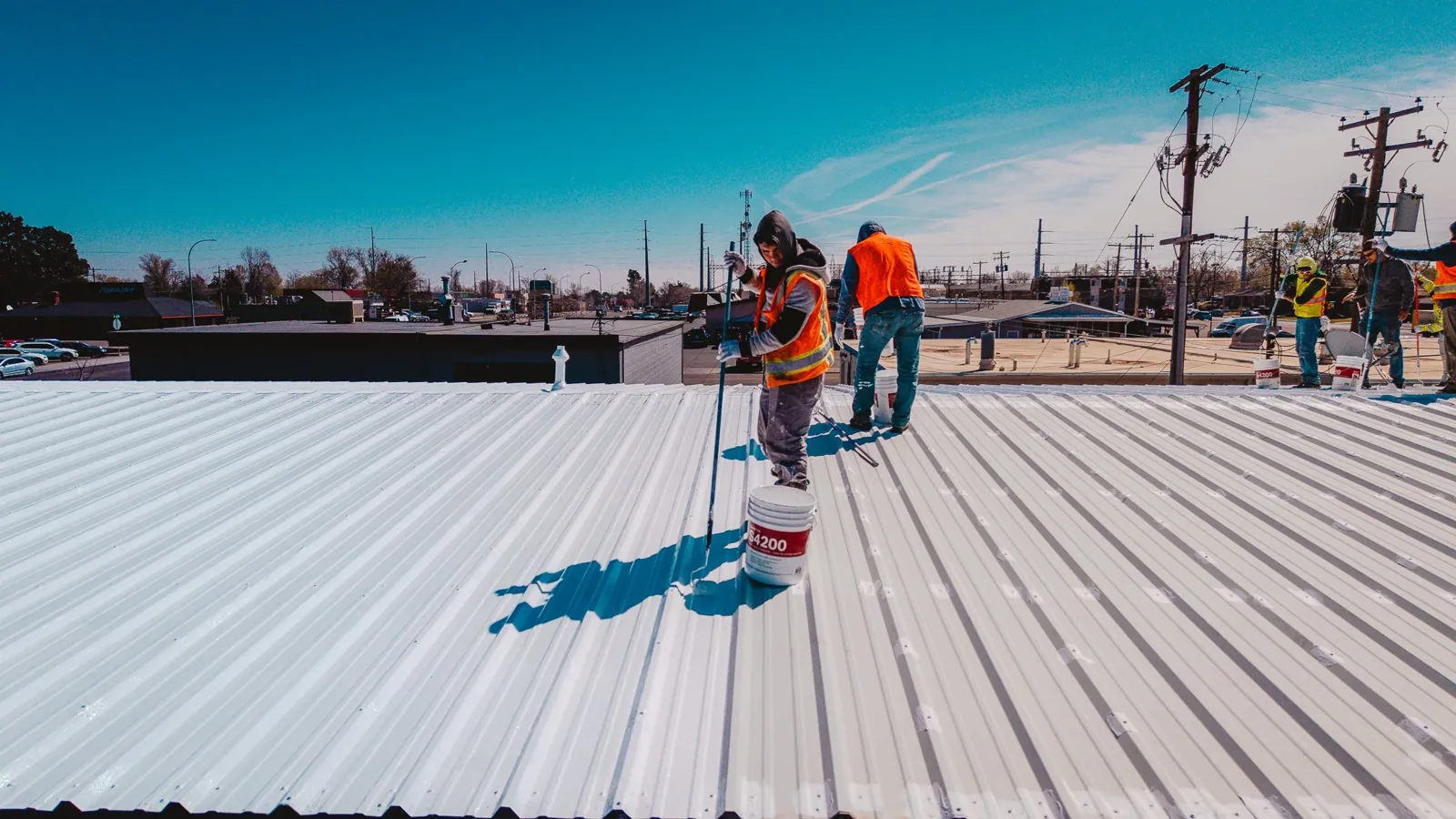
Tyler’s 94.5°F normal July high is climate context, not a roof reading. Adhesive, primer, flashing, and coating steps each wait on a substrate measurement and the system’s stated requirements. Direct sun, shade, wind, and moisture can change the working window. The crew records the measurement and hold point so the next team knows why a detail is not ready for installation.
Before tear-off, we define the area that can be opened, temporary protection, drain access, and the procedure for protecting interior spaces. A hospital schedule may require a smaller work package or separate access release for each roof zone. We match the sequence to what facilities and clinical teams can release, then perform the agreed inspection before the next crew handoff. A phased occupied-building scope can set these boundaries for replacement work without treating every department or roof area as available at once.
Repair limits and capital options
A local seam opening, puncture, or curb failure may fit a targeted repair when nearby membrane and insulation remain serviceable. We prepare the repair area, use a compatible detail, and document the check before returning access. Repeated leaks, saturated insulation, weak attachment, or deteriorated deck can make the repair boundary larger. We compare the findings by roof zone and note which test or removal step would resolve an open question.
A recover is considered only when the existing layers are dry enough, stable, attached, compatible, and within project limits. Otherwise, removal may be needed to address moisture or deck conditions. Replacement cost and timing change with tear-off depth, insulation, mechanical equipment, interior protection, lift access, and the number of clinical route releases. We separate confirmed tasks from tests and owner approvals in the replacement scope. Each option lists what operations must release and what the crew can close within the planned shift.
Facilities handoff and condition record
Closeout lists completed zones, photographs, tested details, drain checks, temporary protection, and open observations. We tie items to the roof plan and note any restricted clinical route, equipment area, or ceiling access. Approved changes and trade handoffs help facilities plan the next maintenance step.
The handoff names each area’s release contact and any continuing equipment or clinical access limit. We return a sequenced plan with protected boundaries, test points, hold points, and daily closeout criteria. The Tyler Midtown Area is part of Tyler’s healthcare and education context, while a condition report gives the specific hospital an operating record of its own findings. Any emergency protection remains documented until the permanent repair and release are complete.
Commercial Roofing Questions
How do roof crews protect patient access?
We map the entrances, accessible routes, service deliveries, overhead work zones, and any areas that need interior protection with the facilities contact. The work plan assigns temporary boundaries and a person who can release each route. Changes are communicated through the hospital’s chosen process.
Can hospital HVAC equipment stay in service during roofing?
The facilities team confirms operating limits, technician access, and any shutdown requirement. We coordinate flashing and equipment work by roof zone, record trade ownership, and keep service paths clear. A unit is not treated as available for shutdown without an explicit release.
What does a storm inspection cover?
We document current conditions at seams, edges, curbs, skylights, and drains, with photos and roof-zone locations. Tyler’s hail, wind, and tornado exposure informs the inspection plan, while present evidence and agreed tests define repair scope.
How does summer heat change the schedule?
The 94.5°F normal July high is a planning cue. We measure the substrate at the work area and follow system limits for adhesive, primer, flashing, or coatings. If a step is outside range, it stays at a hold point while another approved operation proceeds.
What should facilities receive at the end of each shift?
The handoff lists opened and completed zones, temporary protection, drain checks, photos, restricted routes, test results, and remaining approvals. It names who releases the next area and whether any clinical or equipment access remains limited.

Related Pages
Commercial Roof Inspection
Tyler, TX
Medical Office Roofing
Tyler, TX
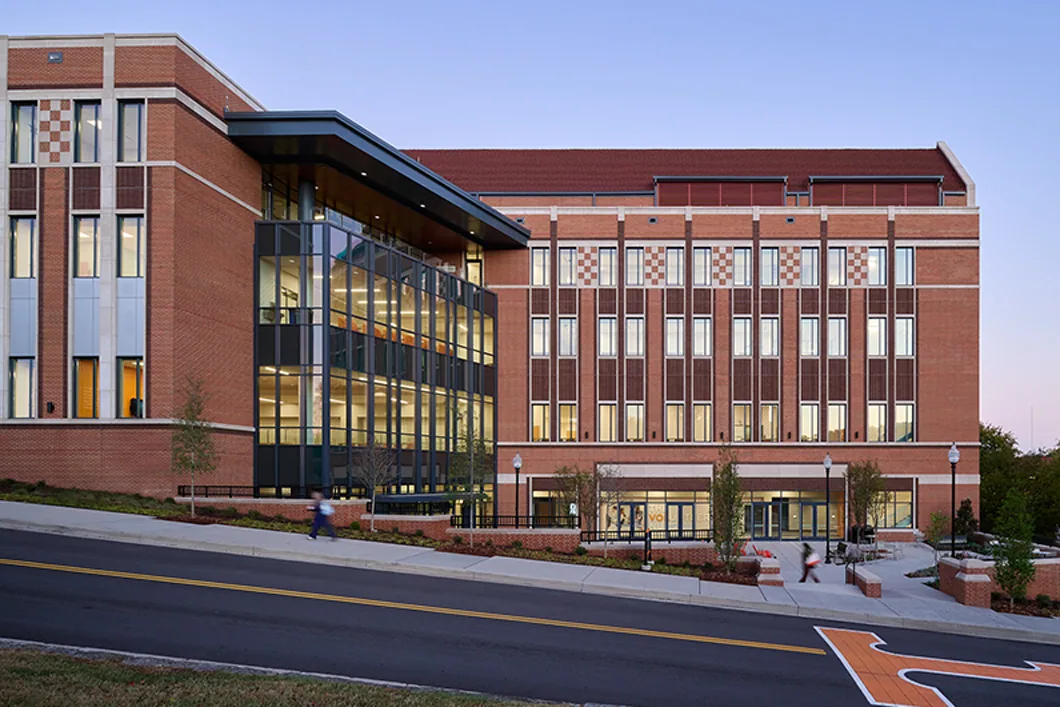
Office Building Roofing
Tyler, TX
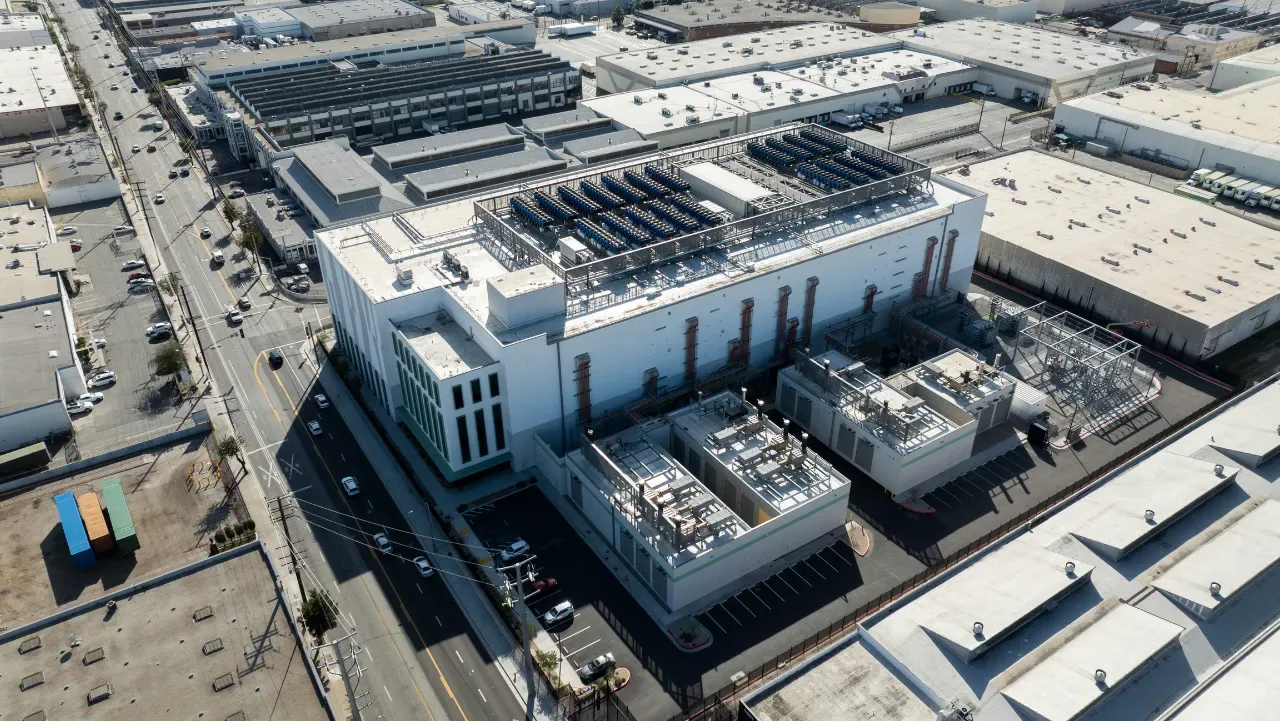
Rooftop Equipment Curbs and Supports
Tyler, TX
Coordinate the hospital roof release
Send current roof drawings, assembly records, leak history, equipment schedule, route restrictions, access window, and decision deadline. We will return a sequenced field plan with protected boundaries, open tests, trade handoffs, and hold points.