
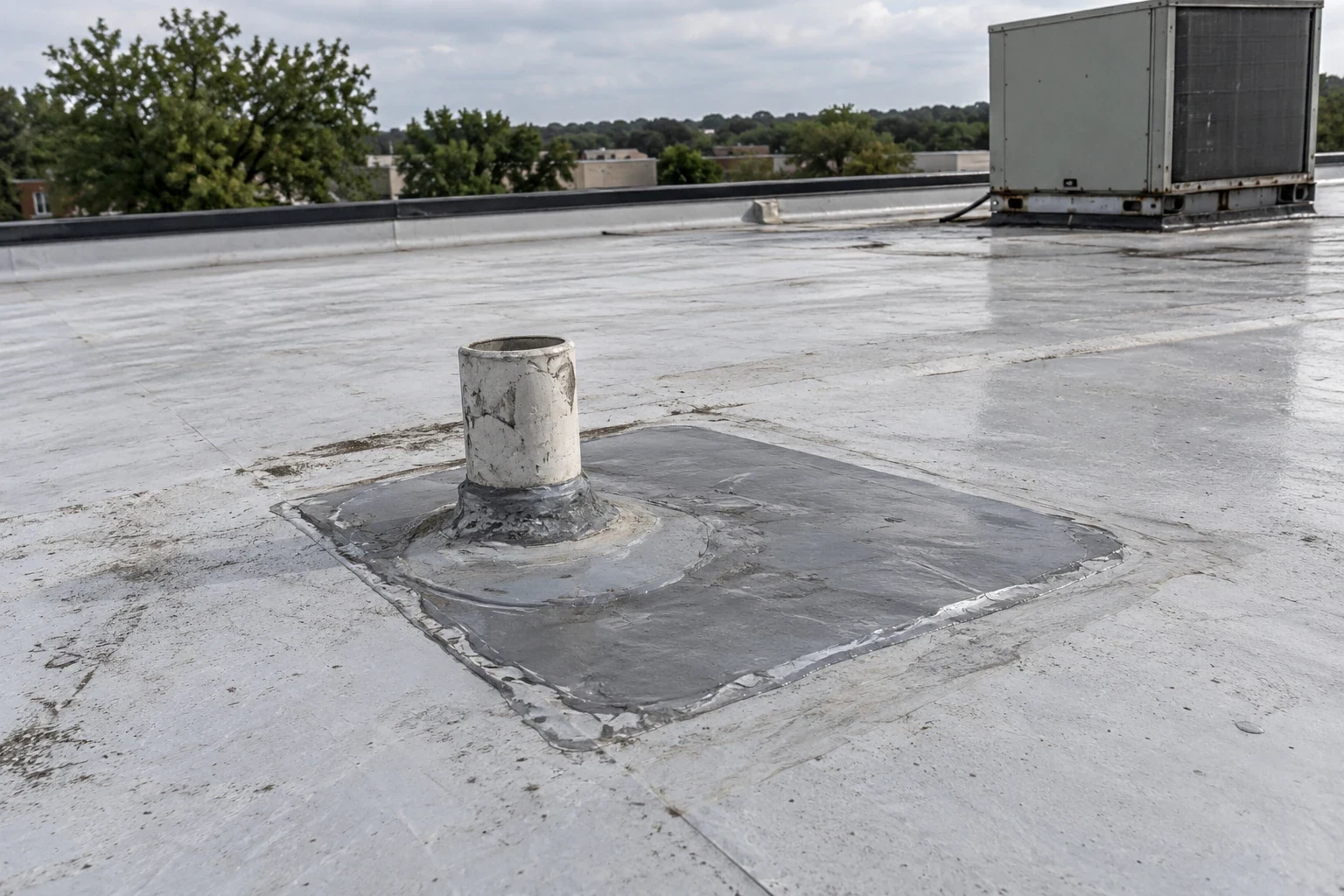
Tyler’s recorded June 8, 2021 tornado is a local reminder that roof inspections after severe weather should separate a puncture from displaced edges and impact marks. At a commercial property, a small breach can admit water into insulation even when the opening looks limited. We map the puncture, inspect the surrounding field, and mark whether a test point is needed before closing the membrane. The general contractor receives the temporary protection status and next roof-zone release in the first work package.
Punctures can come from dropped tools, fasteners, sharp debris, service traffic, or storm-related impact. The repair depends on membrane type, age, surface condition, and whether the substrate below remains dry. Near the Tyler Interstate Commerce Park by I-20 and SH 155, access and material handling may shape staging, while a roof’s actual assembly controls the patch detail. We confirm both before dispatch. A storm assessment can record surrounding damage when a puncture follows a weather event; an isolated breach remains its own repair item.
Breach location and cause clues
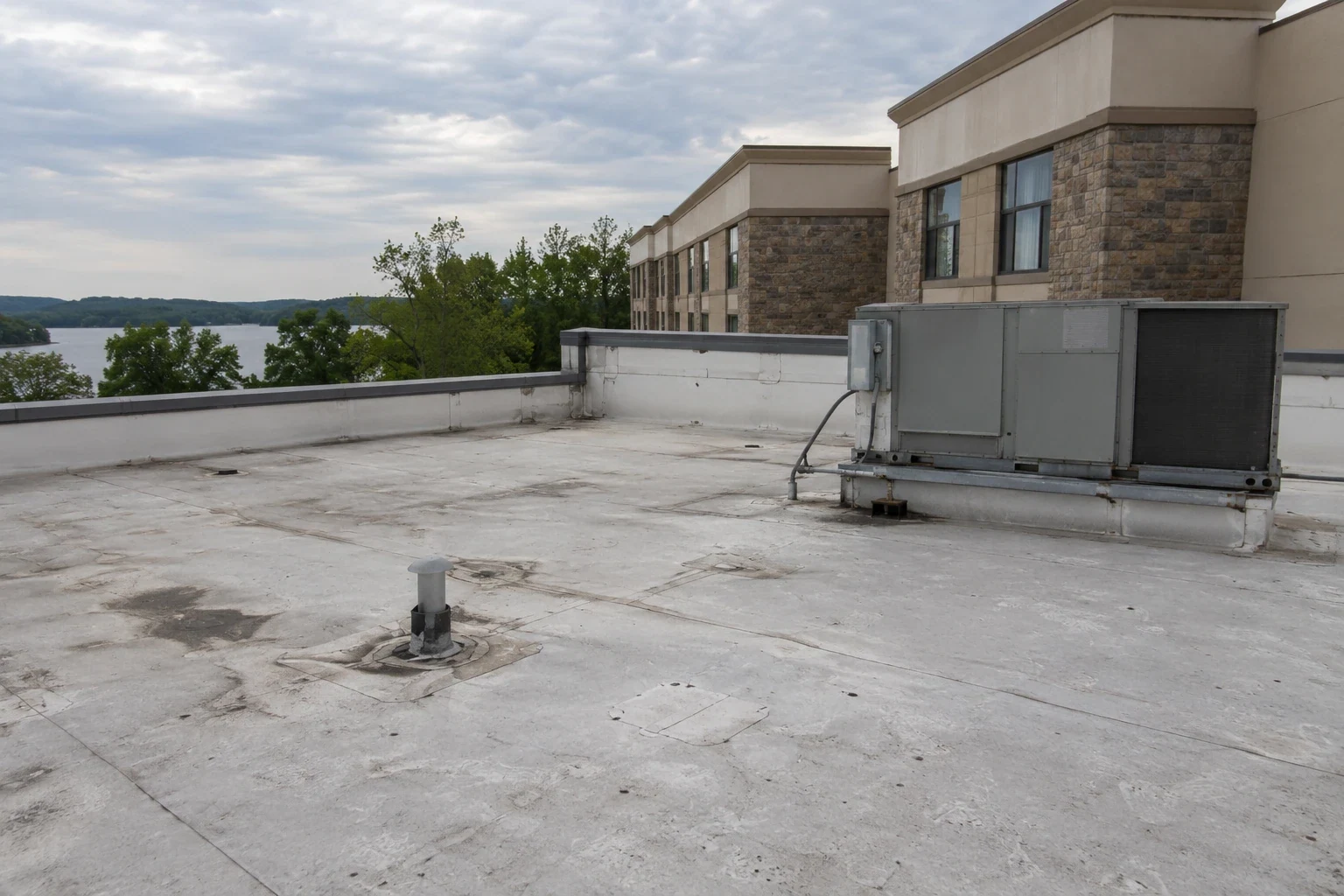
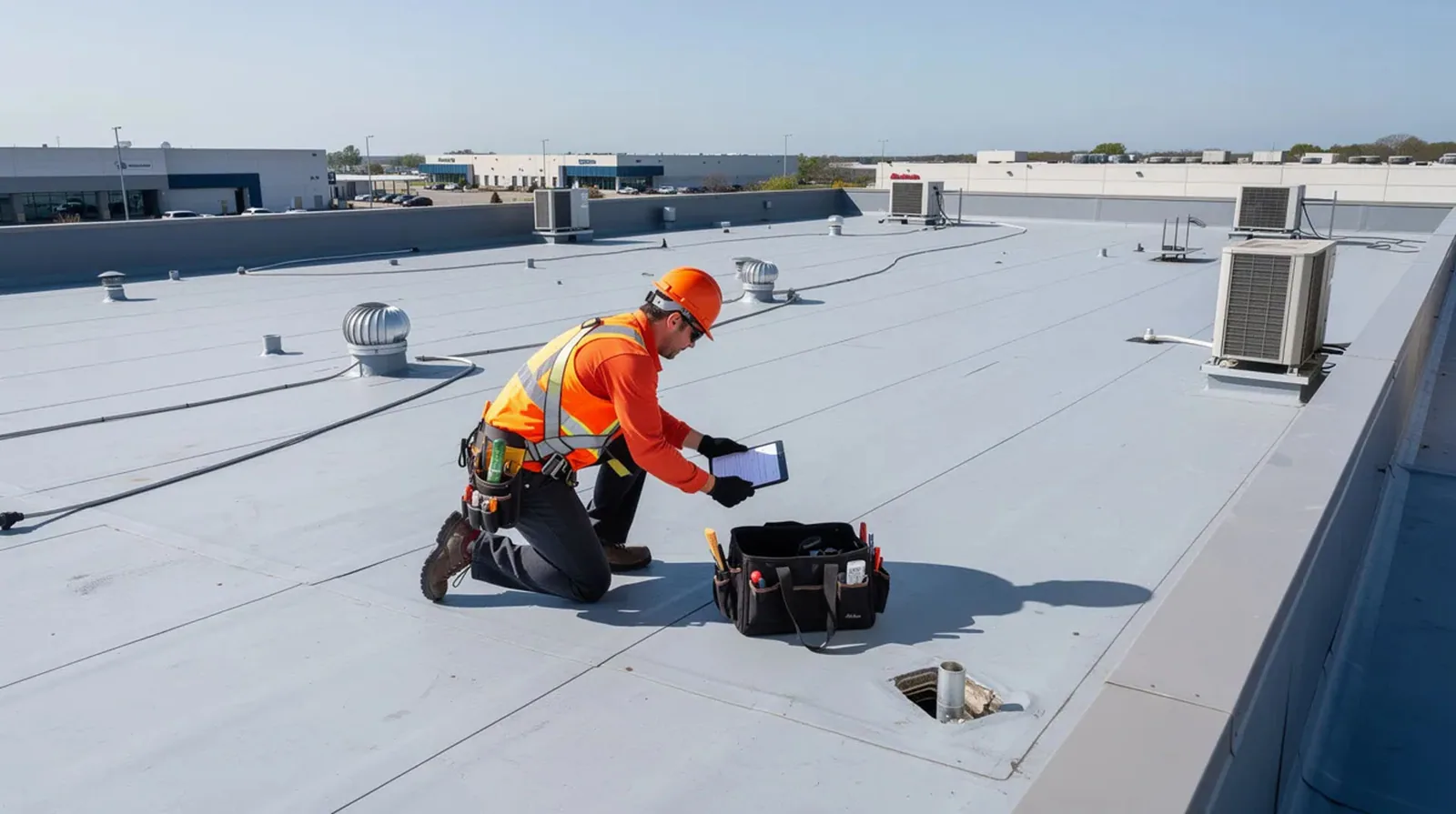
We locate the opening against the roof plan and photograph it with surrounding context. The survey checks for a cut, puncture, abrasion, lifted patch, fastener, or sharp object, then looks for water tracks that extend beyond the surface mark. If roof access is restricted, we note which zones remain unobserved and do not assume they are clear. A site representative can relate the point to recent service work, but the visible roof condition still determines the repair boundary.
Spring and autumn storms can drop large hail with damaging wind, and Tyler has a recorded tornado on June 8, 2021. Neither regional hazard establishes what caused an individual opening, so we keep impact and puncture evidence separate. A metal fragment, roof-fastener, or tool mark may need photographs before removal. The hail damage review addresses impact patterns, while wind repair covers lifted or displaced components. The field package records the observed condition without assigning a cause that the evidence cannot support.
Patch compatibility and substrate
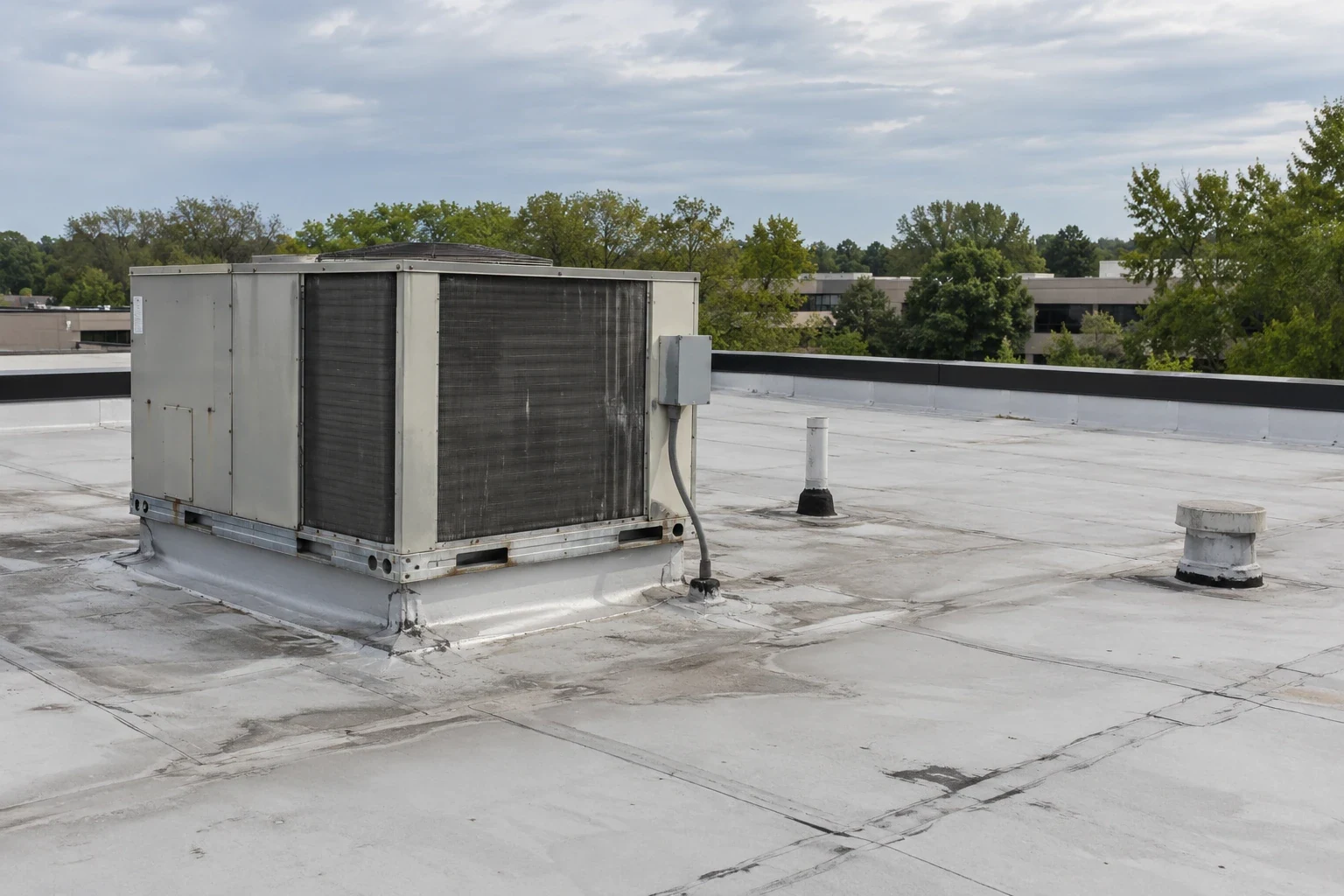
We identify the membrane before choosing a patch. TPO, PVC, KEE, EPDM, modified bitumen, and coated assemblies use different repair methods and accessories. The area around the puncture must be clean and suitable for a bond or weld. A prior coating, patch, or embedded debris may need removal or a test before the permanent detail can be selected. We record the product system if known and mark any uncertainty for the owner’s review.
A small opening at the surface may reach wet insulation or a damaged deck. If the assembly permits, we use an approved test cut or moisture survey to learn whether the damage extends beneath the membrane. Each sample is located on the plan, photographed, and closed after examination. If moisture is found outside the approved patch boundary, the crew stops at the hold point before adding removal. TPO membrane and modified bitumen need system-matched preparation. Related seam failures or flashing defects are noted separately so the estimate can show each repair clearly.
Temporary closure and water control
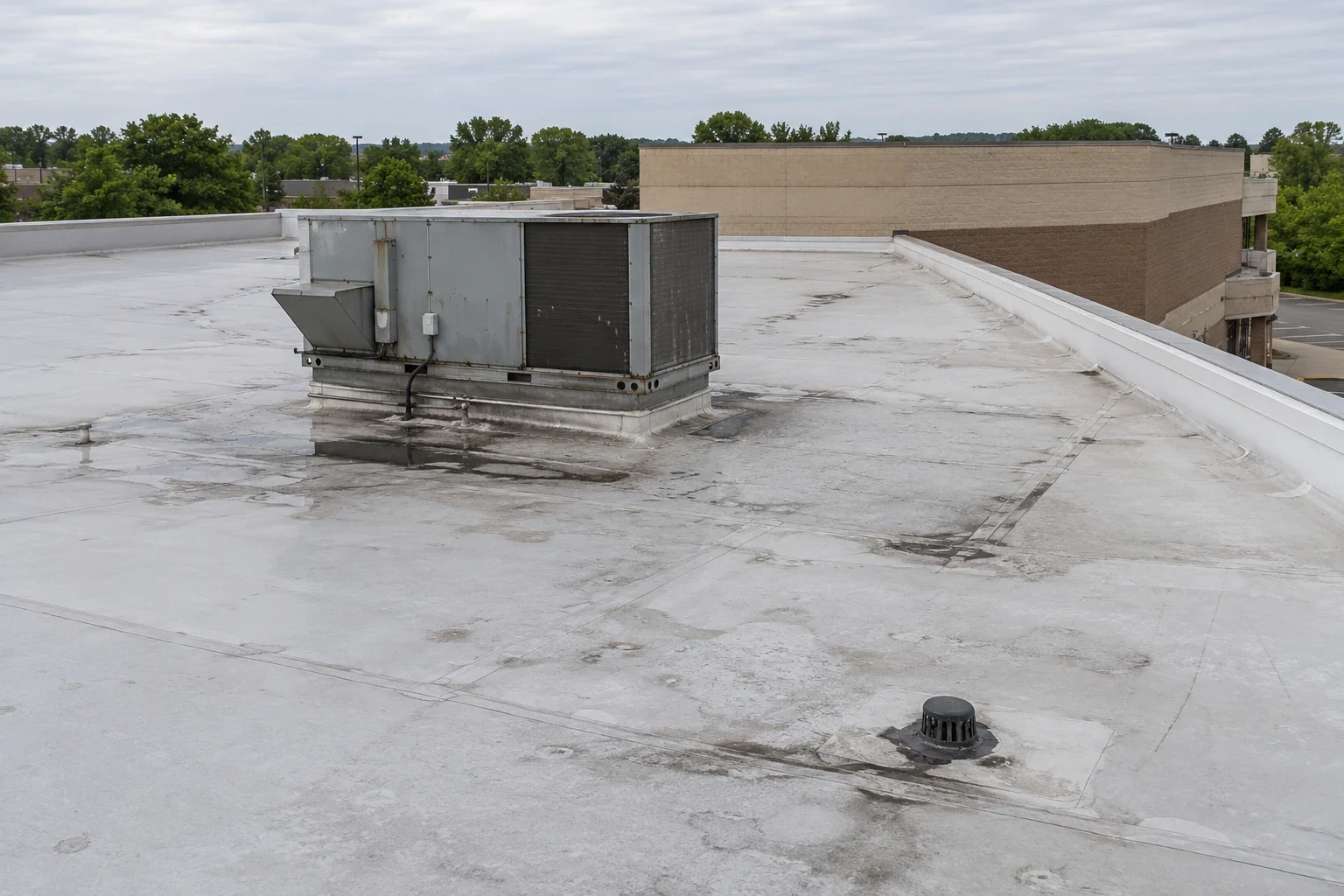
When the breach is open, we select temporary protection suited to the membrane and forecast conditions. The closure must resist movement, protect the opening, and avoid blocking nearby drains. We photograph the temporary detail, note the exposed-section closeout, and identify who will check the roof if permanent materials or access are delayed. A temporary closure stays on the work list until repair inspection confirms the permanent patch.
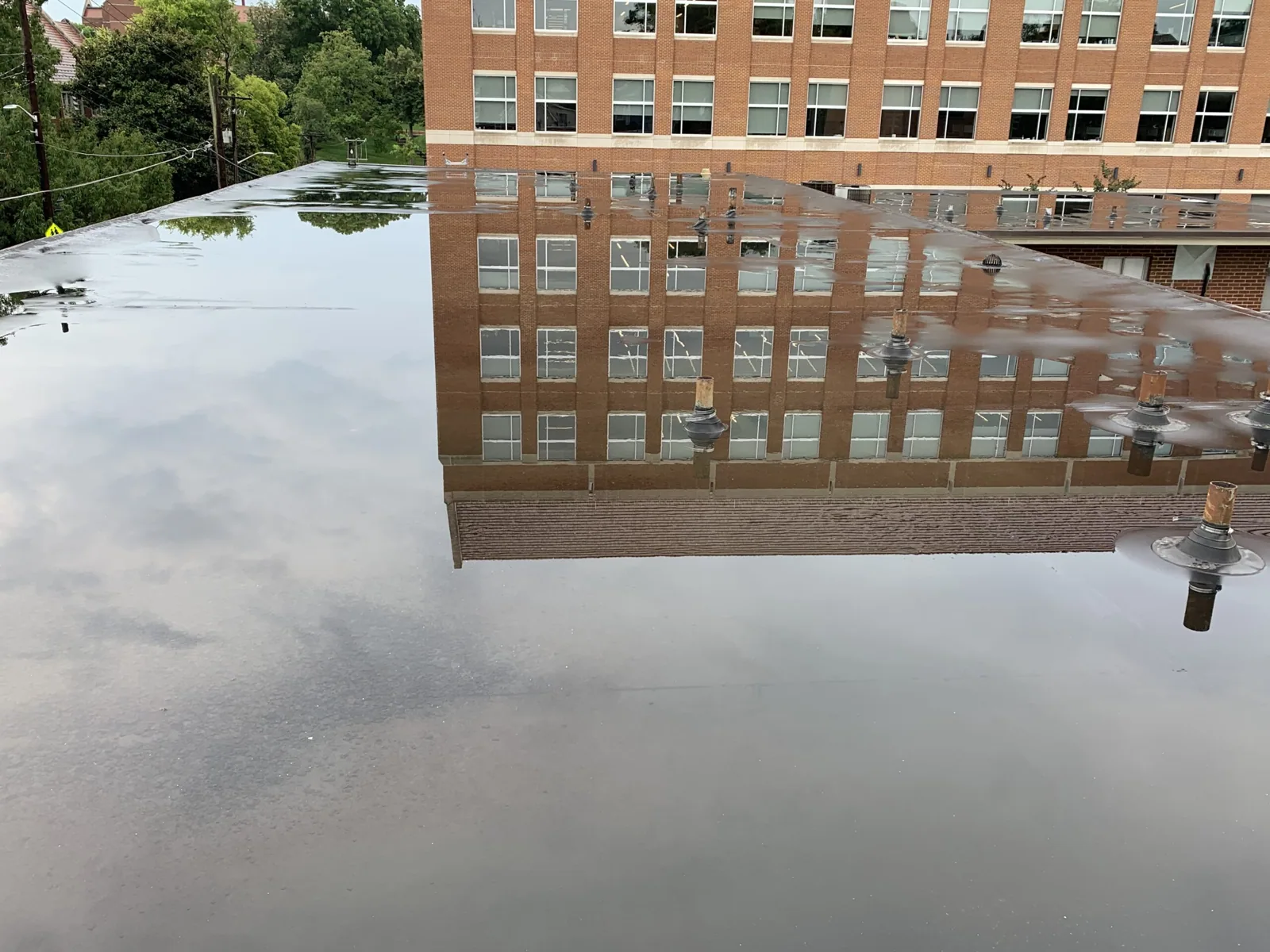
Water entering through a puncture can travel laterally along the deck or insulation. We review interior reports and the surrounding roof zone without assuming the ceiling stain sits below the breach. If drains or scuppers contain debris, we record that condition as another task because drainage affects protection during the next rain. A leak tracing visit can map water movement if the interior symptom does not align with the surface opening. We separate that diagnostic work from patching so the owner can approve the right test and repair boundary.
Preparation under Tyler conditions
Tyler’s normal July high is 94.5°F, so heat belongs in the sequence for adhesive, primer, and coating steps. The number is a climate reference, not a reading from the roof. We measure the substrate and follow the selected product’s temperature, moisture, and open-time requirements. If the work window closes, we protect the exposed zone and note whether cleaning, primer, or another preparation step must be repeated when the crew returns.
Prosperity Park north of Loop 323 is the current name for the former Wisenbaker property, a 281-acre Tyler development with approximately 255 acres remaining in 2025. A building’s own operations may impose loading periods, restricted areas, or interior containment needs that affect the puncture repair. We confirm the roof access route, equipment use below, and site contact before opening any material. The work package marks access release, test point, installation, inspection, and closeout in sequence. If rain or wind interrupts the task, the crew records the last completed hold point before handing the area back to operations.
Repair cost and closeout evidence
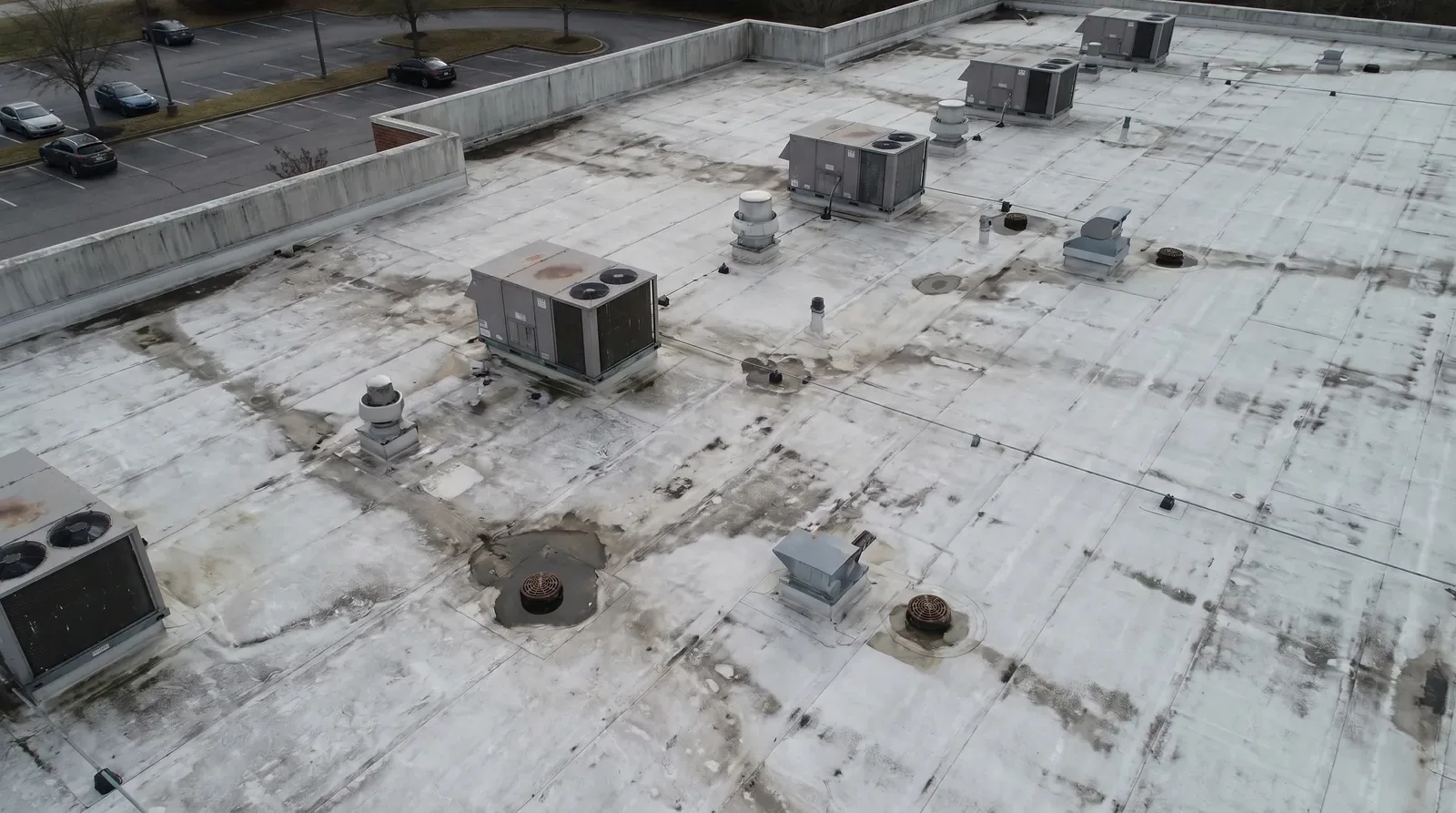
Cost and timing depend on patch size, membrane type, access, surface preparation, moisture testing, insulation removal, and whether the deck requires repair. Several punctures may share a cause such as service traffic or loose debris, but each location needs an individual inspection. We can map them together and group the approved work while retaining separate photographs and roof-zone references. If damage reaches several layers, the project team receives a separate scope before removal expands.
Closeout records the opening, patch footprint, materials, installation conditions, photographs, test results, and any adjacent area still under review. We check the repair and drain path before releasing the zone. A condition report preserves the patch location, test results, and surrounding observations so a later inspection can compare the same roof detail. For a project near the Tyler Interstate Commerce Park, the actual property contact confirms access and staging. The final handoff names open tests and the next decision deadline.
Commercial Roofing Questions
Can a small puncture be patched without replacing insulation?
A localized patch can work when inspection shows the substrate is dry and sound around the breach. We check the surface and use targeted testing when concealed moisture is a concern. If wet material extends past the patch boundary, we document it and seek approval before removal.
How do you identify what caused the puncture?
We record the cut, indentation, embedded object, abrasion, or nearby work evidence visible at the site. Weather history may guide where to inspect, but the repair record describes observed conditions rather than assuming a cause. Photographs are taken before debris is removed when practical.
Can you use the same patch on TPO and EPDM?
No. The repair detail and accessories must match the membrane and its condition. We identify the assembly, prepare a test area when needed, and verify the selected method before applying the permanent patch.
What happens if rain begins before the patch is complete?
The crew secures a temporary closure, checks nearby drainage, and records the last completed preparation step. On return, we confirm substrate condition and repeat any preparation that the product instructions require. The patch remains open for inspection before the zone is released.
What information do you need before preparing a puncture repair?
A roof plan, assembly or product records, access instructions, leak observations, and timing constraints help define the first visit. We use them to locate the area and prepare a work package. The field inspection still confirms the boundary and material compatibility.
Related Pages
Storm Damage Roof Repair
Tyler, TX

Commercial Hail Damage Roof Repair
Tyler, TX
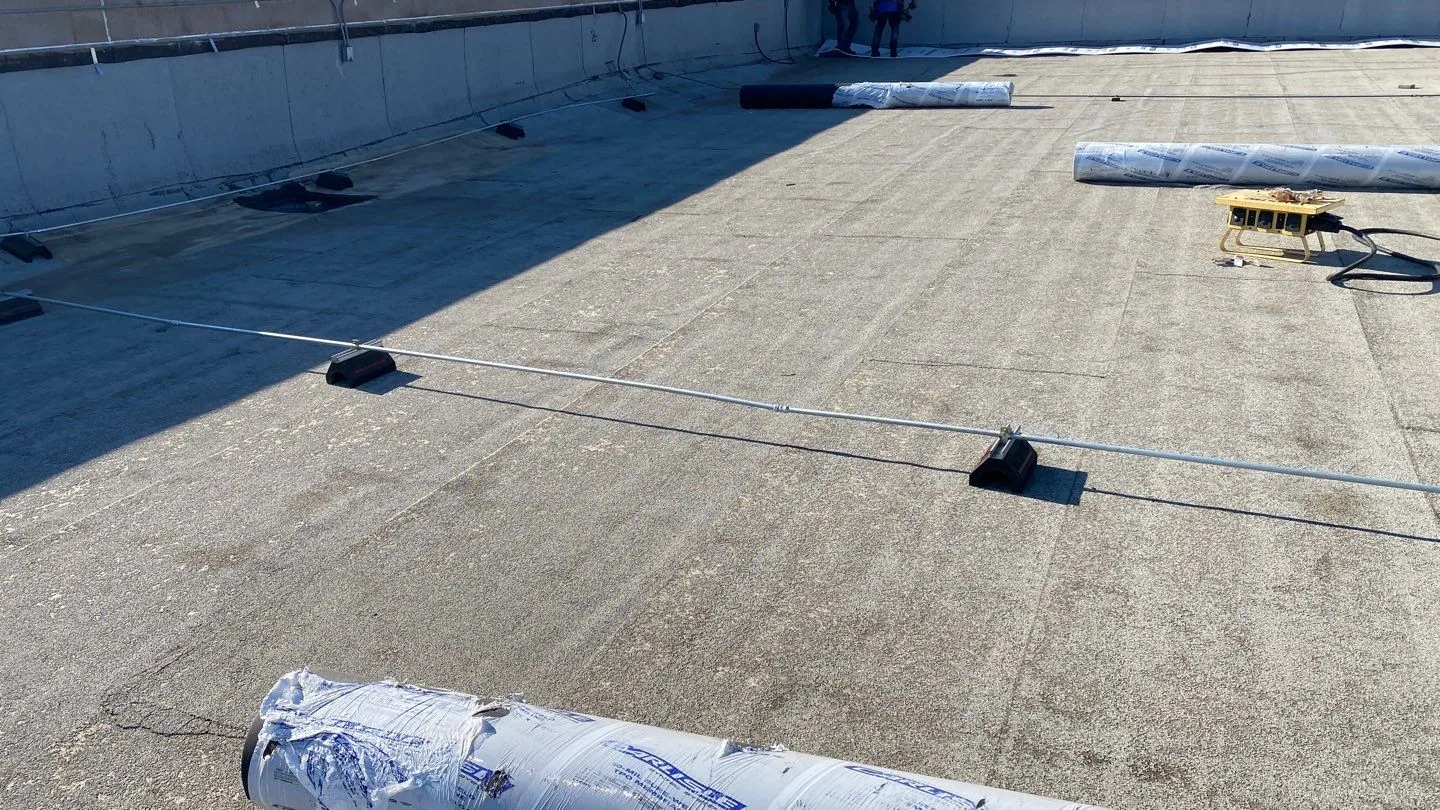
Wind Damage Roof Repair
Tyler, TX
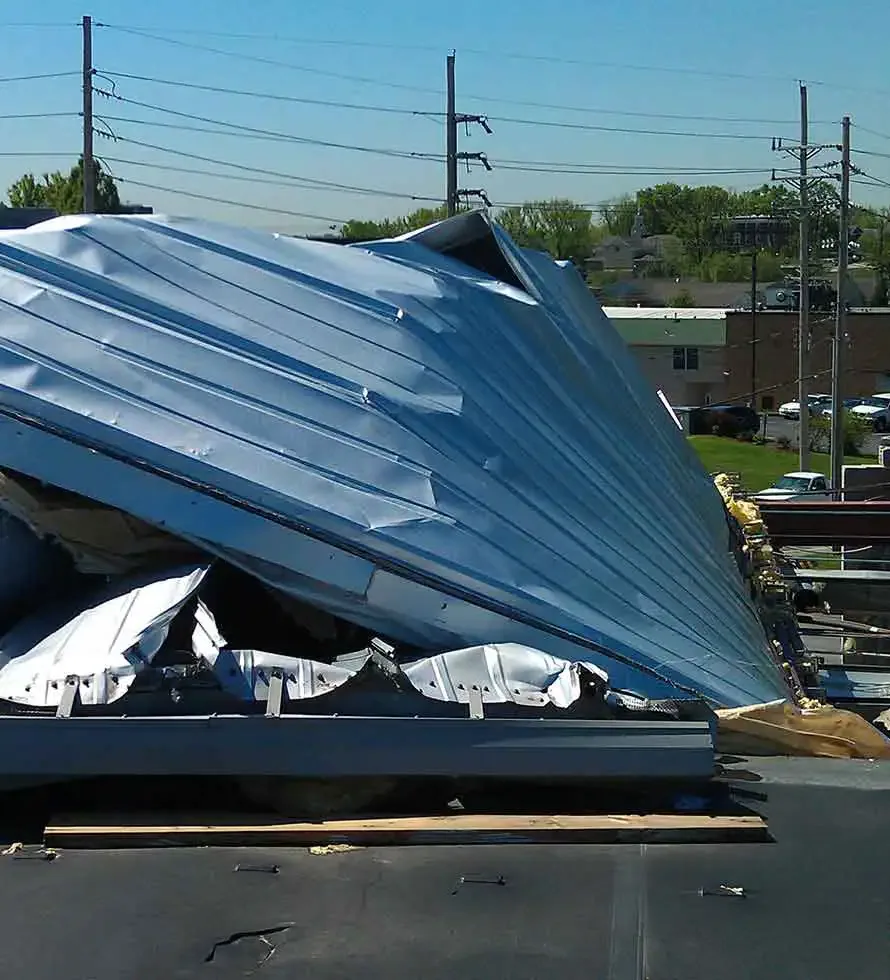
TPO Roofing
Tyler, TX
Mark the puncture zone
Send the roof plan, assembly records, access window, current condition, and decision deadline. We will return a patch work package with temporary protection, test points, material match, and inspection release marked.