
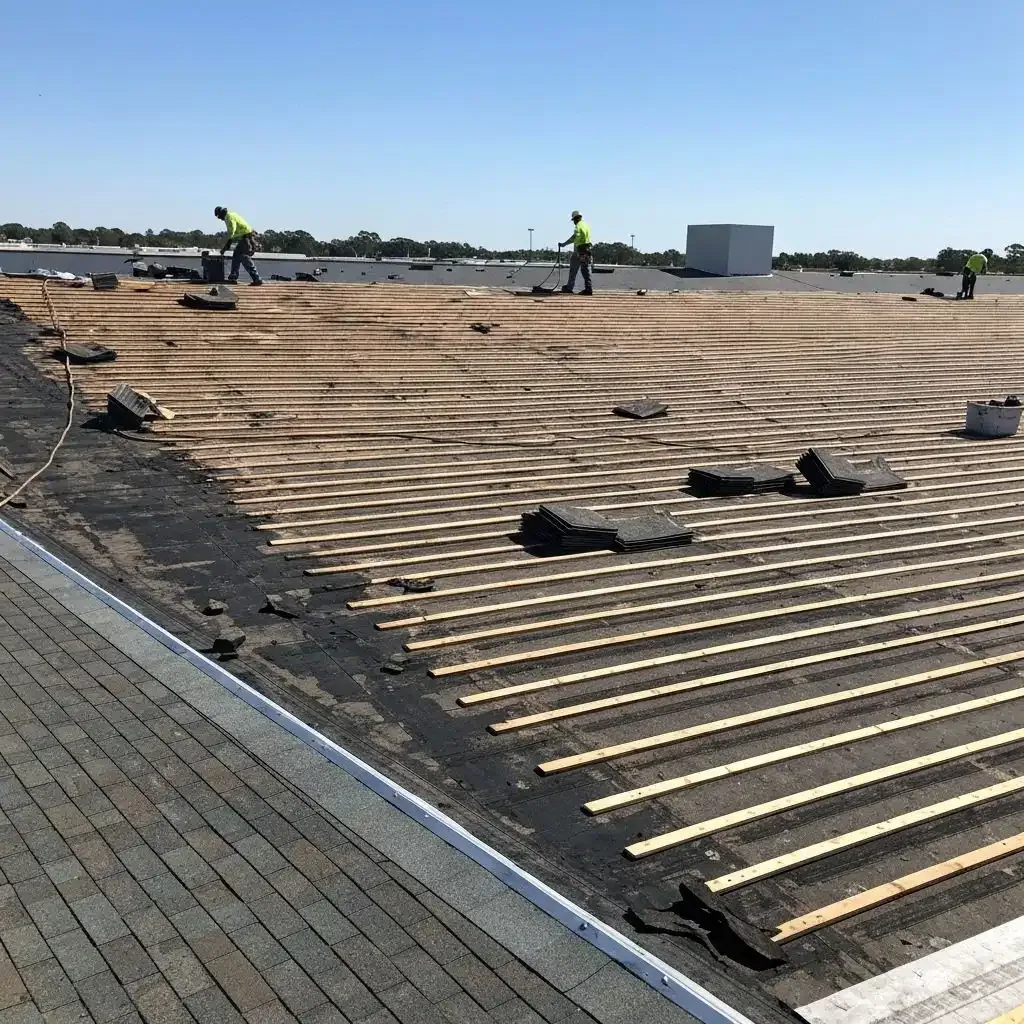
Summer heat in Tyler changes how a fire-damaged roof can be opened, dried, and covered. July normal highs average 94.5°F, but the actual roof surface and substrate reading set the work window for adhesives and coatings. We begin with the affected roof zone, the extent of heat damage, and any water introduced during firefighting. The first work package separates weather protection from permanent reconstruction and gives the general contractor a release point for each trade.
Fire can affect membrane, insulation, decking, rooftop equipment, penetrations, and interior finishes at different rates. Smoke residue, heat distortion, and water intrusion need separate observations because each can lead to a different repair. The Tyler Interstate Commerce Park and Prosperity Park are separate multi-property development areas; Prosperity Park is the current name for the former Wisenbaker property. Their broad context does not establish a damaged building’s operating conditions, so we confirm access and staging with the property contact. We document those requirements before removal begins. A roof inspection records visible conditions and identifies tests needed to define the safe repair boundary.
Safe access and temporary closure
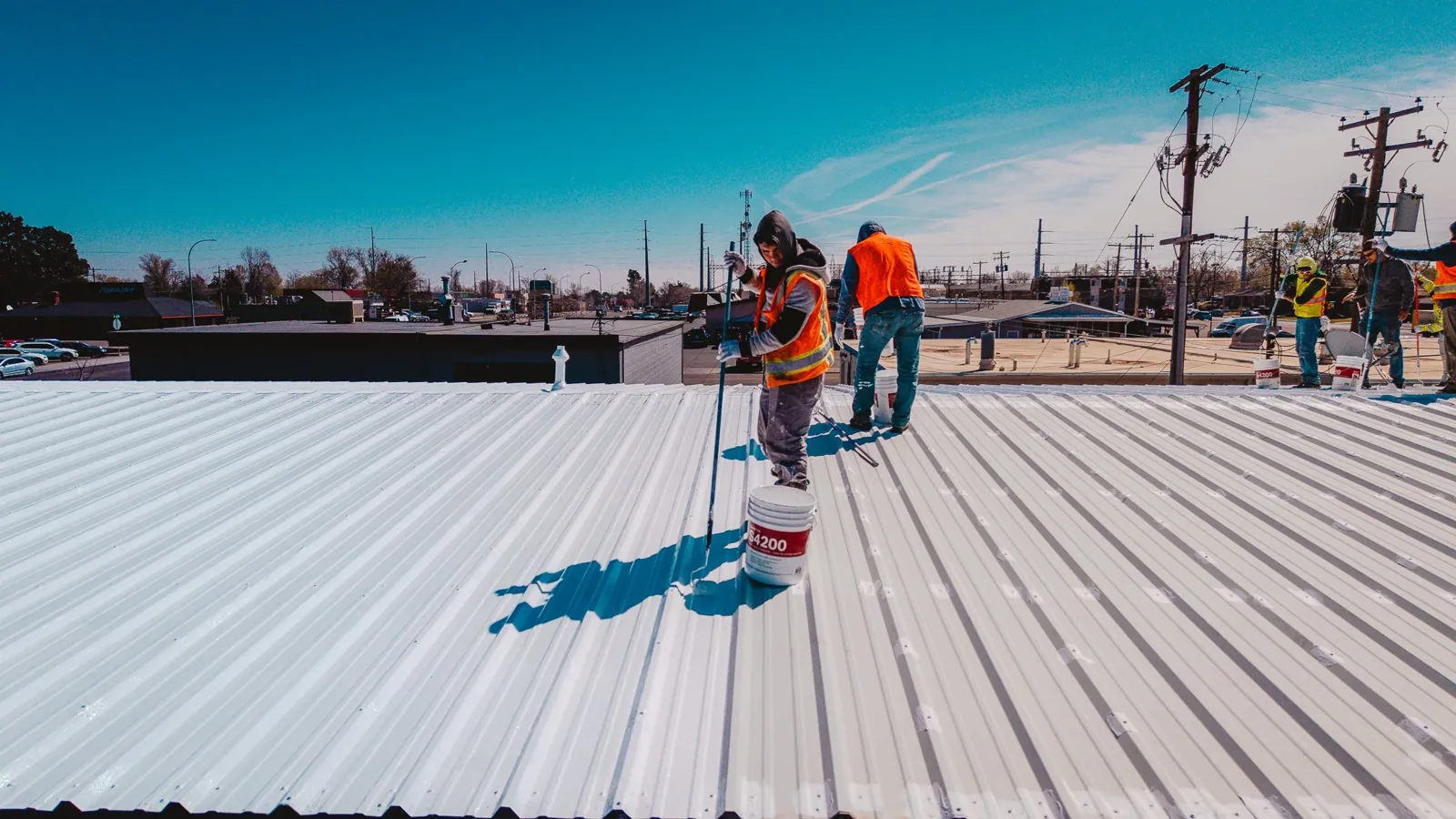
Before roofing materials are disturbed, the project team confirms that the area is released for inspection and that other trades have completed their required checks. We identify unstable or wet sections, map access routes, and keep the initial opening within the agreed work zone. Temporary protection must account for the remaining assembly, weather exposure, and drainage path. The handoff states which area is protected, what remains exposed, and who can release the next stage.
Water from suppression can enter through damaged membrane, open drains, or gaps created by heat. We inspect outlets and nearby roof transitions while distinguishing fire-related openings from existing conditions. If the building remains in operation, interior containment and equipment protection need to be coordinated with the site contact. The roof plan can show smoke-affected or heat-exposed sections without assuming every area requires removal. A temporary roof protection visit can stabilize openings while the permanent assembly scope is being developed.
Heat, smoke, and water findings
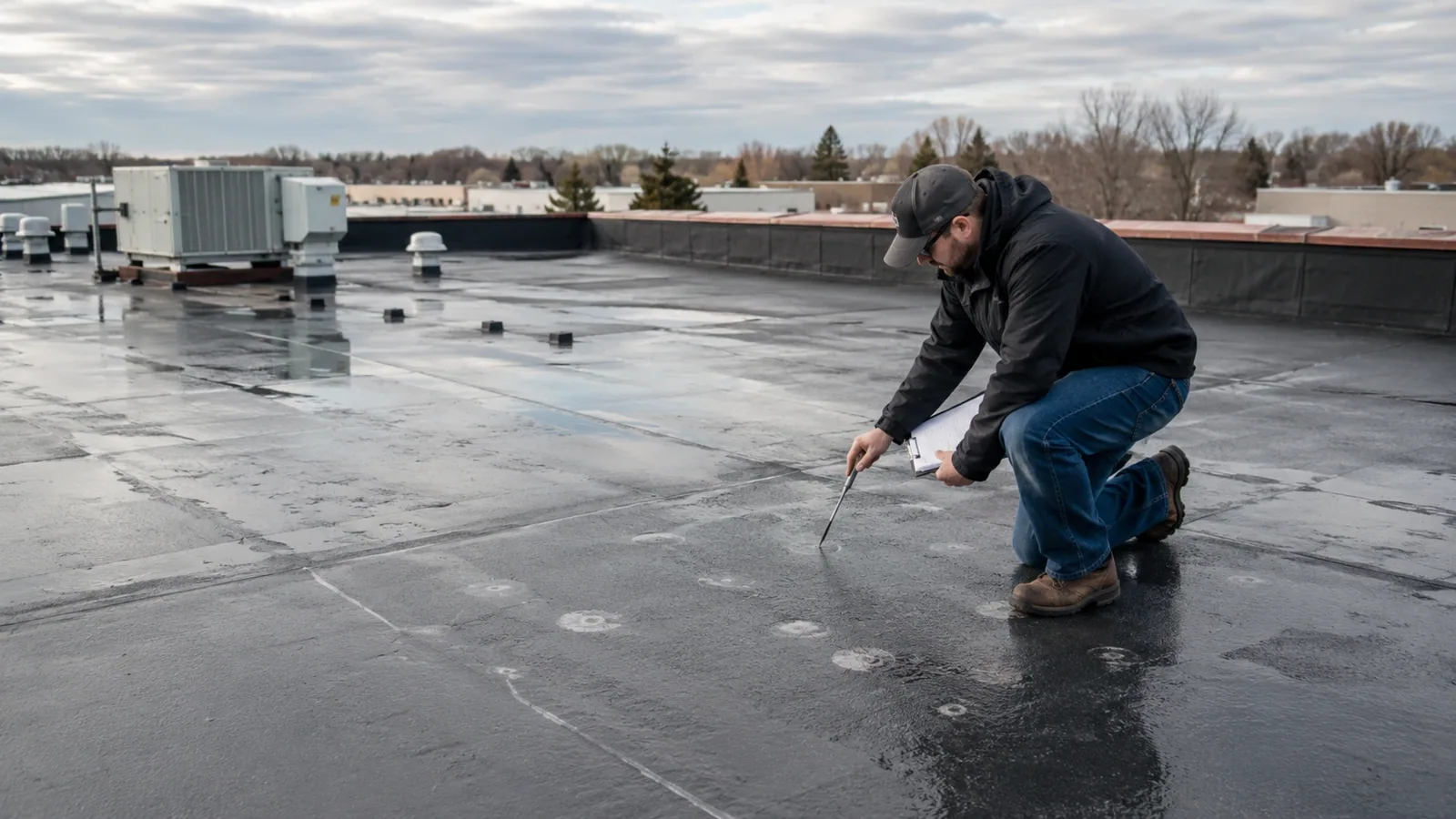
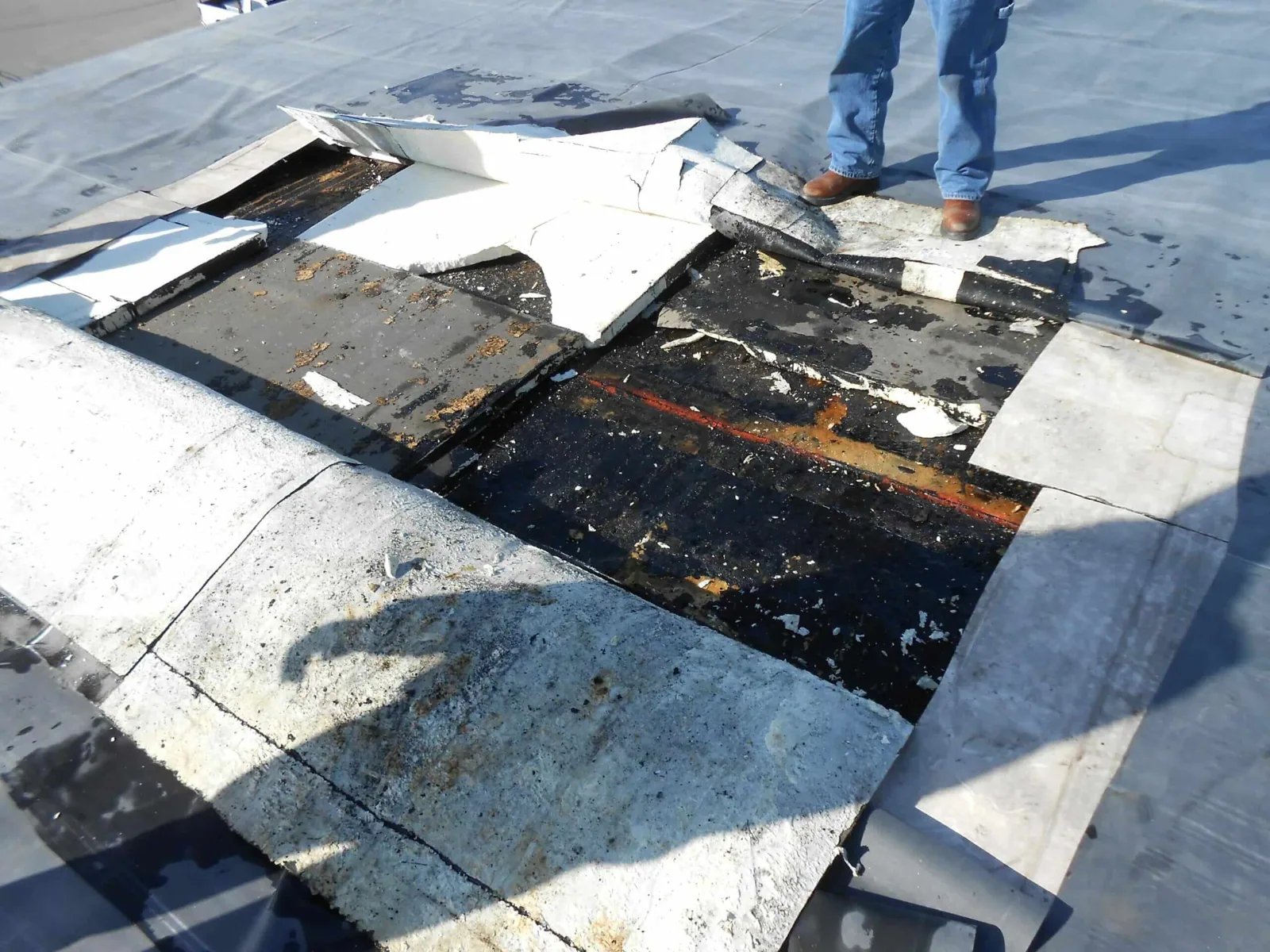
We examine the membrane for blistering, shrinkage, loss of bond, scorching, and deformation. Insulation and deck are reviewed where accessible, with test locations marked on the roof plan. Smoke deposits can obscure surface condition, so cleaning or sampling may need to precede a decision on reuse. Water paths are assessed separately from heat exposure; a wet layer may extend beyond the visible burn zone. We photograph each condition before material is removed.
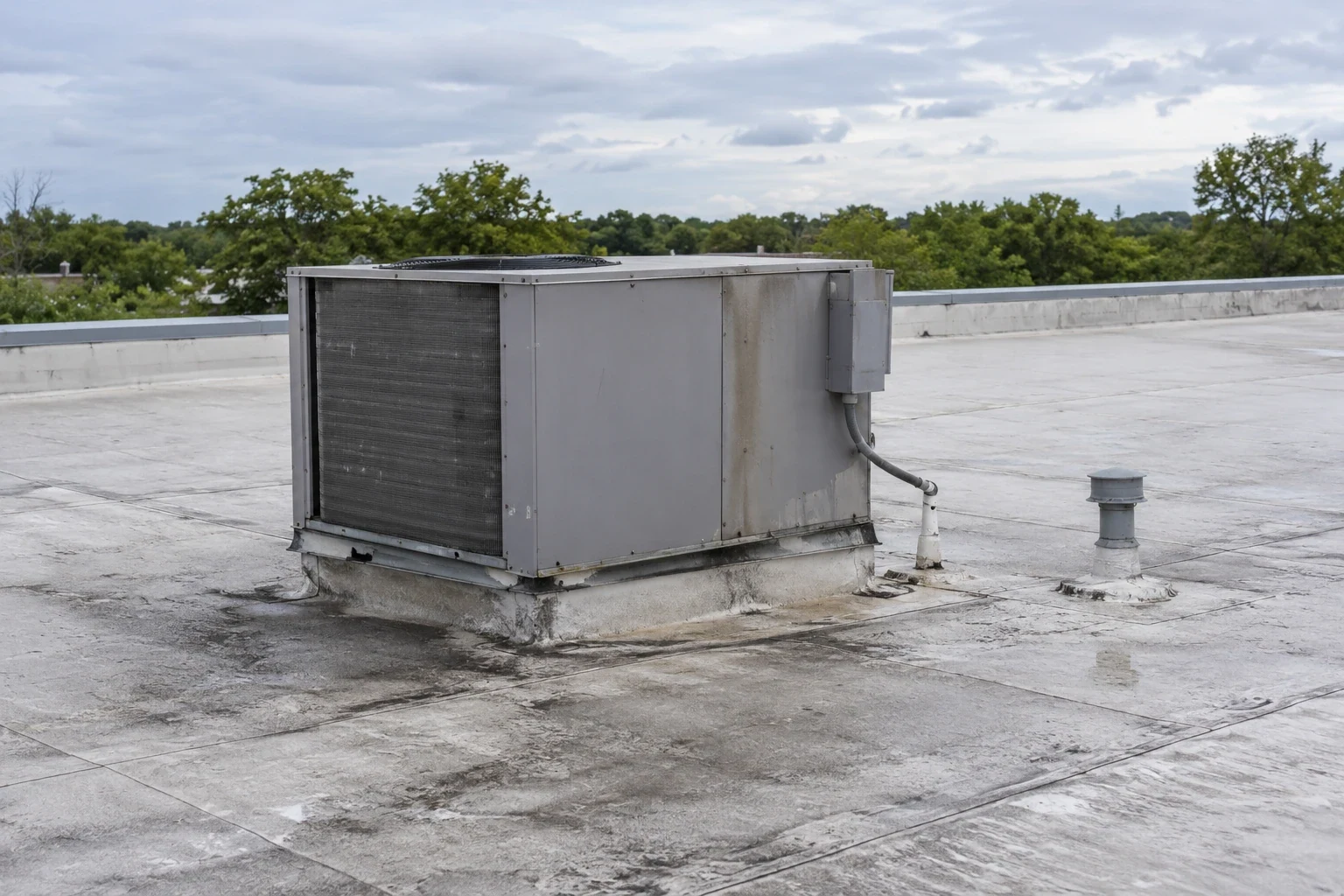
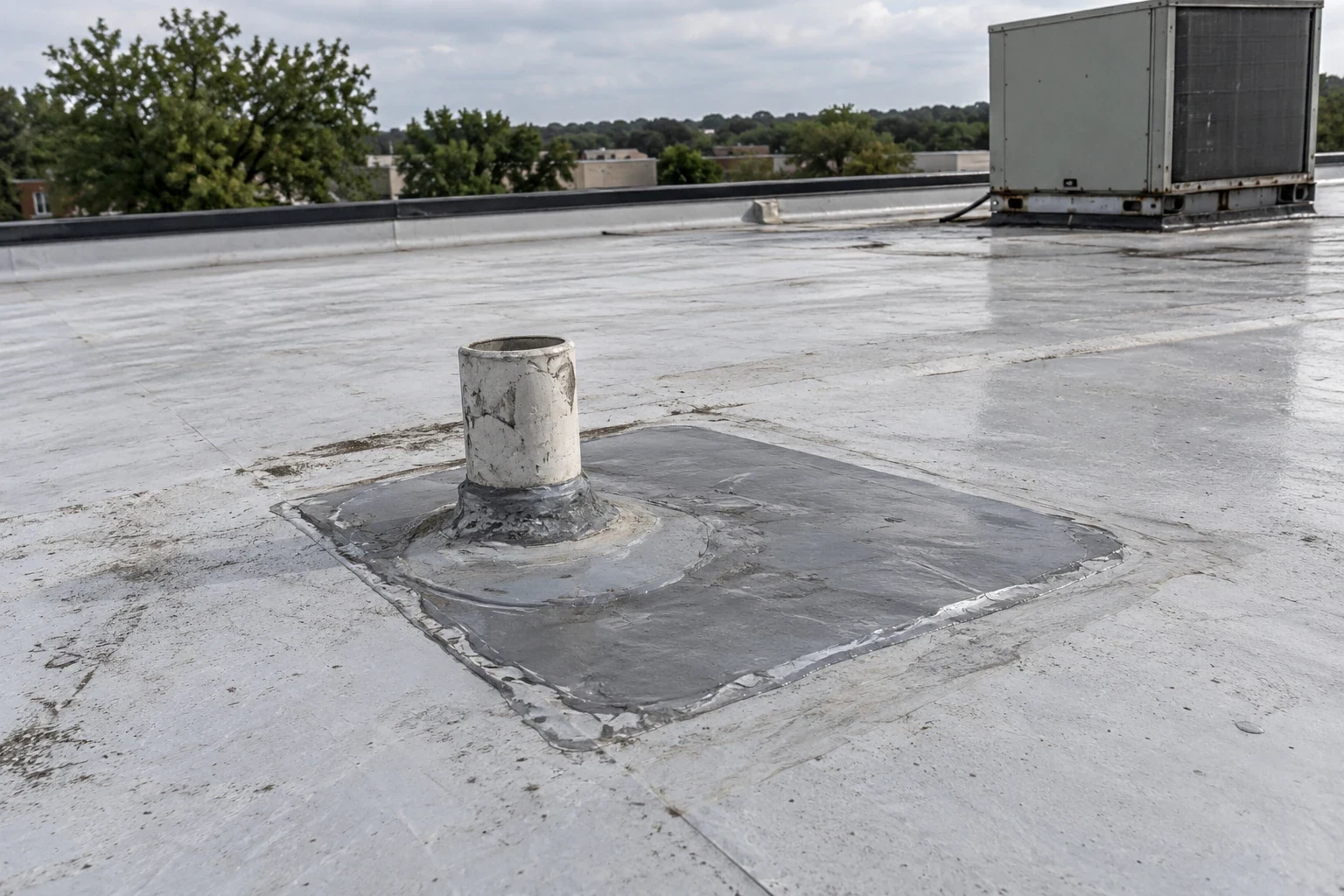
Mechanical curbs, drains, edge metal, and penetrations can transmit heat or leave openings where flashing has separated. We test or open only the approved area, then record the layers and close each inspection point. If electrical or mechanical equipment is involved, the general contractor coordinates its inspection and release before roofing resumes. A membrane breach may need a discrete patch, while damaged flashing calls for a transition repair. Those line items remain distinct even when they sit within a fire-affected zone.
Repair boundary and material choice
The repair boundary follows the condition of the roof layers, not only the visible discoloration. Sound membrane may be retained when preparation and inspection support a compatible tie-in. Heat-deformed material or wet insulation may need removal and replacement. A deck with visible charring or uncertain capacity requires evaluation by the appropriate project professional before a roof assembly is installed over it. We identify the evidence, proposed boundary, and approval required before expanding demolition.
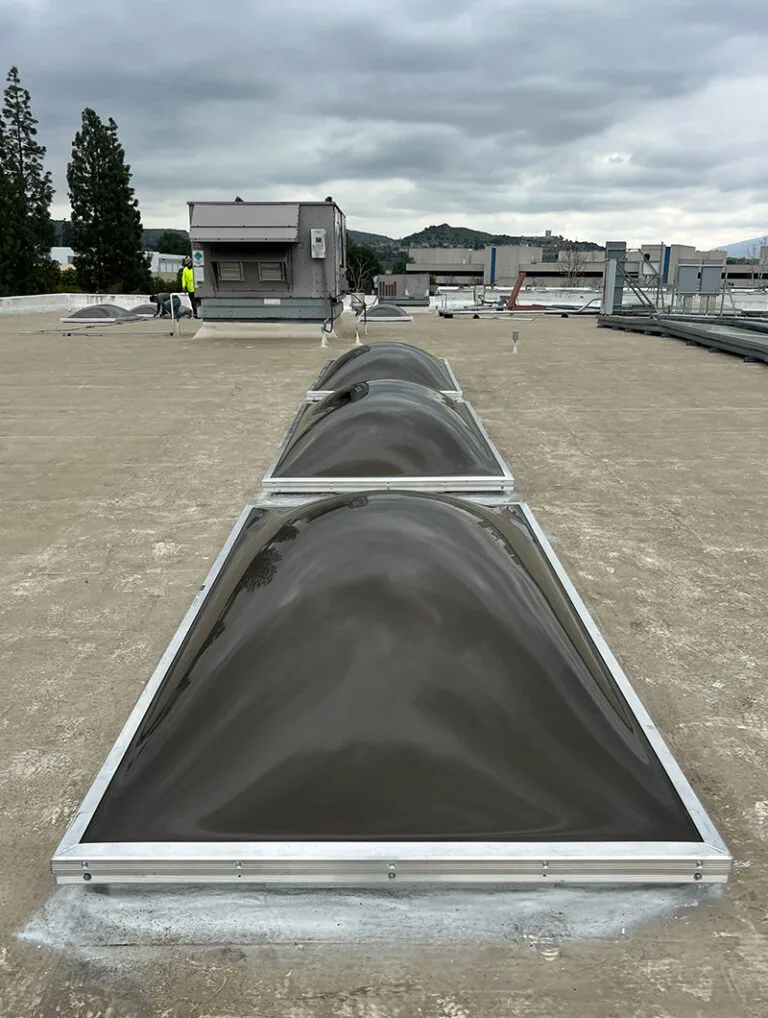
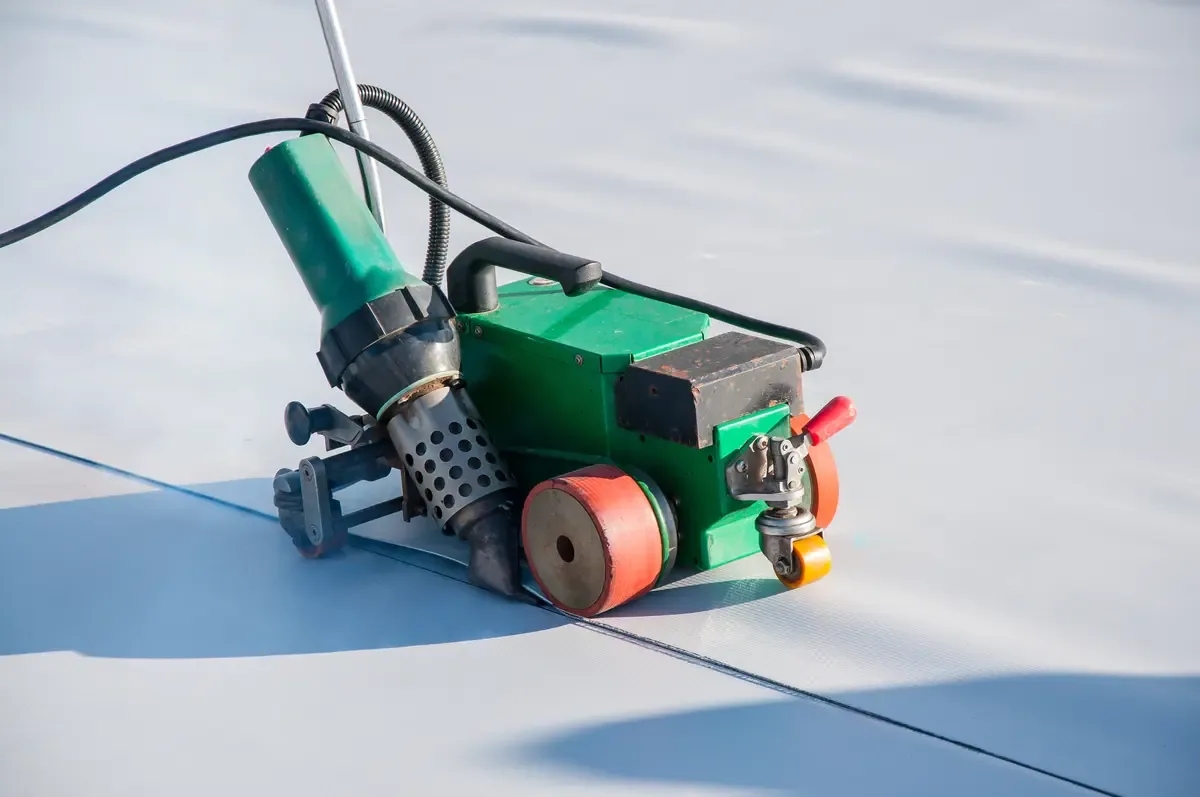
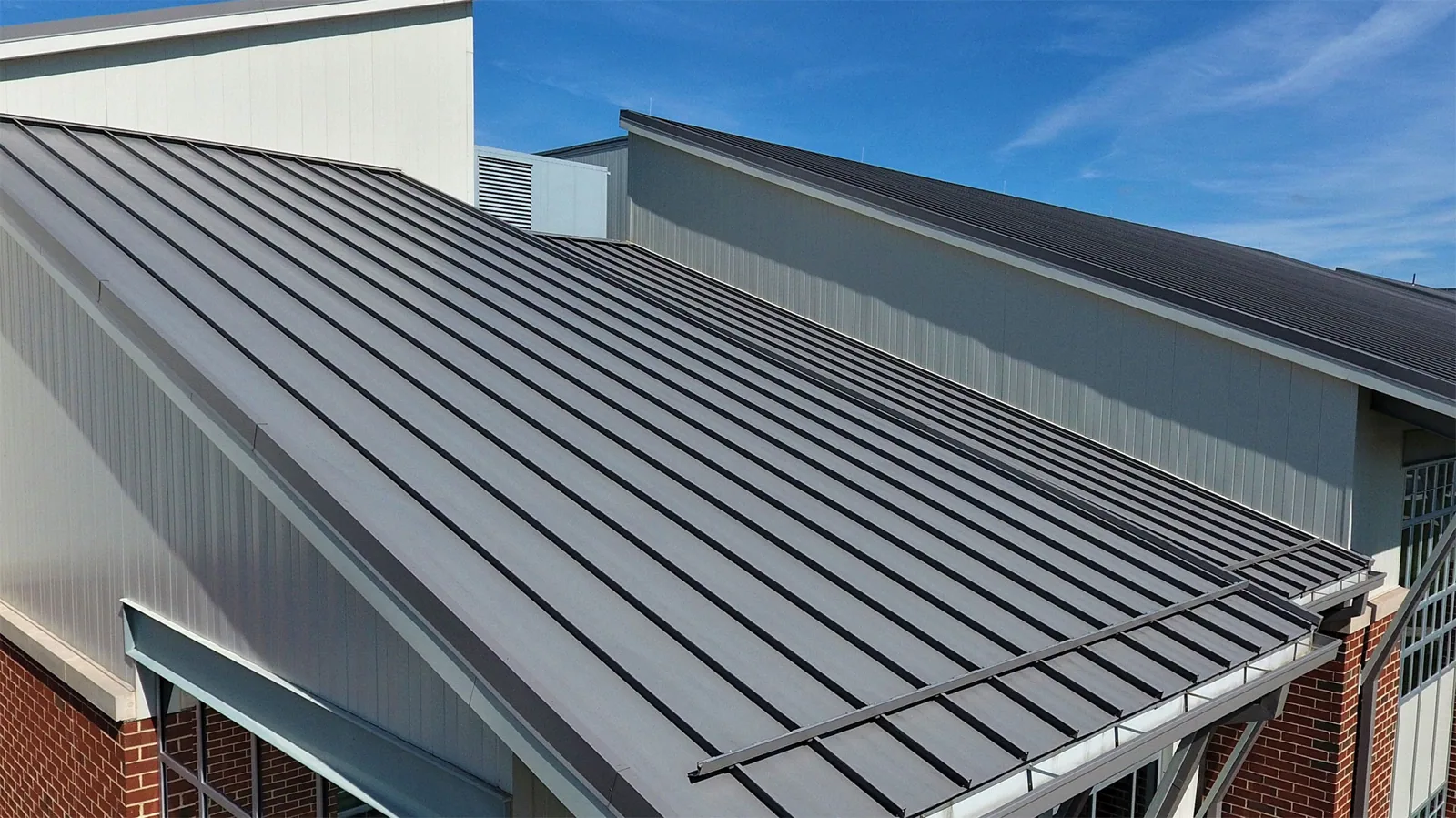
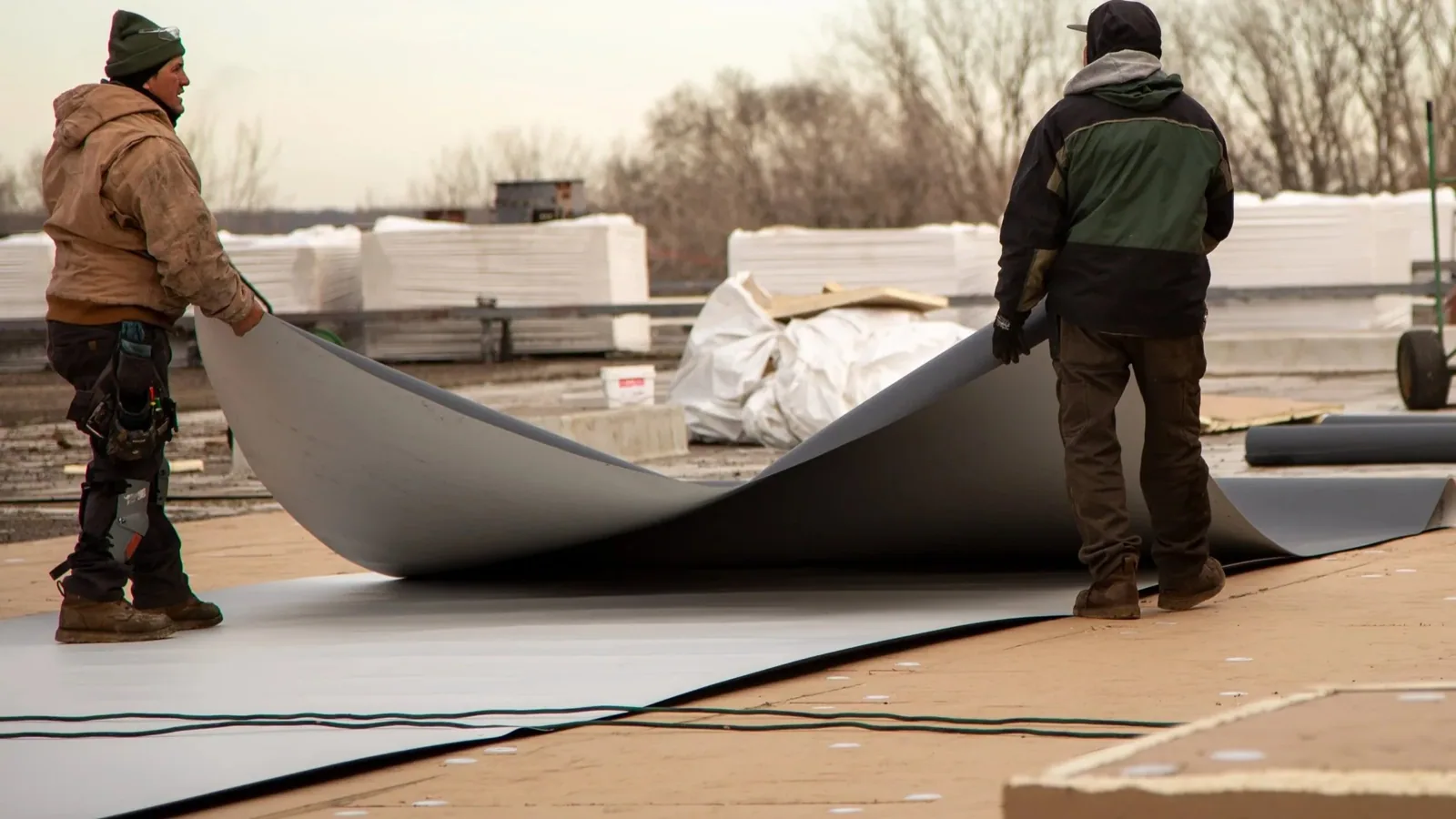
Replacement material must work with the remaining system and the building’s design. A thermoplastic membrane, EPDM, modified bitumen, or metal assembly each has different transition details. We record known product information and identify any unknown layer that could affect compatibility. The replacement scope can include insulation, cover board, flashing, and drainage work when removal reaches beyond a localized area. If only a limited section is affected, a repair work package can document the tie-in and adjacent conditions without implying the entire roof has been evaluated.
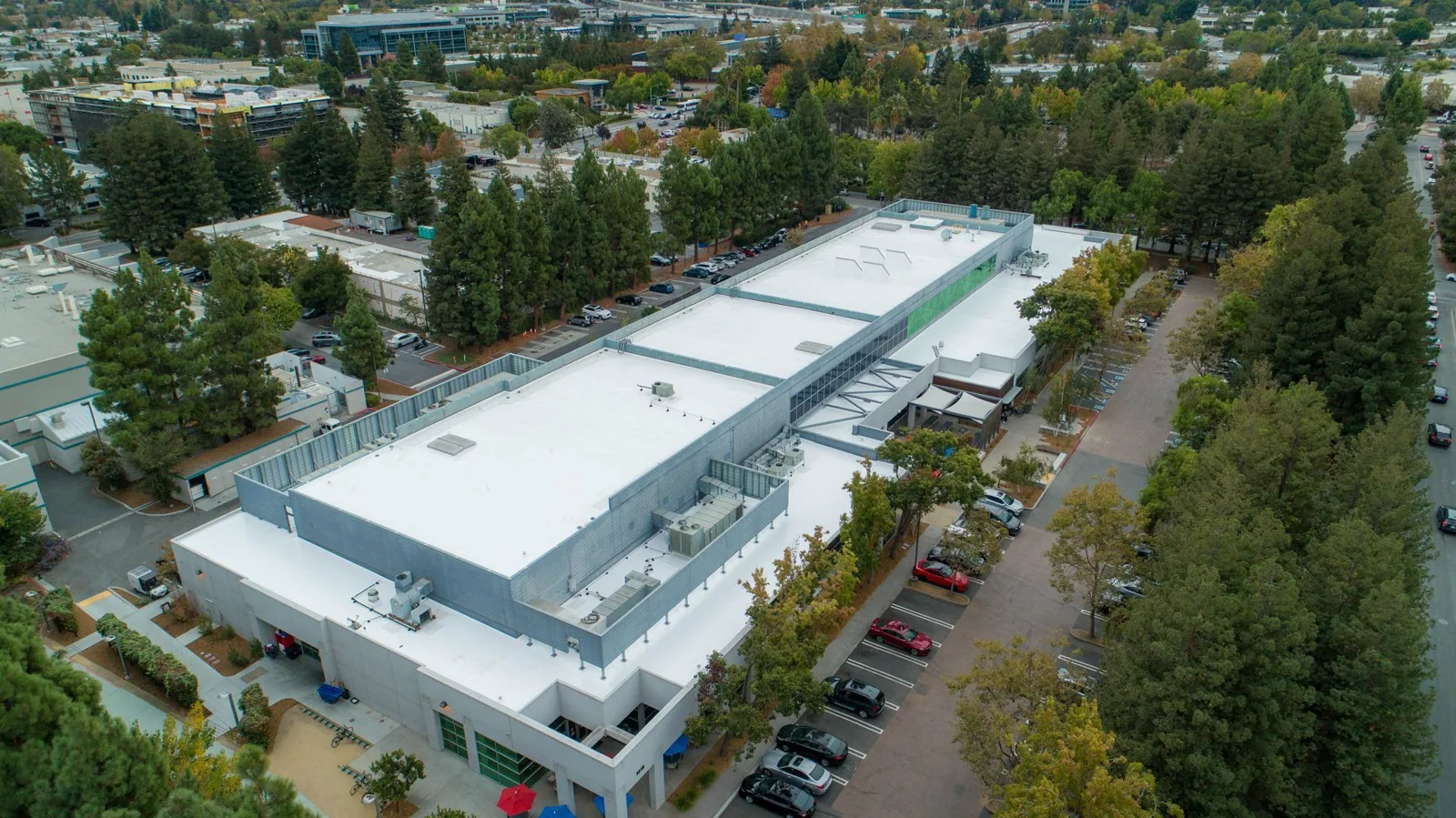
Heat window and trade sequence
Fire restoration often requires several work packages: protected access, controlled removal, substrate inspection, drying, replacement, and final detail closeout. We mark where roofing depends on electrical, mechanical, environmental, or structural release. A hold point prevents new cover board or membrane from concealing a condition still awaiting review. If conditions change, the owner can see the affected zone and the decision needed to proceed.
In July the normal high of 94.5°F is a scheduling reference only; the surface reading is what releases a step. We check temperature and moisture against the product instructions before adhesive, primer, or coating steps. A weather delay can require the exposed section to be protected and the substrate checked again. Along the South Broadway Commercial Corridor, equipment arrival may be affected by site access or local traffic conditions; the property confirms its actual delivery window. The selected roof system and insulation assembly determine the field sequence and material handoff.
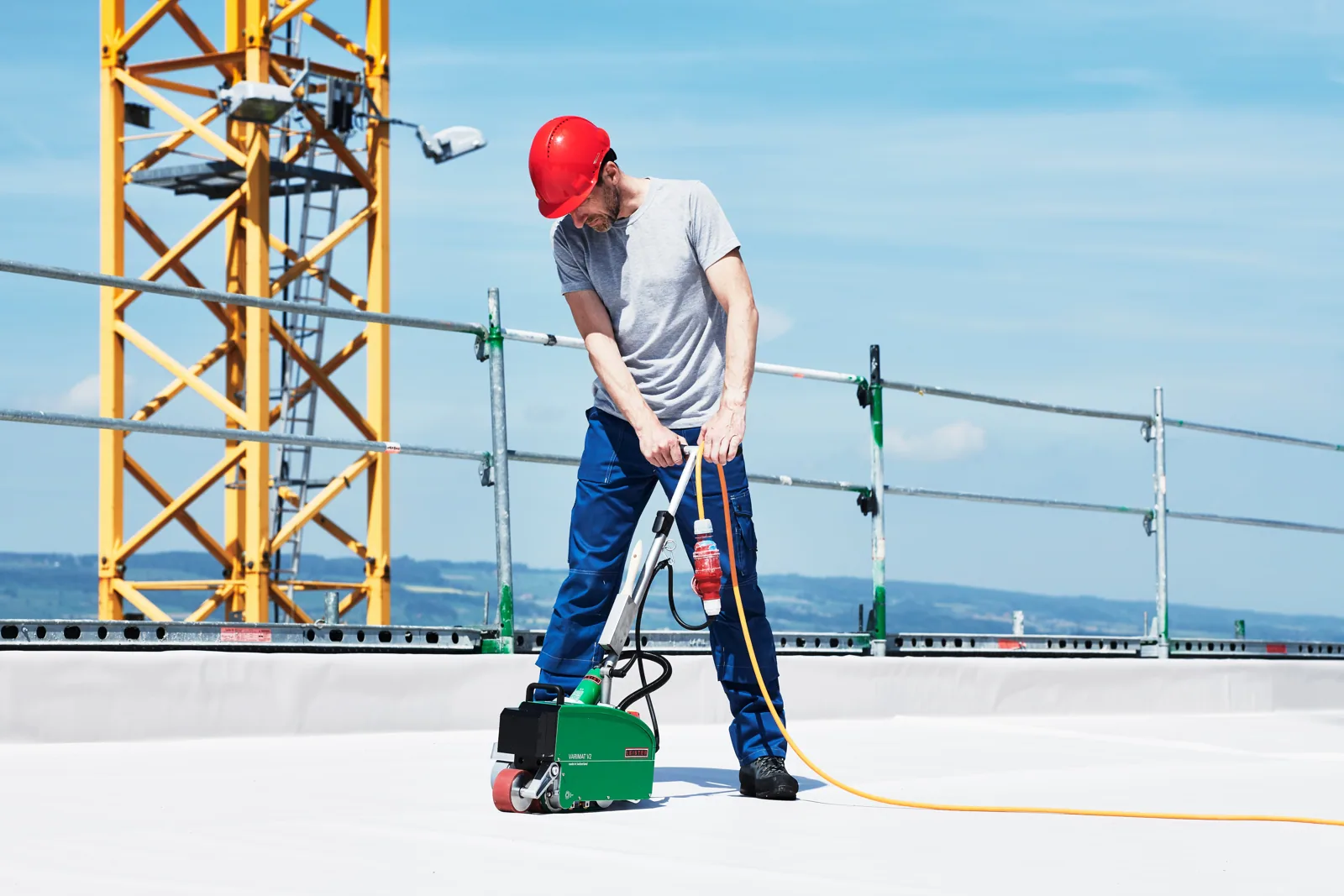
Evidence for restoration decisions
The closeout report lists inspected zones, photographs, test locations, materials removed, temporary protection, and remaining open conditions. We distinguish what was visibly damaged from layers that were sampled or replaced. It also records any access limits and the next approval or trade release. That gives the owner and general contractor a traceable record while restoration work continues inside and above the roof. If separate additions use different membrane types, we keep their zones and test results distinct so one repair detail is not applied across assemblies without review. The status sheet also names who is responsible for removing temporary protection after permanent closeout and whether another trade must inspect the area first.
Cost and schedule depend on the affected area, removal depth, disposal, substrate condition, replacement assembly, testing, access, and coordination among trades. We identify confirmed work and possible extensions separately so the owner can approve the next package on evidence. A photo-supported report can carry the findings into a capital or insurance review. For a property near the South Broadway Commercial Corridor, we confirm staging with the building representative. The final handoff marks completed zones, remaining tests, and the next decision date.
Commercial Roofing Questions
Can the existing roof be kept after a fire?
That depends on membrane condition, substrate, insulation, smoke residue, and water intrusion. We inspect visible layers and propose test locations where concealed conditions matter. The report separates material suitable for a tie-in from areas requiring removal or further evaluation.
Does firefighting water change the roof repair?
It can. We check drains, openings, insulation, and deck conditions where access permits, then record how far the wet area is confirmed. A wet layer may require drying or replacement even outside the visible heat-affected zone.
Who releases the roof for removal work?
The owner and general contractor coordinate site access and required reviews with the relevant project professionals. We identify the roofing work zone and hold points, then begin removal after the site releases that area. Any remaining equipment or structural review stays visible in the handoff.
How do you keep a damaged area protected during reconstruction?
We define a temporary closure that fits the opening and preserves drainage, then record its condition and the person responsible for the next check. The exposed zone is limited to the approved work package. A change in weather or access triggers a new roof-condition check before resuming.
What drives the cost of fire roof repairs?
The affected area, removal depth, disposal, moisture findings, deck condition, replacement layers, access equipment, and trade coordination all affect the scope. We separate confirmed work from possible extensions. The owner receives a defined decision point before the crew opens additional sections.
Related Pages
Commercial Roof Inspection
Tyler, TX
Emergency Commercial Roof Repair
Tyler, TX
Sequence the fire repair
Send the roof plan, assembly records, access window, current condition, and decision deadline. We will return a phased work package with protected zones, test points, trade hold points, and roof releases marked.