
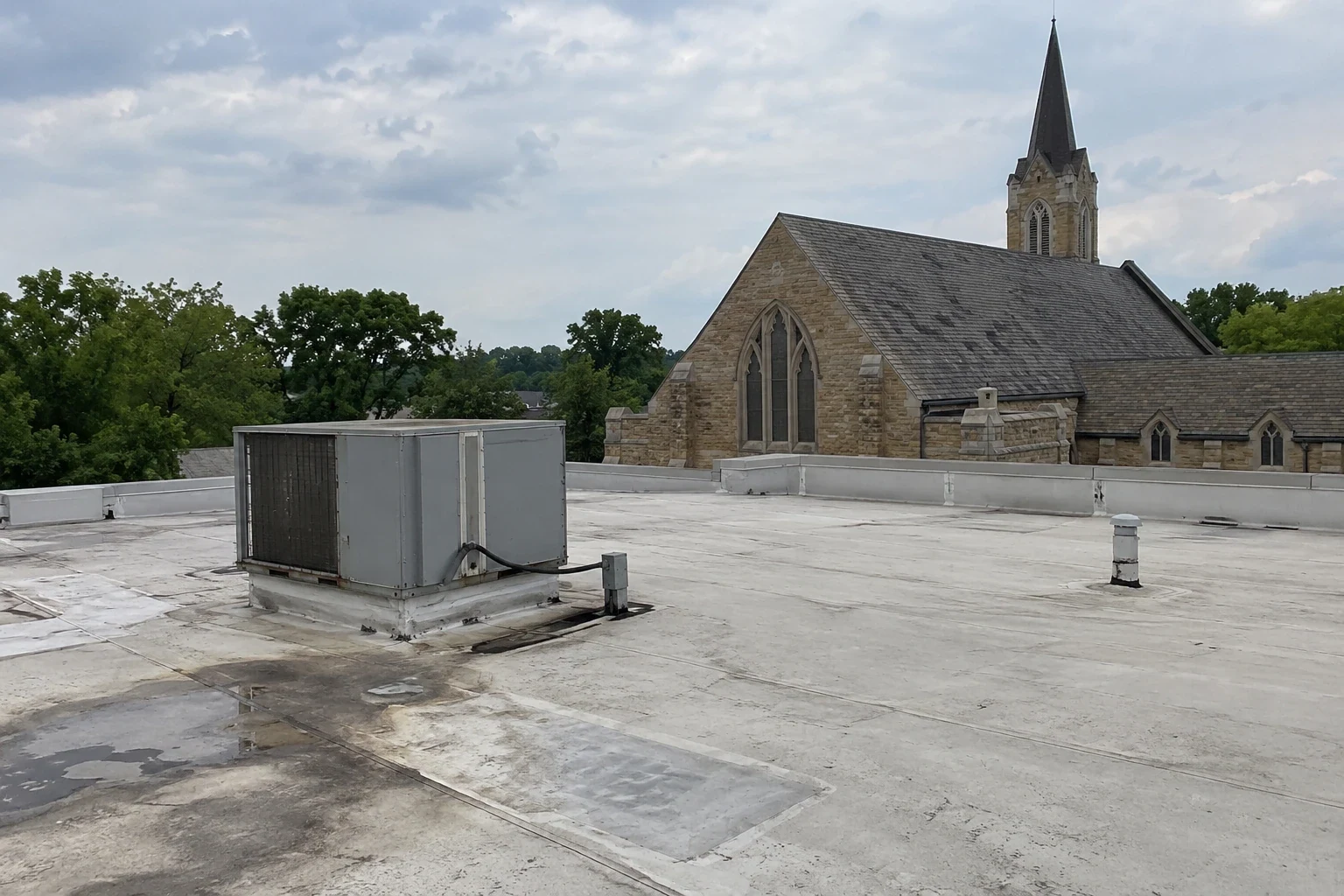
State Highway 64 puts New Chapel Hill’s businesses, school, and residences in a small incorporated town southeast of Tyler, but each commercial roof still needs its own work boundary. We start with the roof plan, reported leak areas, assembly records, and access rules. On the first walk, the crew marks seams, drains, edge metal, penetrations, and transitions by zone. That gives the general contractor a field record to review before a repair, recovery, or replacement package is released.
Nearby Tyler’s normal July high averages 94.5°F, which is why summer work here keeps room for the heat-sensitive steps of preparation and installation. A New Chapel Hill work package accounts for the spring and fall severe-storm window by setting temporary protection and a defined stopping condition before exposure begins. A commercial roof inspection records the roof that is actually present. We check the product requirements and current substrate conditions before setting an adhesion window or assigning a crew handoff.
A work package for a small-town property
New Chapel Hill is an incorporated Smith County town on State Highway 64, about eight miles southeast of Tyler. The town includes businesses, a school, and residences. For a commercial building, we identify the occupied spaces below, confirm the membrane or metal system, and measure the area proposed for work. The first release includes access, preparation, and a secure stopping point.
A school-adjacent or mixed-use schedule may involve occupied hours, deliveries, and routes that cannot be blocked. We ask the project contact to identify those limits before staging material or opening a roof zone. Photos pair each finding with a roof-plan location, and the work package lists what can proceed, what remains untested, and who releases the next area. For nearby work in Tyler or Troup, each address receives a separate access plan instead of inheriting another property's assumptions.
What the first roof walk records
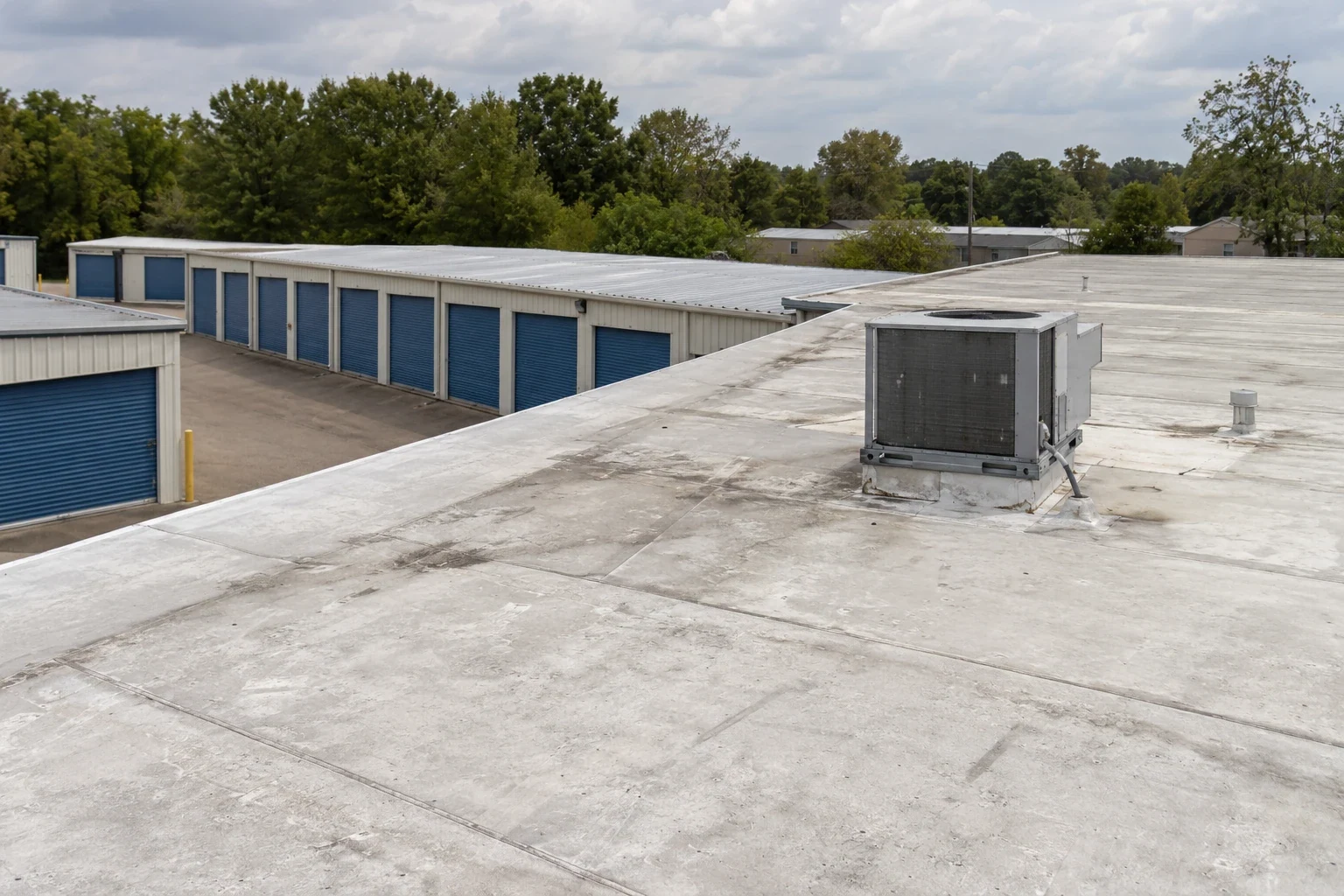
A stain indoors does not set the limit of a roof repair. Water can travel beneath a membrane before it reaches a ceiling, so we compare the report with seams, penetrations, curbs, wall transitions, perimeter details, and drain paths. The inspection notes visible openings, prior patches, ponding indicators, and areas that could not be reached. Where a hidden layer might alter the recommendation, we propose a test point and wait for authorization before making an opening.
That discipline matters when a building operates during the repair. The crew identifies a protected work zone, safe access, material staging, and a stopping condition before disturbing the assembly. A photo-based condition report ties the observation to its location and records the next decision. Where moisture is in question, an infrared scan can help focus follow-up testing, but the chosen method and field conditions determine what it can establish. No single reading substitutes for a documented test where the result changes the scope.
Heat-sensitive preparation and release
Direct sun, shade, and residual moisture can give a roof field and adjacent flashing different preparation windows. We check each planned detail before materials are mixed or a bonded connection is opened. We take a roof-zone temperature and substrate reading, then compare both with the selected material's application limits before releasing that step. If the surface sits outside that window, the operation holds. The crew can complete an authorized task that does not expose the roof or compromise the detail, then return when the condition supports the next release.
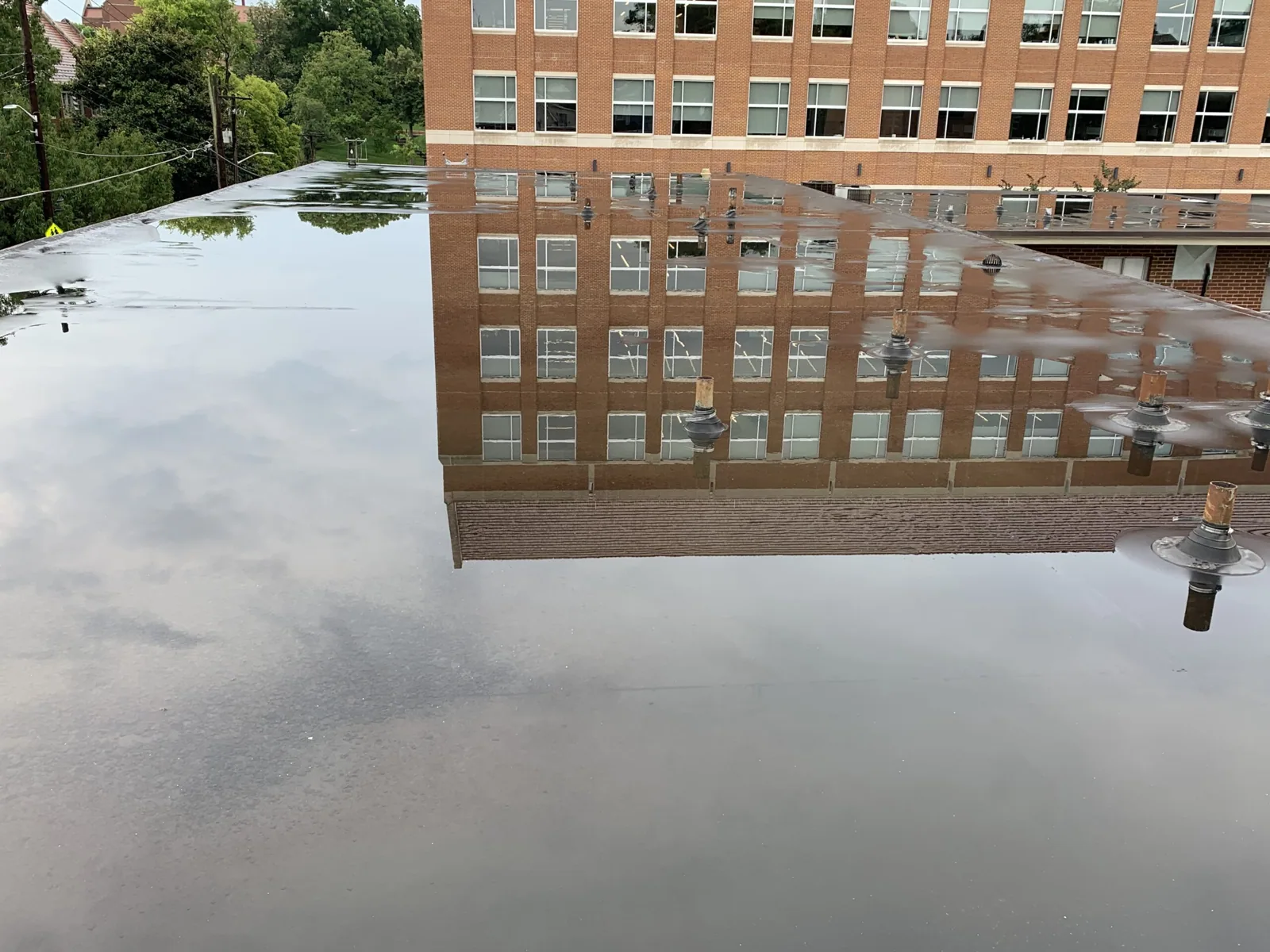
Preparation has to match the system. A membrane repair may require clean, dry, compatible surfaces and a weld or adhesive method suited to the existing assembly. A coating needs a sound, prepared substrate and confirmed compatibility; it does not resolve moisture beneath the roof. We list the preparation, test point, weather delay, and exposed-section closeout in the sequence. A TPO assembly review or restoration assessment begins with the records and roof findings, not a town-wide assumption.
Storm findings and water control
A weather alert may put New Chapel Hill under a regional watch, but the roof decision starts with what the field shows at that building. We map displaced edge metal, broken flashing, punctures, open seams, and debris by zone, then record which inspection paths remain blocked. The owner can tie the repair decision to visible evidence and give the crew a defined temporary water-control limit. The regional spring and autumn storm pattern helps set readiness, not a property-specific diagnosis.
Water control is a separate work package from permanent repair. We mark the drain path, protect the active opening, and identify the condition that must be checked before the crew leaves. If hail or wind is involved, a hail-impact inspection and a wind-damage review can organize different observations without presuming what a storm did. The photo record also notes temporary materials and the next access release. This gives the project team a usable handoff if weather pauses work before the final detail is complete.
Repair limits, options, and cost drivers
A localized defect with stable surrounding material may support a patch. Repeated seam separation, wet insulation, weak attachment, or a damaged deck can point to a larger boundary. We compare repair, recover, restoration, and replacement only after the assembly and any approved test support those options. A recover requires a suitable existing roof, acceptable roof count and drainage, and a system compatible with the project. The owner sees confirmed work separately from quantities that depend on opening another area.
Pricing and sequencing reflect roof height, the route to the work area, curbs and penetrations, tear-off depth, insulation or deck condition, edge work, staging, occupied hours, and weather holds. We mark those drivers in the work package rather than hide them in a single allowance. The repair scope identifies preparation and tie-in; a replacement plan adds removal, drainage, and inspection hold points before the new assembly is covered. A maintenance record can carry confirmed findings into a later budget decision without treating a nearby property as a model for this one.
Commercial Roofing Questions
Does the town profile identify which buildings need a new roof?
No. The local profile establishes a town with businesses, a school, and residences, not the roof assembly or condition at a specific property. We inspect the building, review available records, and document any test needed before comparing repair and replacement.
How do you set a work window during hot weather?
We check the actual substrate and surface against the selected material instructions. Tyler's July normal helps with seasonal planning, while the project reading governs the step. If the condition is outside the permitted range, we hold adhesion-sensitive work and record the next release requirement.
What happens if a leak is active during the inspection?
We first confirm safe access and locate the affected area. Temporary water control receives its own boundary and closeout note. Once the assembly can be examined, we document the permanent repair scope and any concealed condition that needs owner approval.
Can a coating be applied over the existing roof?
Only after compatibility, attachment, moisture, drainage, and surface preparation are checked. A coating may be considered when the assembly supports it, but it cannot correct wet insulation or a failing detail below. The inspection record shows why restoration is or is not a fit.
What should the general contractor send before a site walk?
Send the roof plan, available assembly records, leak history, access rules, occupied hours, and decision date. We use that package to map the first walk, identify test points, and set an approval path before removal or material staging begins.
Related Pages
Commercial Roof Inspection
Tyler, TX
Tyler
Tyler, TX

Troup
Tyler, TX
Commercial Roof Condition Reports
Tyler, TX

Set the first roof-zone release
Share the roof plan, assembly records, current condition, access window, and decision deadline. We will return a sequenced field package with tests, approvals, and exposed-section closeout identified.