
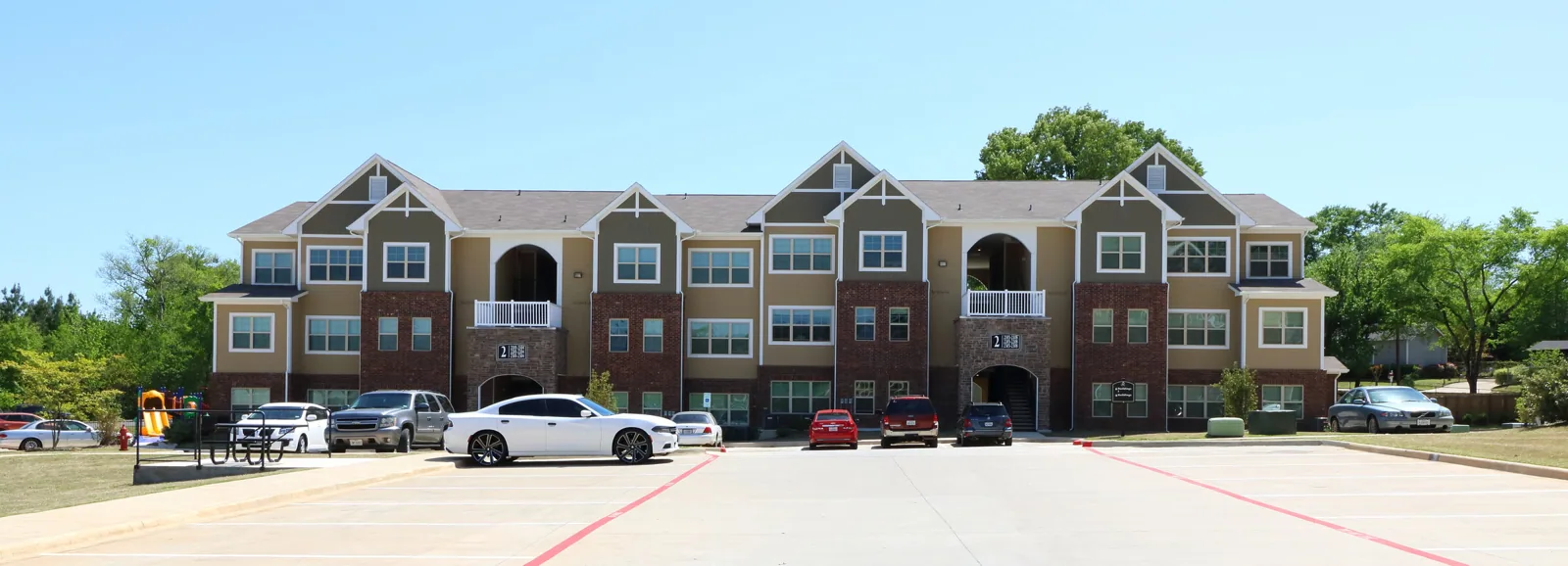
Downtown Troup’s commercial roofs need a work boundary that respects the building and the active street-level use below. Troup’s central business district developed across multiple commercial properties, with business houses serving the town’s early trade. That history gives the district a defined commercial context, but it does not establish the current roof system, building material, or condition. We check each property’s assembly records, access route, leak history, and operating hours, then map the roof zones before setting a repair or inspection package.
Commercial roof repairs in the district are sequenced around occupied storefronts, material access, and the section the crew can close securely. Tyler's 94.5°F normal July high sets useful summer context, and spring or autumn storms can bring hail and damaging wind to the wider region. The daily plan reserves a suitable period for heat-sensitive preparation and sets temporary protection before the assembly is opened. We check the surface, substrate, details, and actual access conditions, then identify the next hold point. For work beyond this district, the Troup service area and Tyler service area retain distinct location records.
A district, not a single building
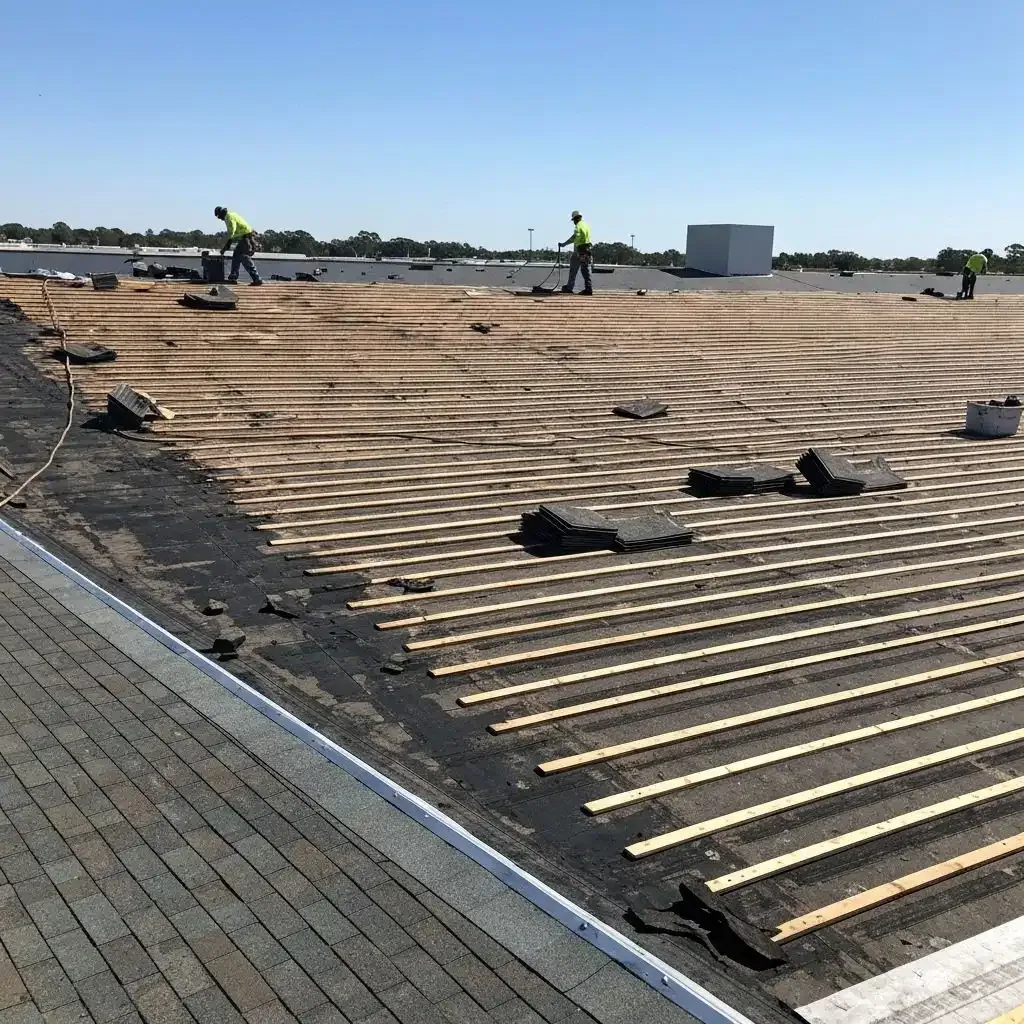
The historic account notes that business houses in downtown Troup were chiefly wood-frame structures and that the district was rebuilt after an 1880 fire with more substantial buildings. That record describes past construction, not the materials or condition of a present roof. We inspect what exists now: membrane or metal surface, seams, flashings, edges, parapets, penetrations, and drainage. If the roof has older additions or repairs, the Diligence Notes show how those details meet rather than assuming the whole roof is one uniform assembly.
The district’s early commercial center included multiple business houses. For a current roof project, the property contact identifies loading, street use, and the hours when an entrance must remain available to staff or customers. We coordinate any lift, material delivery, or protected entrance with the general contractor, then mark where debris and supplies may be staged. A commercial roof inspection maps the condition, while a photographic condition report records each observation and access limit for later review.
Water path and roof-zone findings
A ceiling mark is a starting point, not the roof opening. We check the interior area where water was reported against the roof plan, and we trace possible routes through a seam, flashing transition, penetration, or drainage detail. Water may move between layers before appearing indoors. The field record distinguishes visible surface condition from concealed moisture and identifies whether a selected test could change the repair boundary. A test cut or moisture survey proceeds only after the project team approves the location and method.
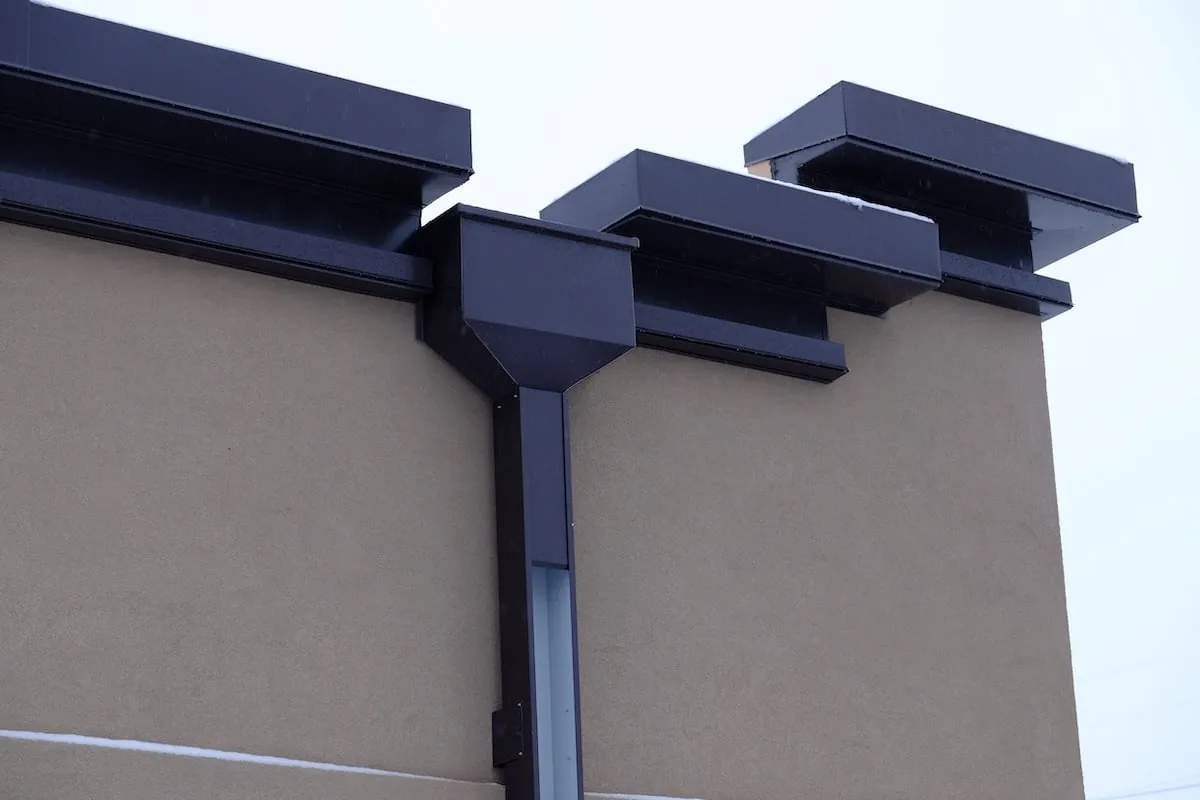
Small commercial buildings can have roof edges and access constraints that make a short work period important. We check curb and equipment clearances, note active use below, and state who can release each zone. If the assembly is single-ply, lap condition and membrane compatibility matter; metal requires attention to seams, fasteners, and trim. A flashing detail review can separate a failed transition from field membrane wear. For an active leak, a temporary response can establish safe access and water control while the permanent scope is being prepared.
Heat windows and storm review
The normal July high recorded for Tyler averages 94.5°F. For Downtown Troup work, that summer pattern helps reserve suitable periods for heat-sensitive preparation and installation. Before primer, adhesive, sealant, or coating work, we measure the roof and compare the result with the product instructions. The hold point is placed before an adhesion-dependent step, and the crew can use a delayed window for a different authorized task. The work plan records the reading and the next release instead of treating the weather normal as proof that the surface is suitable.
In Tyler, the June 8, 2021 tornado is part of the local record; the wider region also sees hail-producing severe thunderstorms and damaging winds most often in spring and autumn. These facts help the team plan a post-event review; they do not prove damage to a particular property. We photograph actual punctures, displaced edge metal, open laps, and debris by zone. If water is entering, call us; after dispatch is confirmed we document safe interim protection before measuring permanent repair. Temporary protection receives its own closeout so permanent repair can be measured after the roof is accessible and the affected layers are clear.
Repair limits, options, and cost
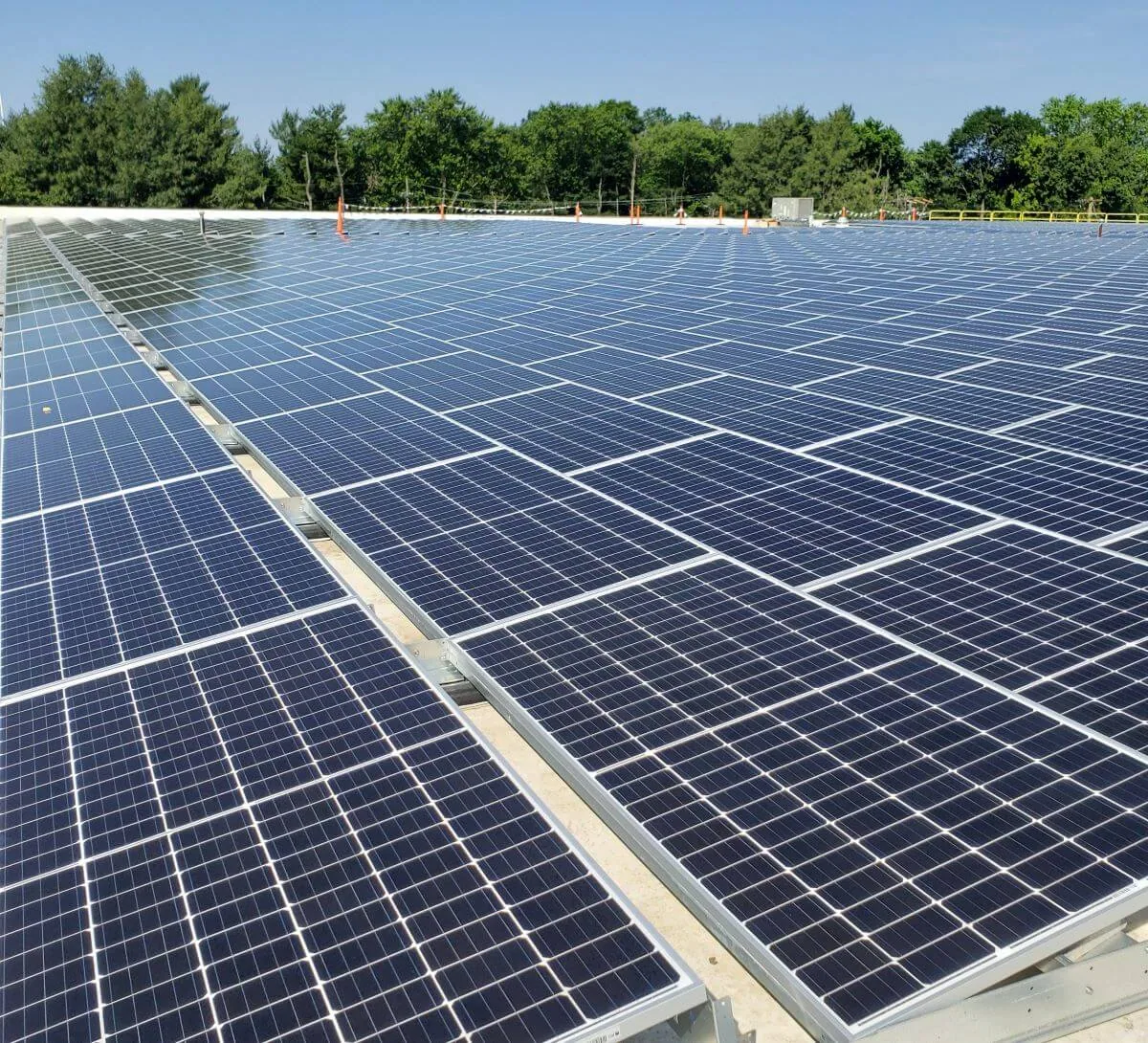
A contained defect surrounded by sound material may support a local repair. Removal runs to the approved limit; the exposed substrate is inspected and a compatible detail goes in with the transition documented. Broader moisture, recurring openings, weak attachment, or damaged deck can change the work from patching to a larger repair or replacement comparison. The crew pauses at the authorization boundary when a test or expanded removal is needed. This gives the owner a decision based on observed layers rather than a guess from the room below.
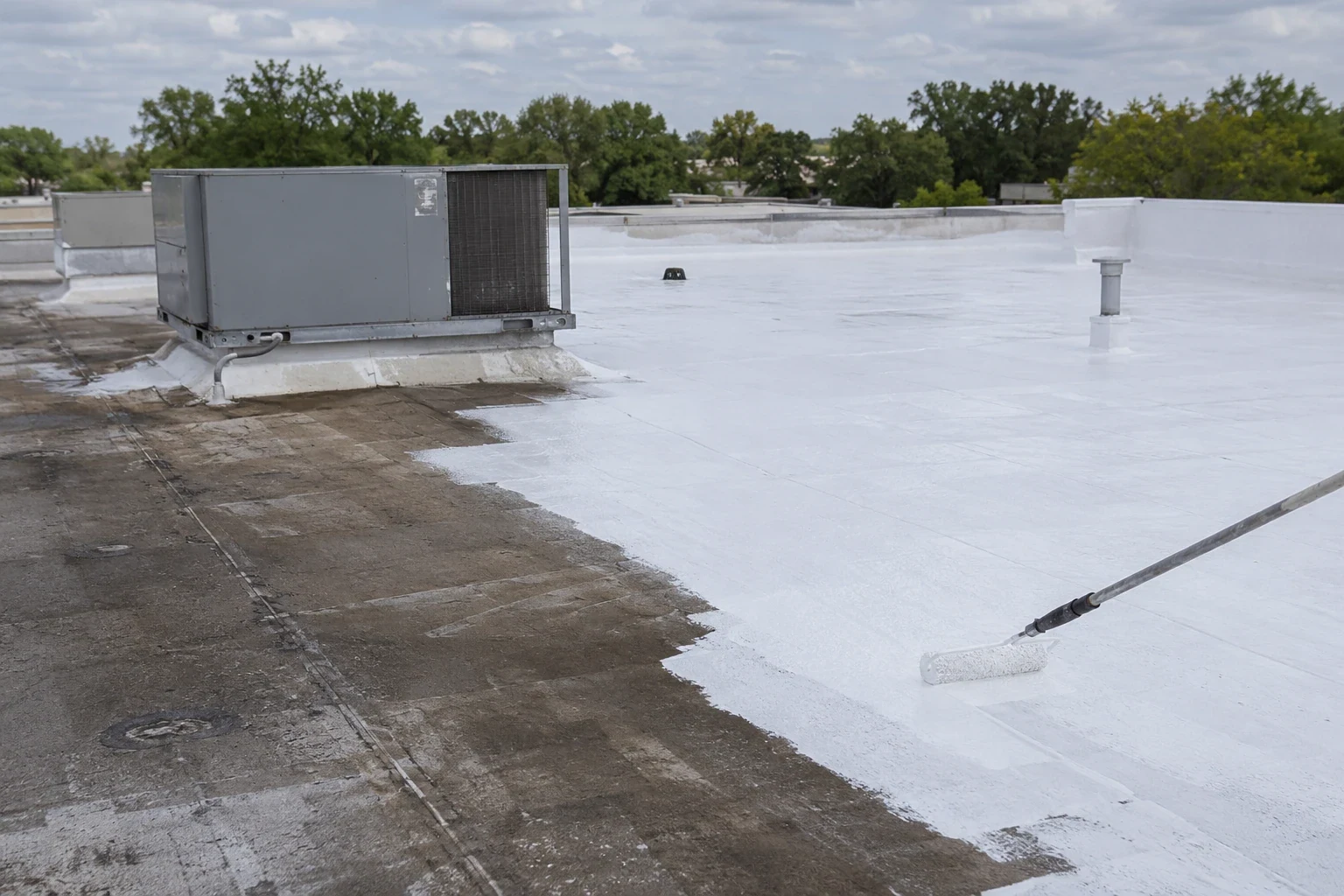
A recover must account for existing roof count, attachment, drainage, edge height, and project requirements. Cost and duration also reflect access, material method, roof penetrations, insulation replacement, deck repair, and weather-sensitive work. A repair package can be separated from a replacement scope. If a coating is under consideration, a restoration review first checks compatibility and preparation; it does not correct wet insulation or an unresolved leak detail beneath the surface.
Daily closeout and next access
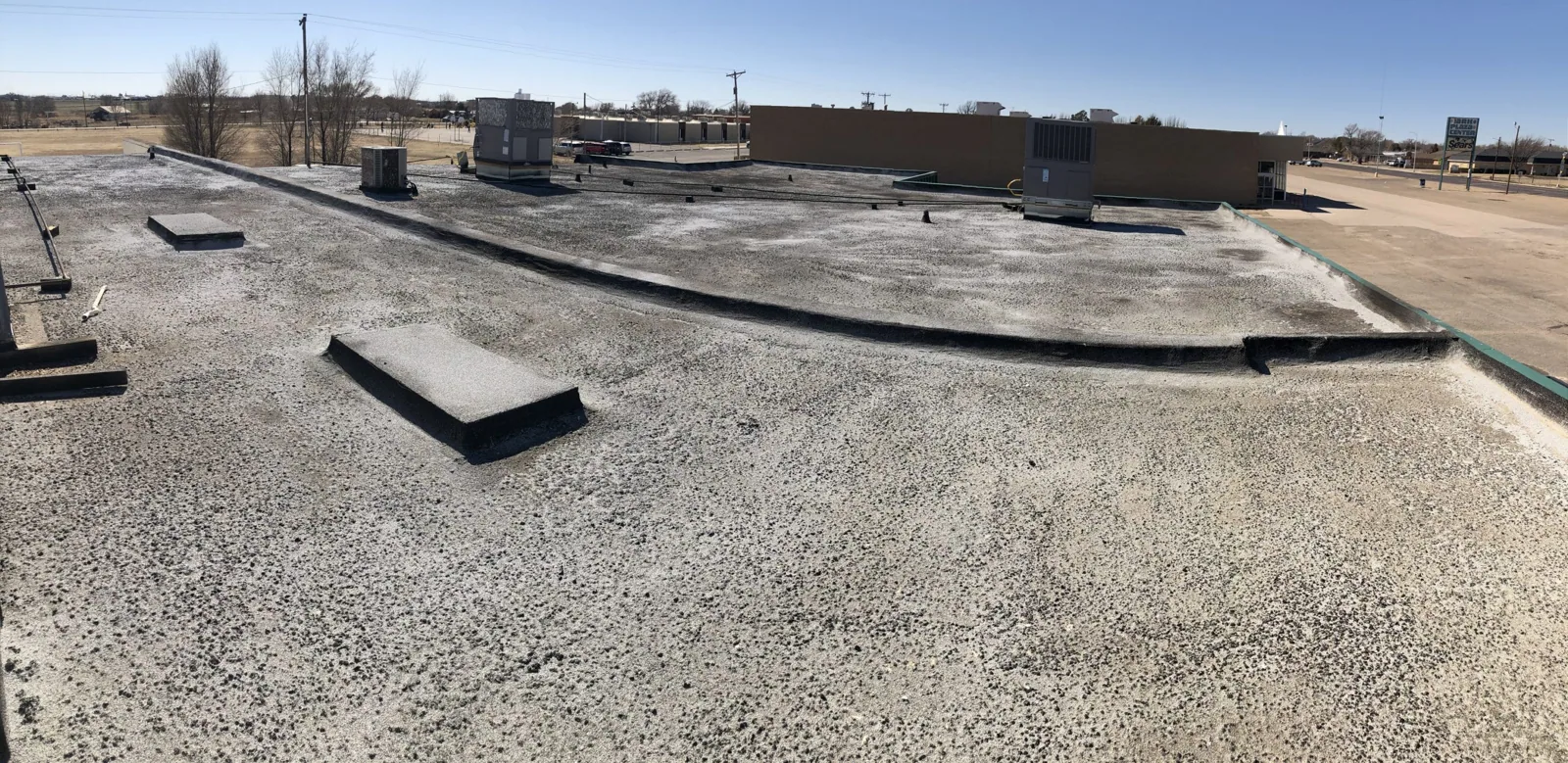
Each shift ends with the last completed detail, the temporary closeout boundary, and the inspection needed before the crew resumes. We attach photographs to the roof plan, note whether the drain path is clear, and keep open tests visible. If another trade needs access, the work package identifies who accepts the zone and when. That record is useful in a district where ground-level activity, material handling, and roof work share limited space and operating hours.
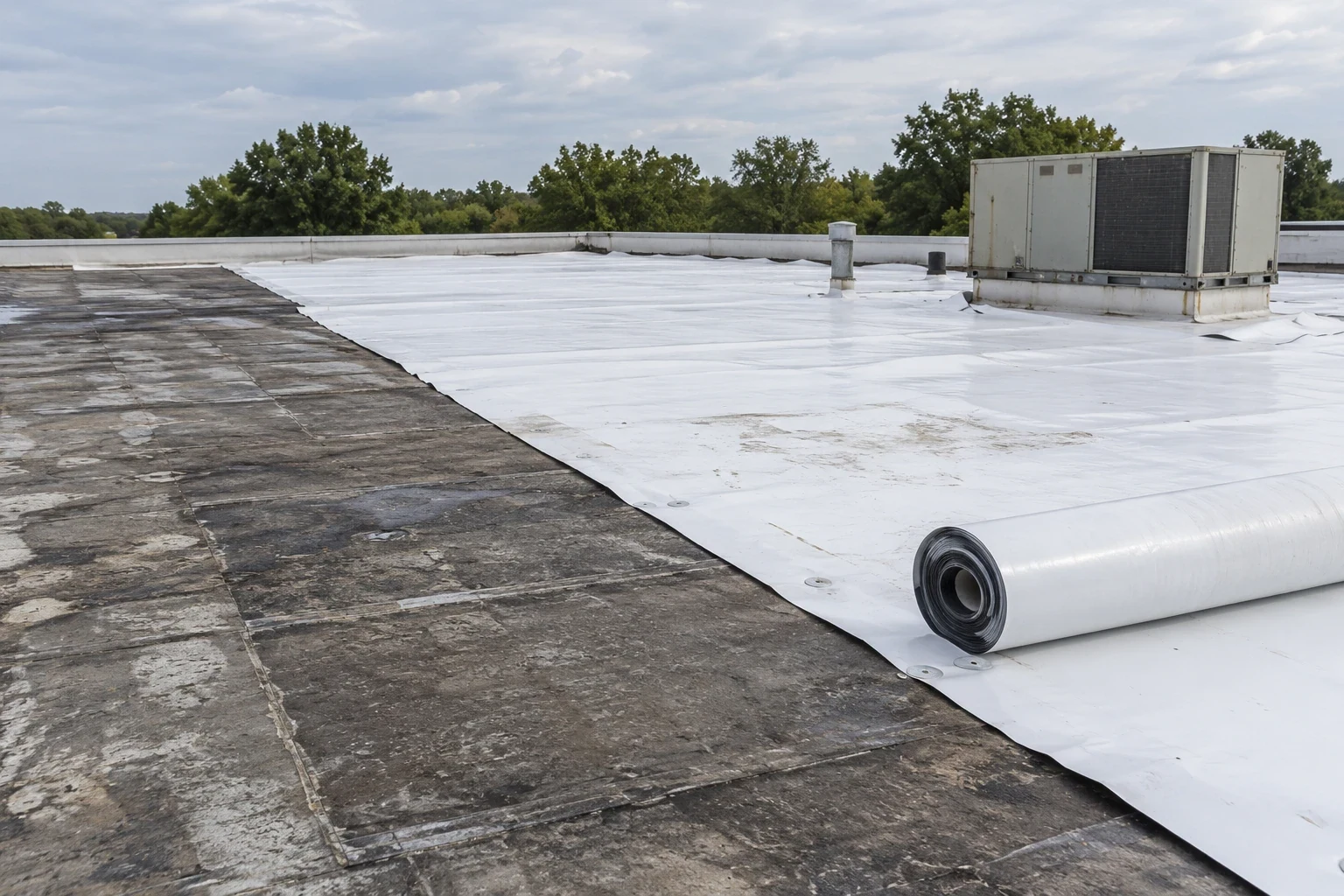
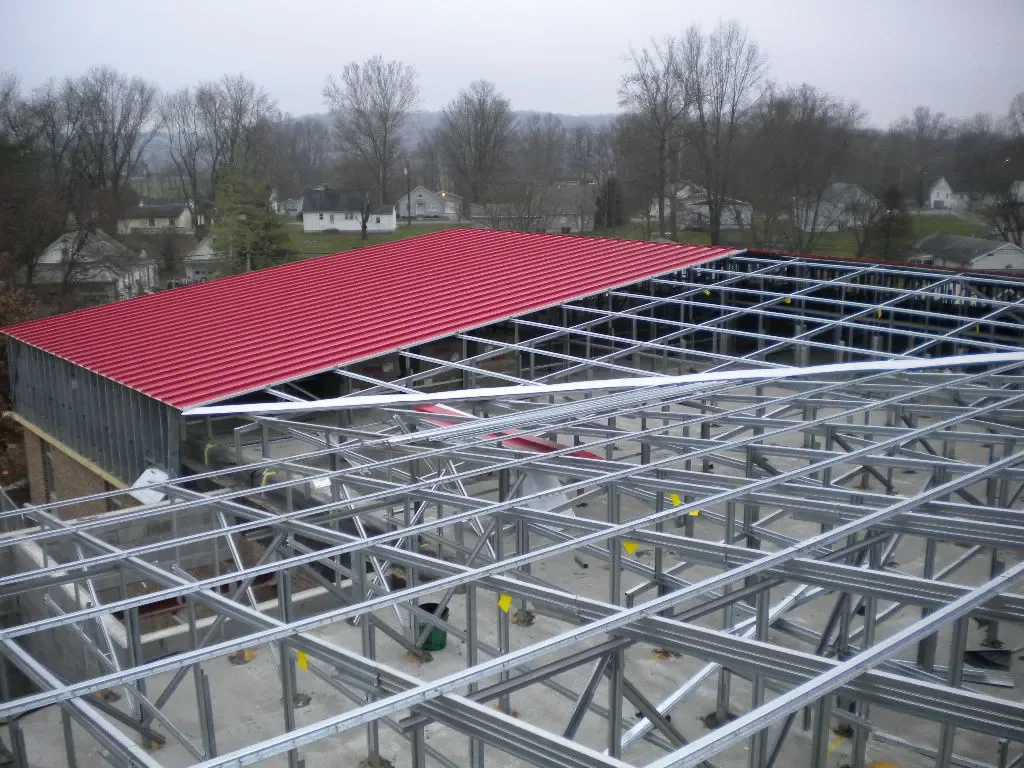
The TPO system and a standing-seam metal assembly call for different seam and flashing checks, so the closeout names the material actually repaired. The district’s historical fire and rebuilding account remains context only; current scope follows the present building and test results. Before mobilization, send the building's roof layout, any assembly documentation on hand, the permitted access period, current observations, and the date the scope decision is due. We return a sequenced field plan with confirmed work, open tests, and hold points marked for the general contractor.
Commercial Roofing Questions
Does the 1880 fire history describe today’s downtown roofs?
No. Earlier business houses and rebuilding do not establish present roof materials or condition. We inspect the current assembly, identify later repairs and transitions, and use records or approved tests where concealed layers could affect the scope.
How do you set a repair boundary when the leak appears inside?
We compare the reported area with the roof plan and inspect likely paths at seams, flashings, penetrations, and drains. Water can move within the assembly. We document visible evidence and identify a test point when a concealed condition could change the repair limit.
Can roof repairs be coordinated with downtown business hours?
We confirm each property’s access, delivery, protected entrance, and operating window with the project team. The work package divides the roof into zones and sets a release and closeout for each. Street or building constraints are verified at the current site rather than assumed from the district’s history.
What happens when heat interrupts an adhesion-sensitive task?
We take surface and substrate readings and follow the material requirements. If the conditions do not fit, the crew holds that step and moves only to an authorized task that can proceed. The record shows the last completed detail and the reading needed before release.
What should a post-storm roof record include?
It should identify the event date, roof zones inspected, actual punctures or movement, photographs, drainage status, temporary protection, and open tests. Regional weather context helps schedule the review, but property findings establish the repair scope. We keep temporary water control separate from permanent work.
Related Pages
Troup
Tyler, TX
Tyler
Tyler, TX
Commercial Roof Inspection
Tyler, TX
Commercial Roof Condition Reports
Tyler, TX
Set the first district work window
Share the roof plan, assembly records, access period, current condition, and decision date. We will return a field sequence with each test, roof-zone release, and exposed-section closeout identified.