
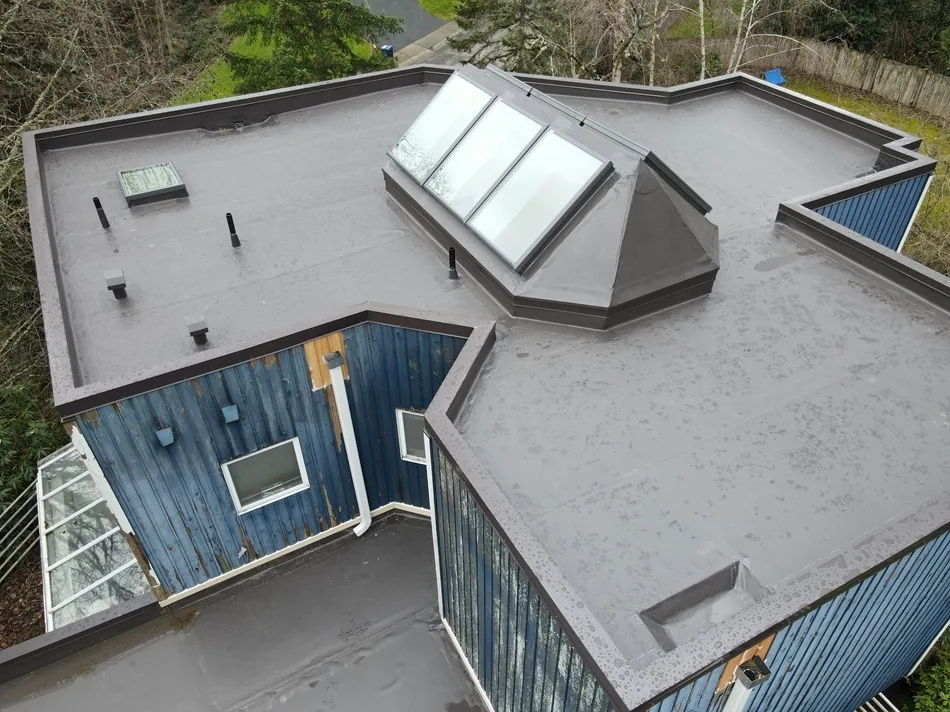
On a hot Tyler roof, a Versico membrane cannot move to the next seam until the crew knows the surface is ready. The normal July high of 94.5°F gives the foreman a seasonal heat-window cue; a substrate reading still decides whether this roof zone can accept a bond-dependent step. We inspect the existing assembly, note moisture and attachment questions, and set test points before the general contractor releases a roof zone. The South Broadway Commercial Corridor offers a broad commercial-area reference; Champion Commons is another multi-property development area along Earl Campbell Parkway. Staging and handoffs are checked at each property.
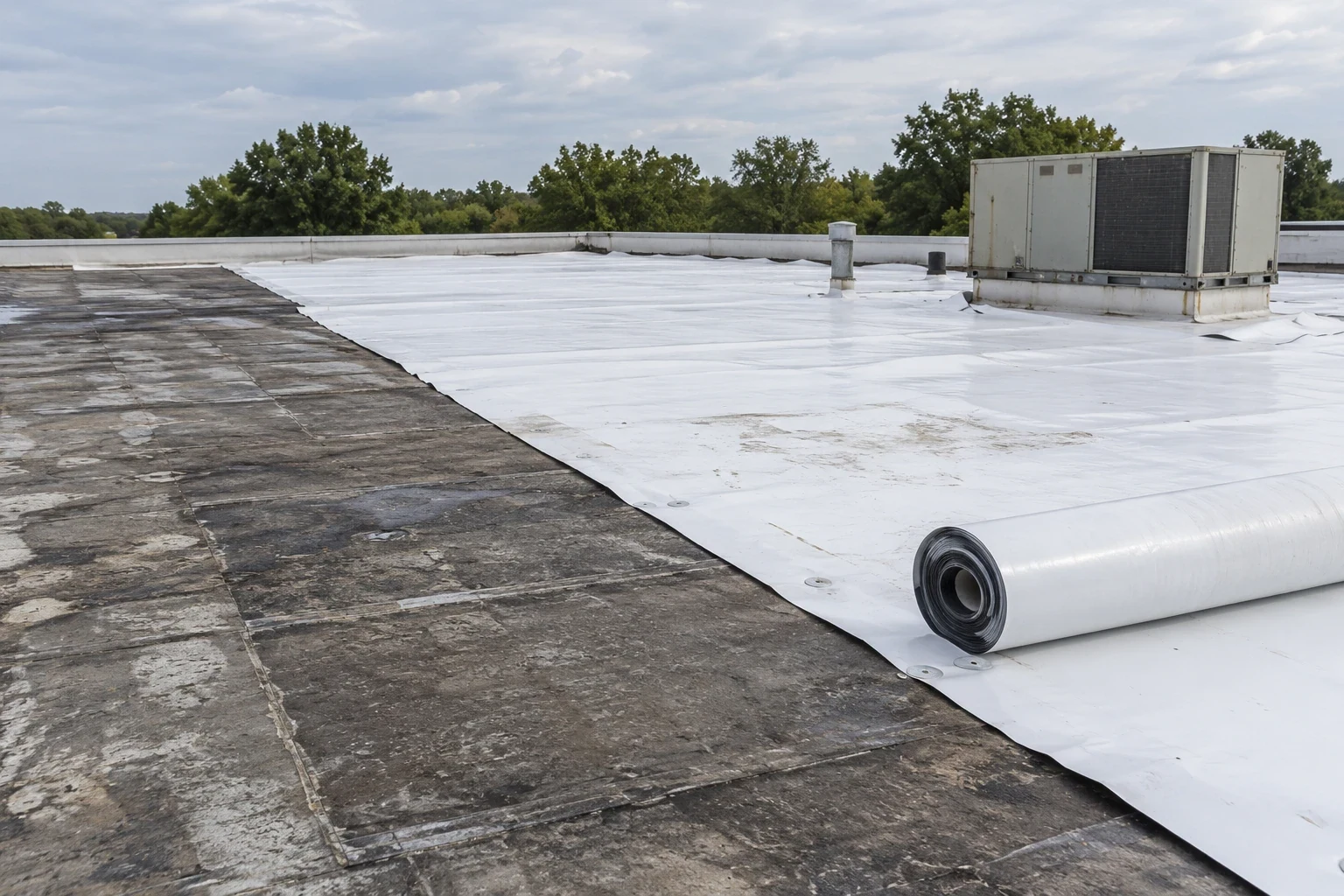
Versico commercial systems include membrane and accessory options that must be matched to the deck, insulation, perimeter, drainage, and approved design. We install, repair, inspect, and maintain the selected assembly based on project documents and field conditions. A manufacturer name does not resolve whether an existing roof can accept a recover or whether concealed moisture requires removal. A Champion Commons roof review can establish the access and condition questions before a material list becomes a field commitment.
Existing roof and system fit
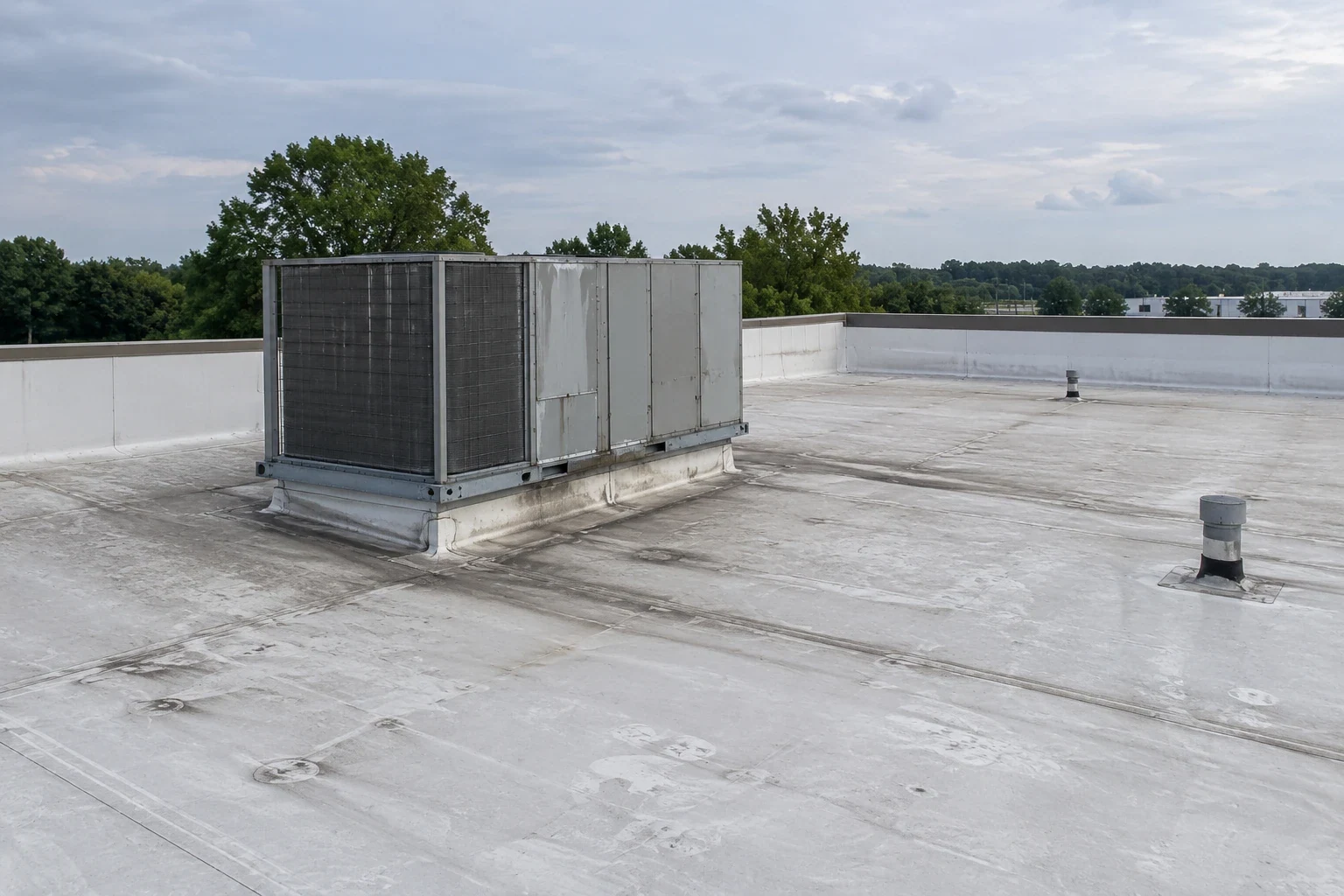
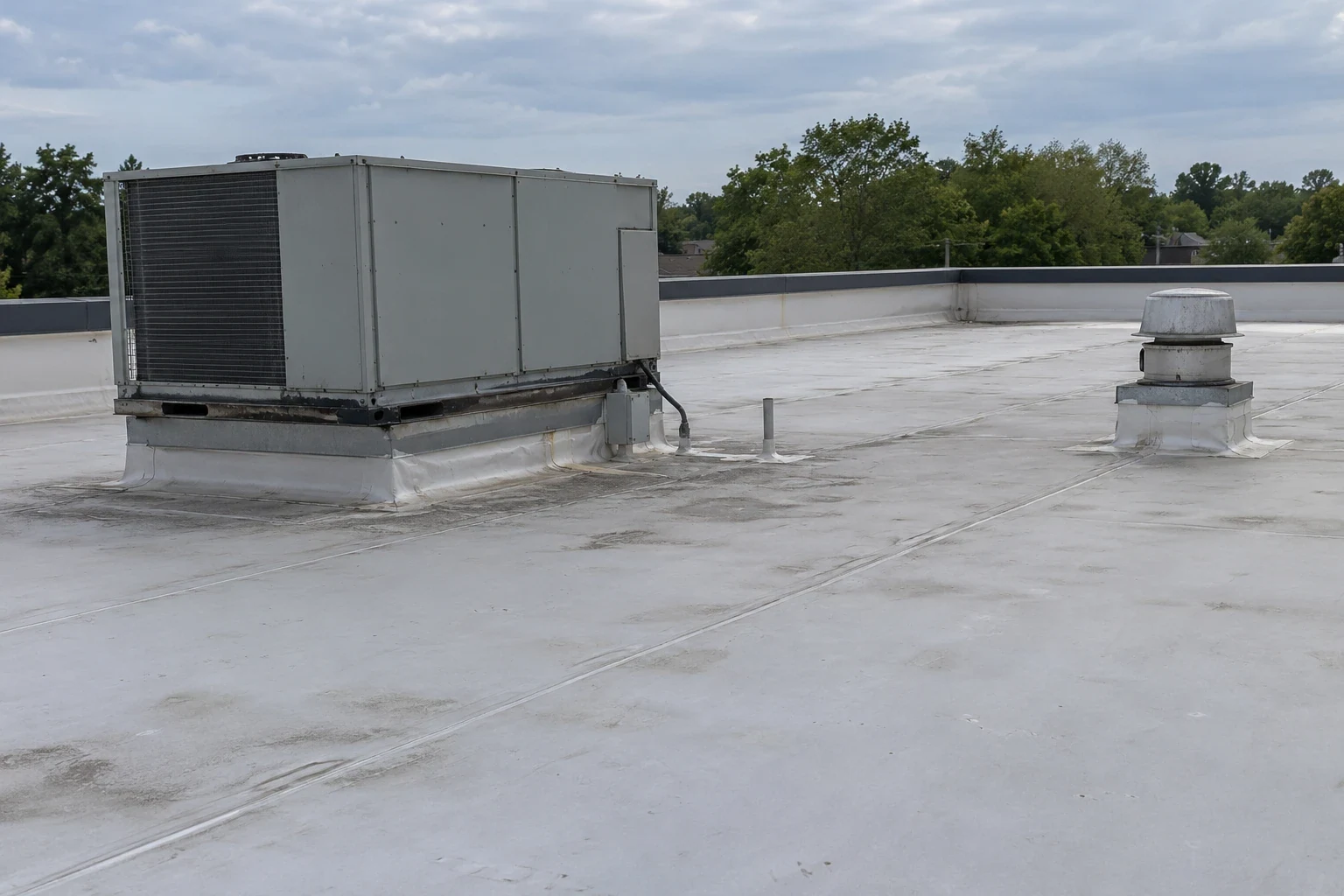
The review starts with the layers that carry the membrane. We identify deck type, insulation, cover board, slope, attachment, drainage, and existing repairs, then compare those details with the proposed assembly. A recover needs a stable, sufficiently dry and compatible substrate that meets the selected system and code limits. Where a drawing or past record disagrees with the exposed roof, we mark the mismatch and use agreed testing to decide whether the scope changes.
Tyler coordinated signal work at major South Broadway intersections; the 2025 program reduced annual vehicle delay by more than 152,000 hours across its network. That transportation context can matter when planning deliveries and crew access, but it does not reveal a particular building’s roof or loading rules. The project team still confirms staging, route, and operating windows. A recover assessment can document the conditions required before another layer is considered.
Membrane seams and details
For a heat-welded membrane, a good seam begins with clean, dry material and a checked tool setup. We make a test weld when equipment or conditions change, allow the sample to cool, and inspect it using the project method. The record ties the result to a roof-zone location. If the test does not pass, the crew adjusts the process and repeats the check before releasing additional sheet. A production seam is not accepted simply because its edges appear closed.
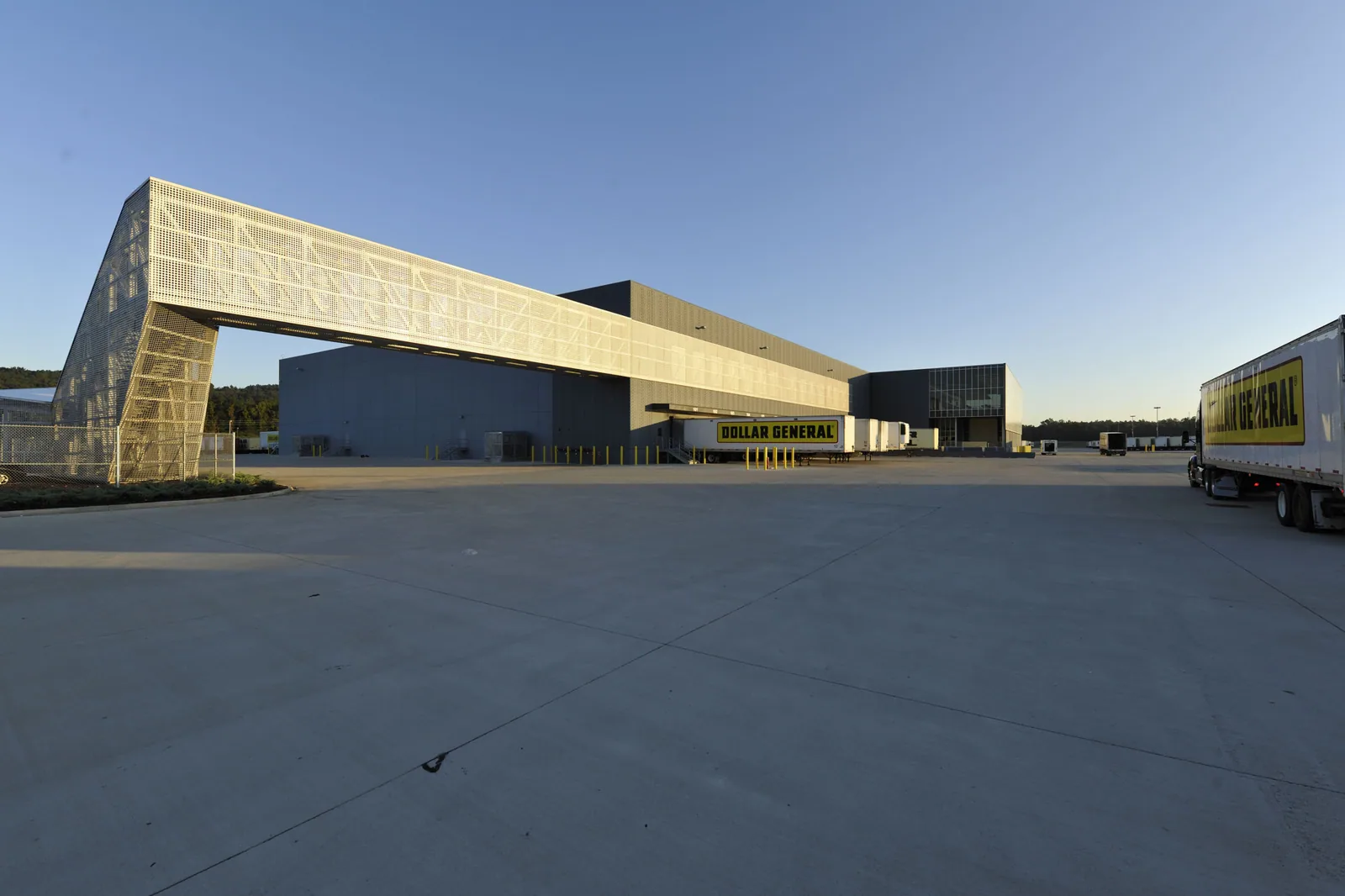
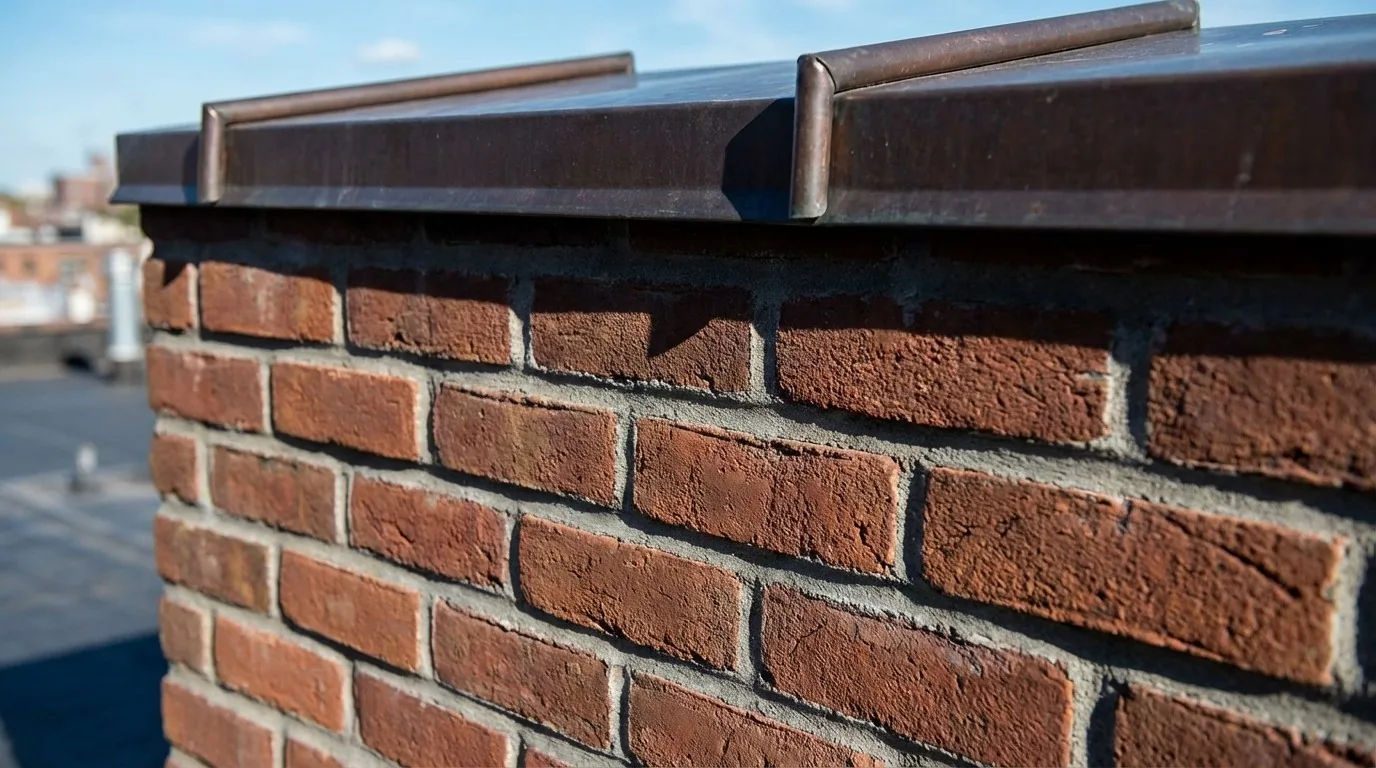
Roof details add another set of hold points. Curbs, pipes, drains, corners, and perimeter terminations must follow compatible details and leave maintenance access where required. We mark those interfaces before sheet layout and confirm which trade completes each transition. Before a delivery at Champion Commons, we confirm the selected parcel, entrance, staging area, and roof-zone release with the property contact and general contractor. A roof-edge detail review can coordinate metal and membrane handoffs.
Heat window and storm preparation
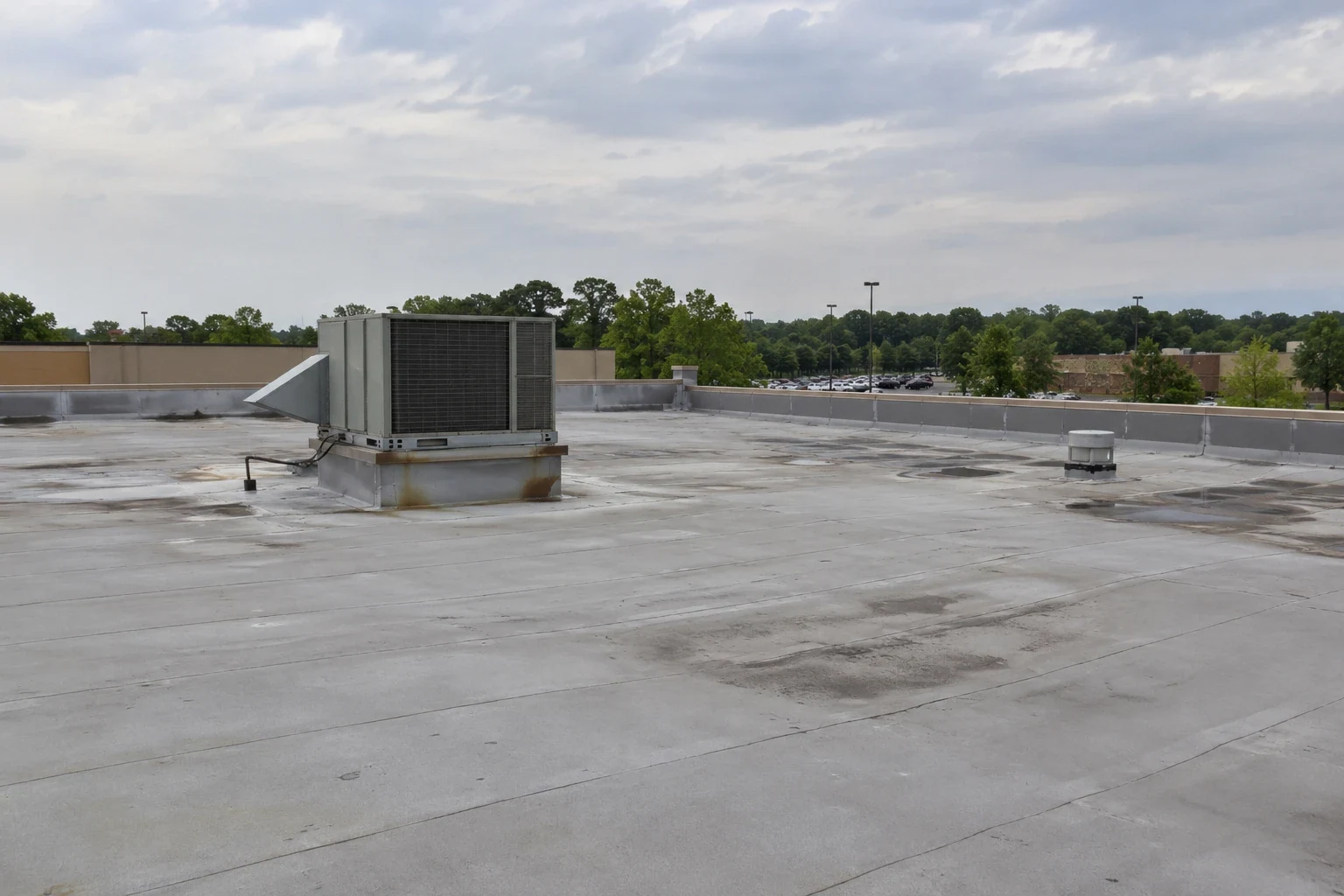
Tyler’s normal July high of 94.5°F is useful for scheduling, yet the actual membrane surface can vary between sun and shade. We take a substrate reading and follow system instructions for welding, primers, adhesives, sealants, and any coating included in the approved scope. The daily work package identifies which operations are ready and which are held for a cooler period or additional check. That way, a weather delay does not become permission to skip preparation or change a detail.
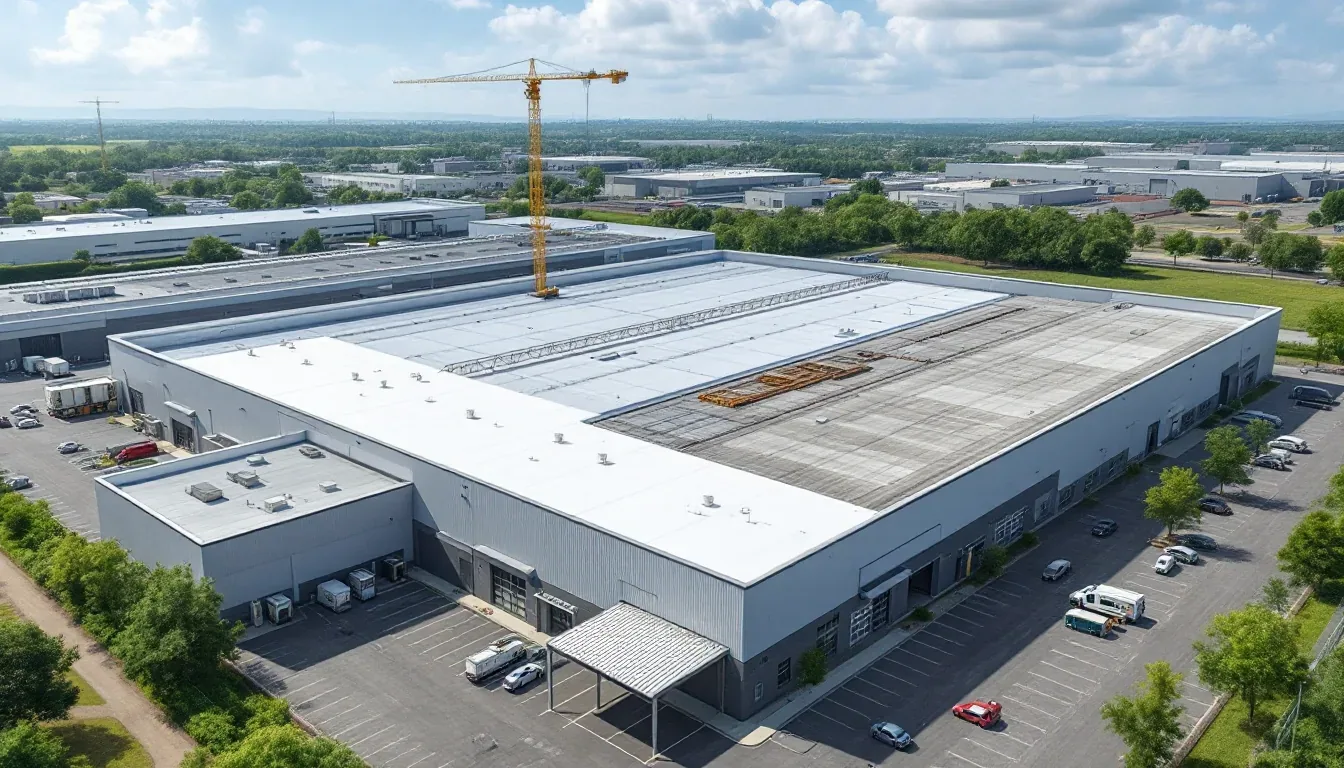
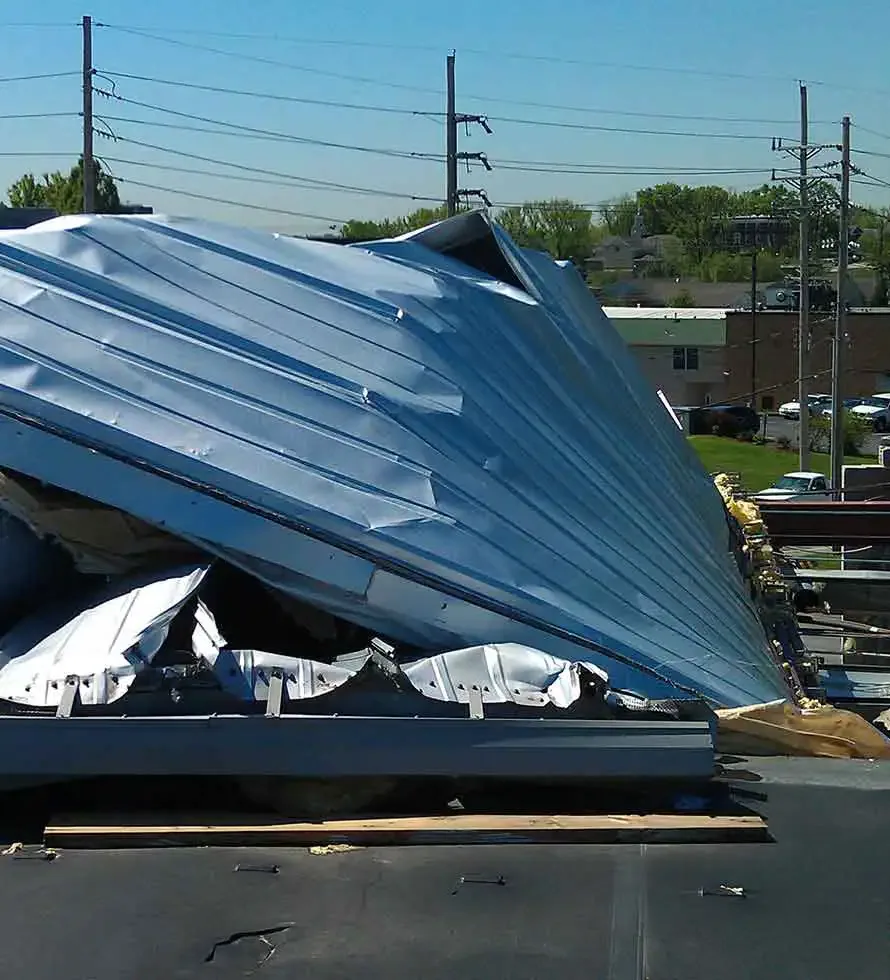
Spring and autumn storms in the region can bring large hail and damaging wind. We plan temporary protection, exposed-section limits, drain clearance, and end-of-shift inspection before removal or membrane work opens the roof. The general contractor knows who verifies the closeout and who can release the next area after conditions are checked. A wind-damage review records visible displacement and follow-up needs after an event. Regional exposure is not proof that a specific property sustained damage.
Repair, restoration, and replacement
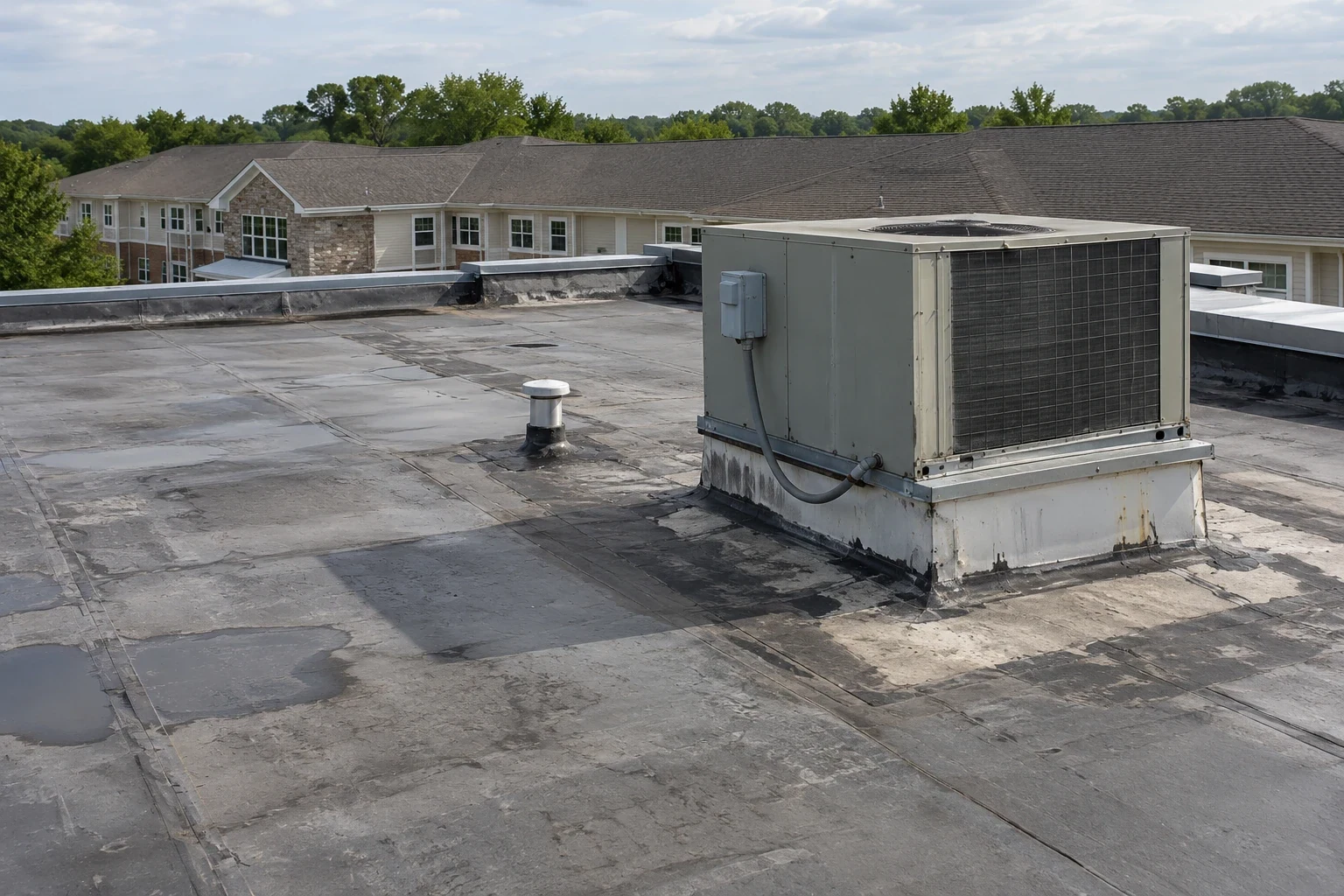
A localized puncture or open seam can be a repair when material around it remains sound and the patch method is compatible with the existing membrane. We inspect beyond the visible opening, check adjacent flashing, and identify moisture or attachment findings that could widen the scope. The repair record states the boundary, materials, preparation, and any test performed. If similar defects repeat across zones, the owner may need a roof-wide condition map before approving more isolated work. A commercial repair plan makes those differences visible.
Recover, coating, and replacement options have separate gates. A recover depends on the existing assembly and its moisture, attachment, and compatibility. Coating work requires an appropriate substrate and specified preparation and adhesion checks. Replacement may include tear-off, insulation, deck repairs, perimeter transitions, and interior protection. We compare these as distinct work packages with different access and timing needs, then show what test could change the choice. An existing-roof restoration review should not substitute for an assembly inspection.
Submittal and turnover
Before mobilization, send the roof plan, assembly records, known leak areas, access rules, and decision deadline. We return a sequence with system components, substrate checks, test welds, roof-edge details, staging, and weather protection. If the field assembly differs from the documents, we identify the location and hold the work until the project team directs the next step. This keeps the approved details and field conditions tied together through each trade handoff. The scope also identifies interior protection, work-hour restrictions, and the person receiving daily photographs. If a test cut or concealed deck issue pauses production, the next decision is recorded before the crew returns to that zone.
At completion, the owner should have an assembly record, roof-zone map, photographs, seam and detail checks, repair boundaries, and unresolved observations. Those notes let a maintenance visit return to the same area with context instead of starting from a generic roof label. We can preserve the inspection in a condition report. If the design allows alternatives, compare Sika Sarnafil PVC details with Duro-Last assembly requirements against the same deck and access conditions.
Commercial Roofing Questions
What should be confirmed before a Versico recover is approved?
We verify the existing roof layers, moisture, attachment, deck, drainage, and compatibility with the proposed assembly. The recover must also fit project and code requirements. Any uncertainty that could change the scope is listed for a test or design decision before installation.
How do you know a Versico seam is ready for inspection?
The crew prepares the lap, checks the welding setup, and tests a sample when conditions or equipment warrant it. Once cooled, the sample is checked with the agreed method. The work record captures its roof zone, and the next release waits for an acceptable result.
Does summer heat stop Versico membrane work in Tyler?
Not by itself. The regional 94.5°F normal helps plan the day, while a field reading and product instructions govern each operation. We can shift to another approved task if a surface falls outside its working range, keeping the affected zone on hold.
Which conditions make a repair larger than a patch?
Moisture beyond the opening, weak attachment, repeated seam failure, or damaged adjacent flashing can change the boundary. We record the visible defect and check surrounding material before recommending the repair method. If the findings repeat, a wider survey may be needed.
What should be included in the general contractor’s handoff?
The roof plan, assembly records, access window, known conditions, and decision deadline give us a starting point. We return work zones, material and test steps, weather protection, and approvals required to release each area. Field discrepancies stay open until the team resolves them.
Related Pages
Release the Versico work package
Send the roof plan, assembly records, access window, current roof condition, and decision deadline. We will return a sequenced field plan with seam tests, weather closeout, and open hold points for the general contractor.