Overton commercial roof work starts with a defined repair boundary and the access needed to inspect seams, flashings, and drains. In Overton, the first useful decision is which roof zone needs protection, testing, or permanent repair before access closes. Overton spans Rusk and Smith counties about twenty miles southeast of Tyler; railroads once drew businesses from nearby communities. That setting does not tell us what assembly is on a present-day building. We verify the roof plan, route, membrane or metal system, and leak location before setting a work boundary.
With Tyler averaging a normal July high of 94.5°F, an Overton summer work package needs flexibility for primer, adhesive, and coating conditions at the selected detail. Hail and damaging wind can ride in with spring and autumn thunderstorms across the region. Tyler’s June 8, 2021 tornado stands as a separate regional event. For an Overton storm report, we collect the event date and interior observations before selecting roof zones for review. We use a commercial roof inspection to map the affected seams, penetrations, edges, and drains, then mark the hold point before the next crew or shift receives access.
Access before the roof zone opens
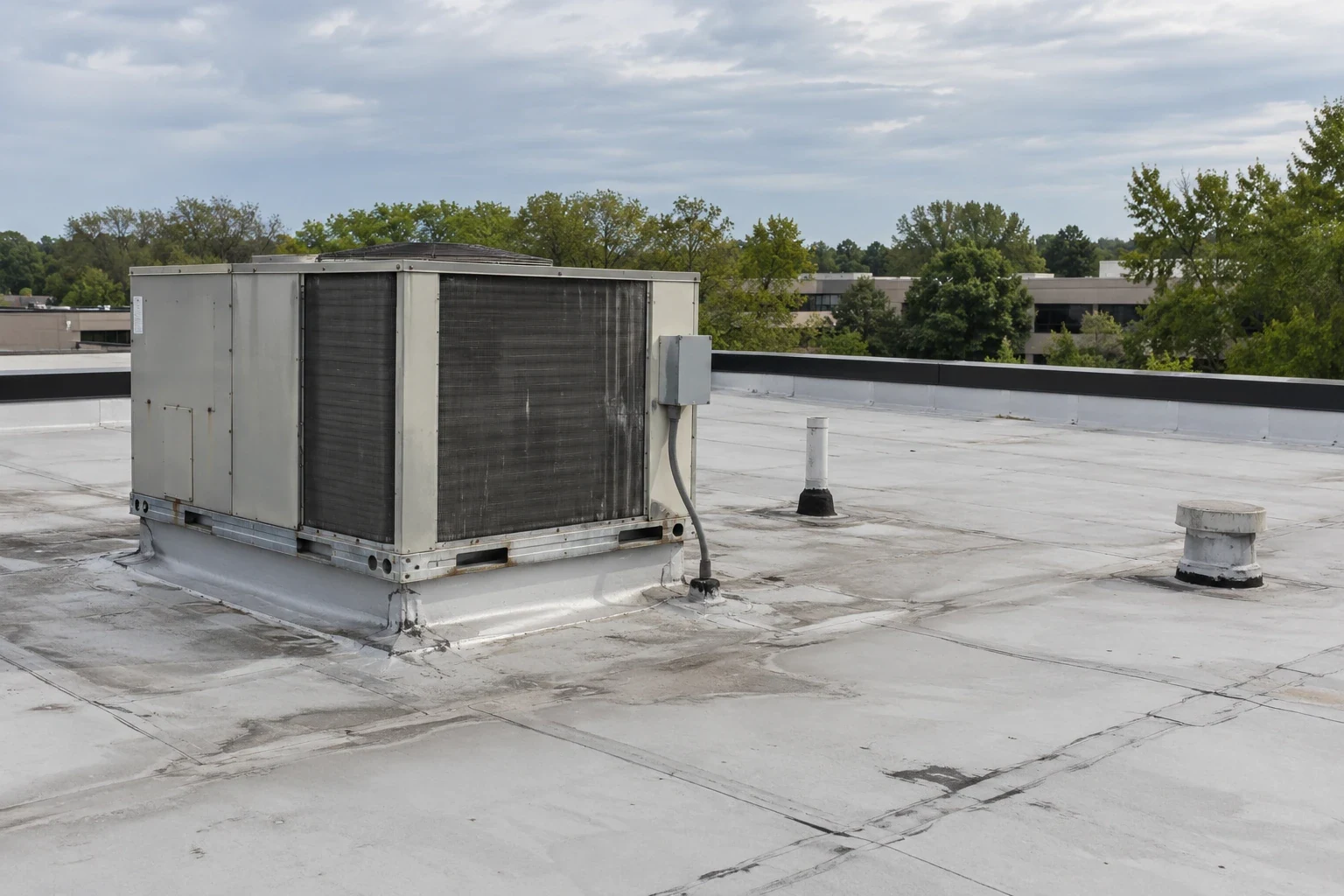
Two railroads once drew businesses from nearby communities, and Overton offered lots for commercial relocations. Today's property access still must be confirmed with the owner. We ask where materials can stage, which doors or drives must remain clear, what operating hours apply, and whether interior areas need protection. Once the route is released, the roof walk follows the assembly from perimeter to drains and equipment details. Photos and a marked plan connect each condition to a place the general contractor can identify.
That record keeps mobilization, lift time, and roof work in the same sequence. A service visit can begin with safe access and a temporary water-control task, then return for permanent repairs after hidden layers are understood. Our condition report with zone photographs notes completed checks, areas not reached, and questions that need testing. For a team coordinating activity between Overton and Arp, the Arp roof inspection area receives its own access confirmation and condition record instead of inheriting assumptions from another property.
Tracing the leak to its roof detail
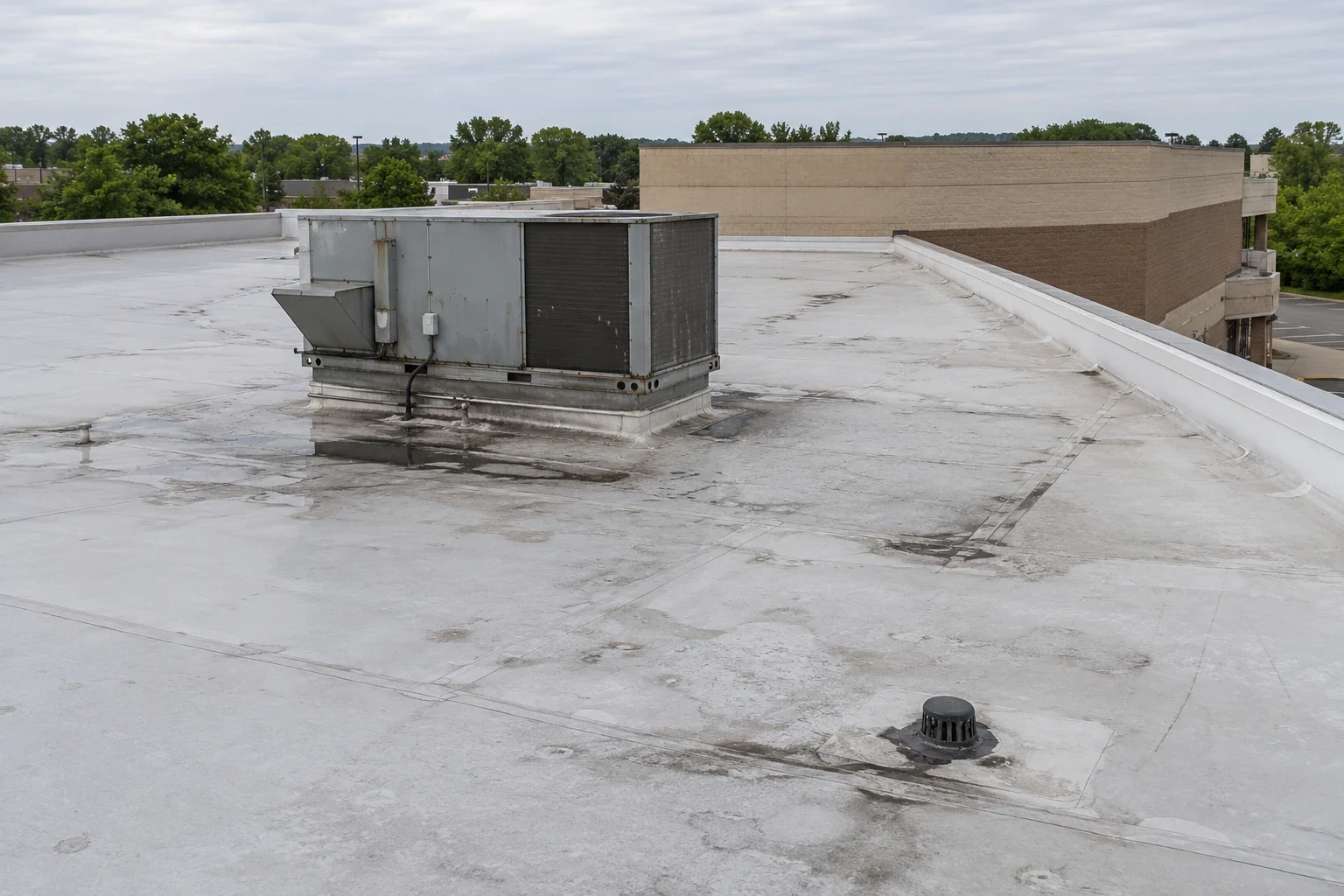
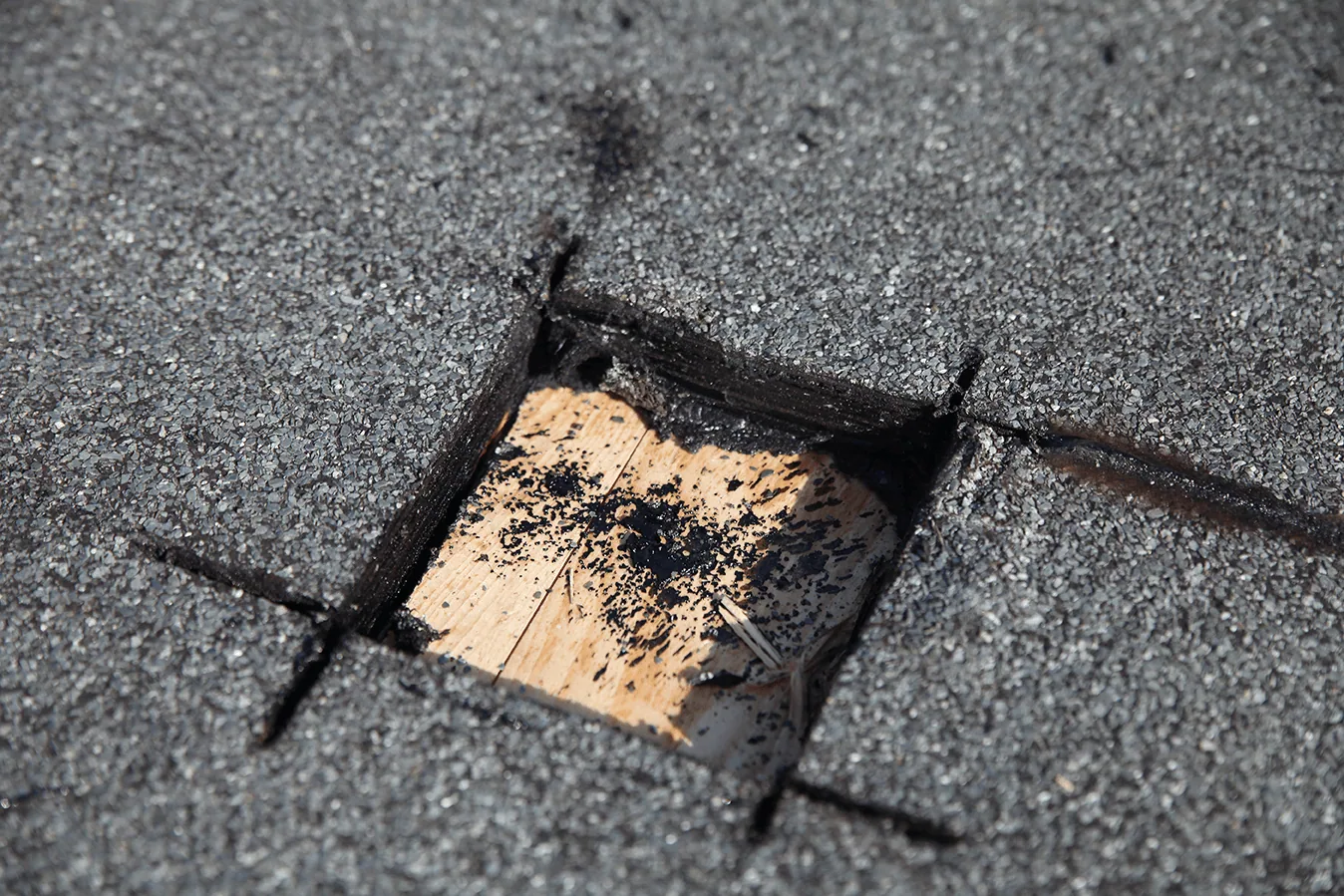
A ceiling stain shows where moisture became visible, which can be separate from the roof opening. We compare the interior report with nearby penetrations, seams, flashing transitions, and drainage before defining a repair area. Water can travel along a deck or within insulation, so a broad removal may be premature without a test that resolves the boundary. If infrared mapping or a test cut would affect the repair-versus-replacement decision, we mark the test point and request approval before opening the assembly.
A successful oil well in 1930 was followed by refinery construction and a shift toward an oil-based local economy, but those events do not describe today's commercial roofs. The actual system governs compatible preparation and repair. A targeted infrared survey can help identify where further evaluation may be useful, while a commercial leak repair addresses the confirmed pathway. We photograph the exposed substrate, note what remains concealed, and keep allowances separate from verified quantities. If a test changes the limit, the owner sees the new condition before the work package expands.
Heat windows and storm holds
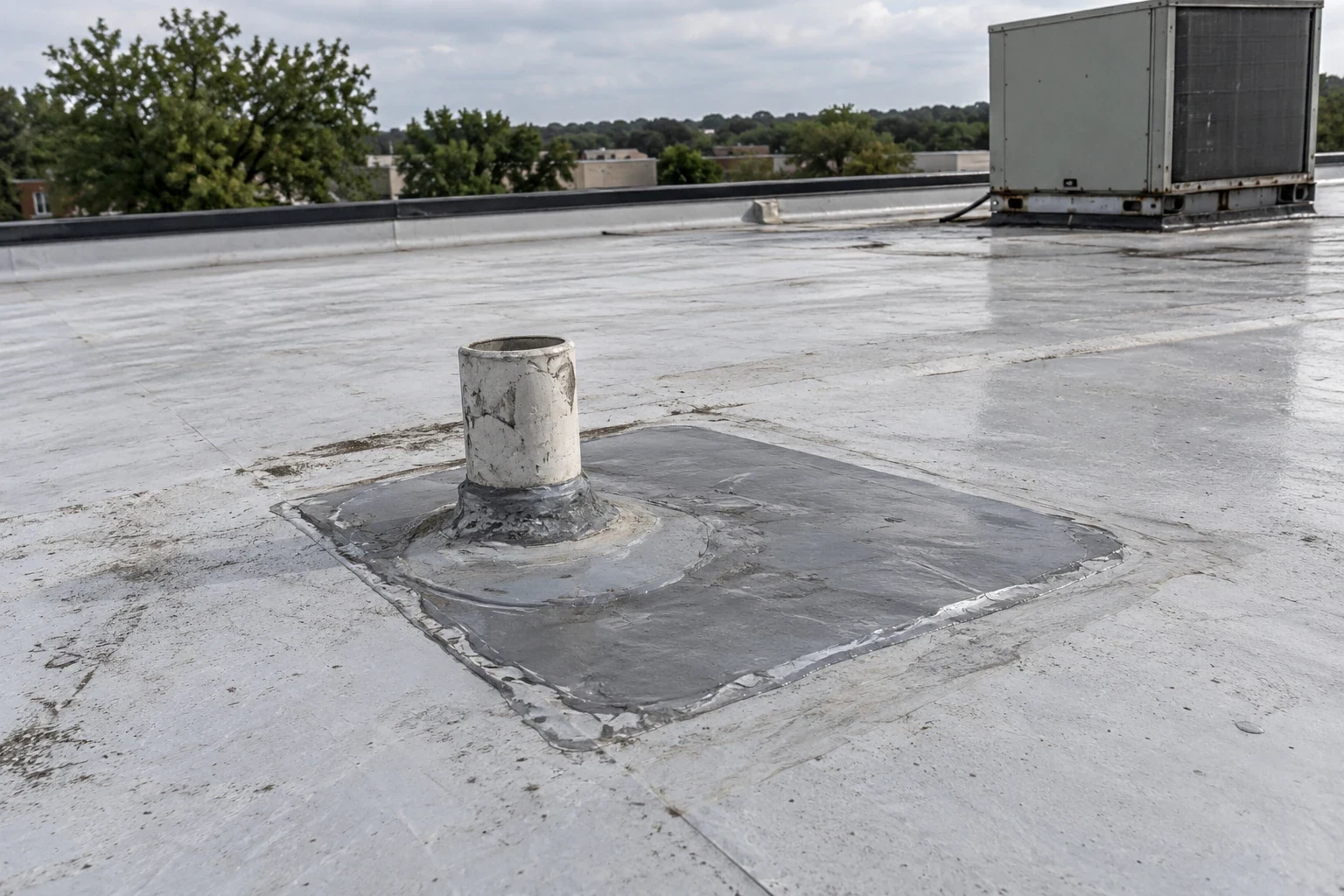
Tyler's 94.5°F normal July high is a planning reference for the market, while the Overton crew still needs a field reading at the roof. We verify the substrate and surface against the chosen primer, adhesive, sealant, or coating instructions before a step that relies on bond or cure. The work plan names that check as a stop point. If the approved window has passed, the detail stays protected and the affected package moves to another period rather than carrying a questionable tie-in forward.
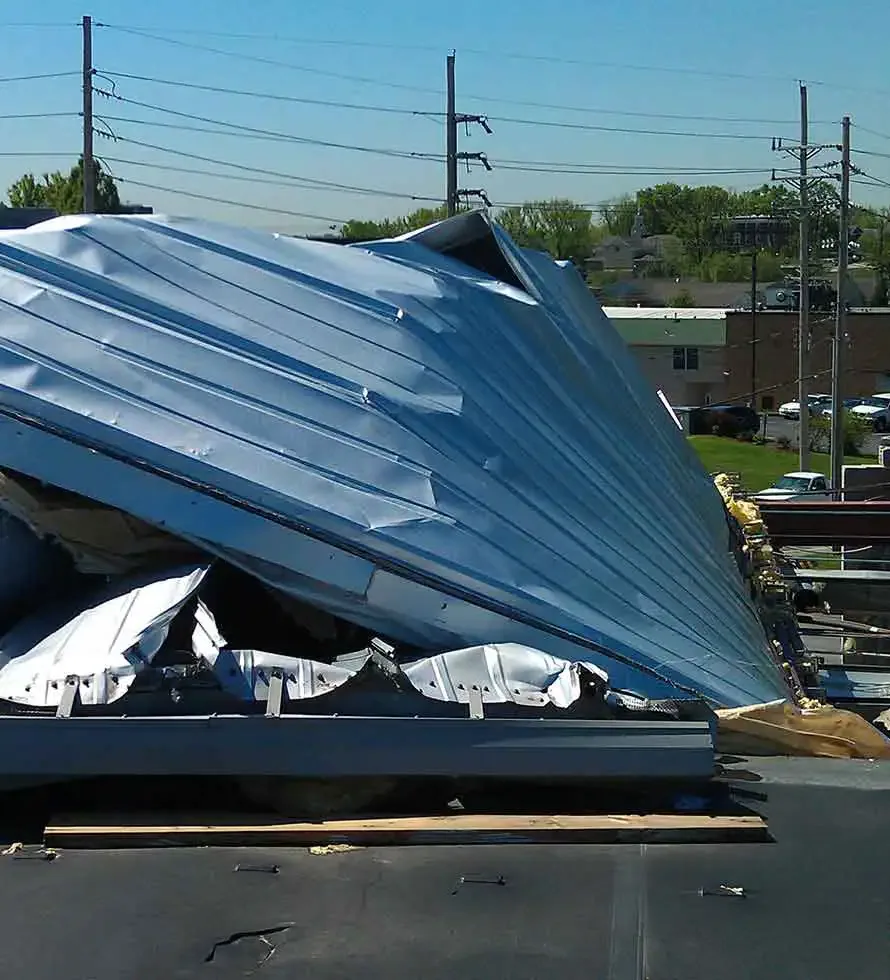
Spring and autumn bring the region's more active severe-storm season, including hail and damaging wind. A report from Overton prompts a zone-by-zone look at punctures, shifted edge metal, open seams, flashing damage, and drainage restrictions. We record visible marks before deciding whether an opening or moisture path is present. When water control cannot wait for the next planned work period, call us; dispatch comes first, then safe interim protection and the exposed-section closeout are documented before permanent repair. The crew marks the protected zone and exposed-section closeout, then the general contractor releases the next access window for permanent repair.
The assembly decision
A localized repair is appropriate when nearby material can accept a compatible tie-in and the substrate is suitable. We remove to the approved line, prepare the surface, complete the detail, and record the closeout. A recover requires more than a clean-looking top layer. Moisture, attachment, roof count, drainage, edge height, and project rules all affect whether another system can be installed. If one item remains unknown, we state which test or approval must precede the decision.
Replacement may be clearer when wet insulation, repeated failure, or deck concerns extend beyond a contained repair. Cost and timing depend on removal depth, insulation and deck work, penetrations, edge metal, material method, access, and shifts exposed to weather. The repair package can be compared with a roof replacement scope, while modified bitumen is evaluated against the verified existing assembly and project requirements. We separate confirmed work from quantities that require a test, so the owner can release the next phase with the scope visible.
Daily closeout and next release
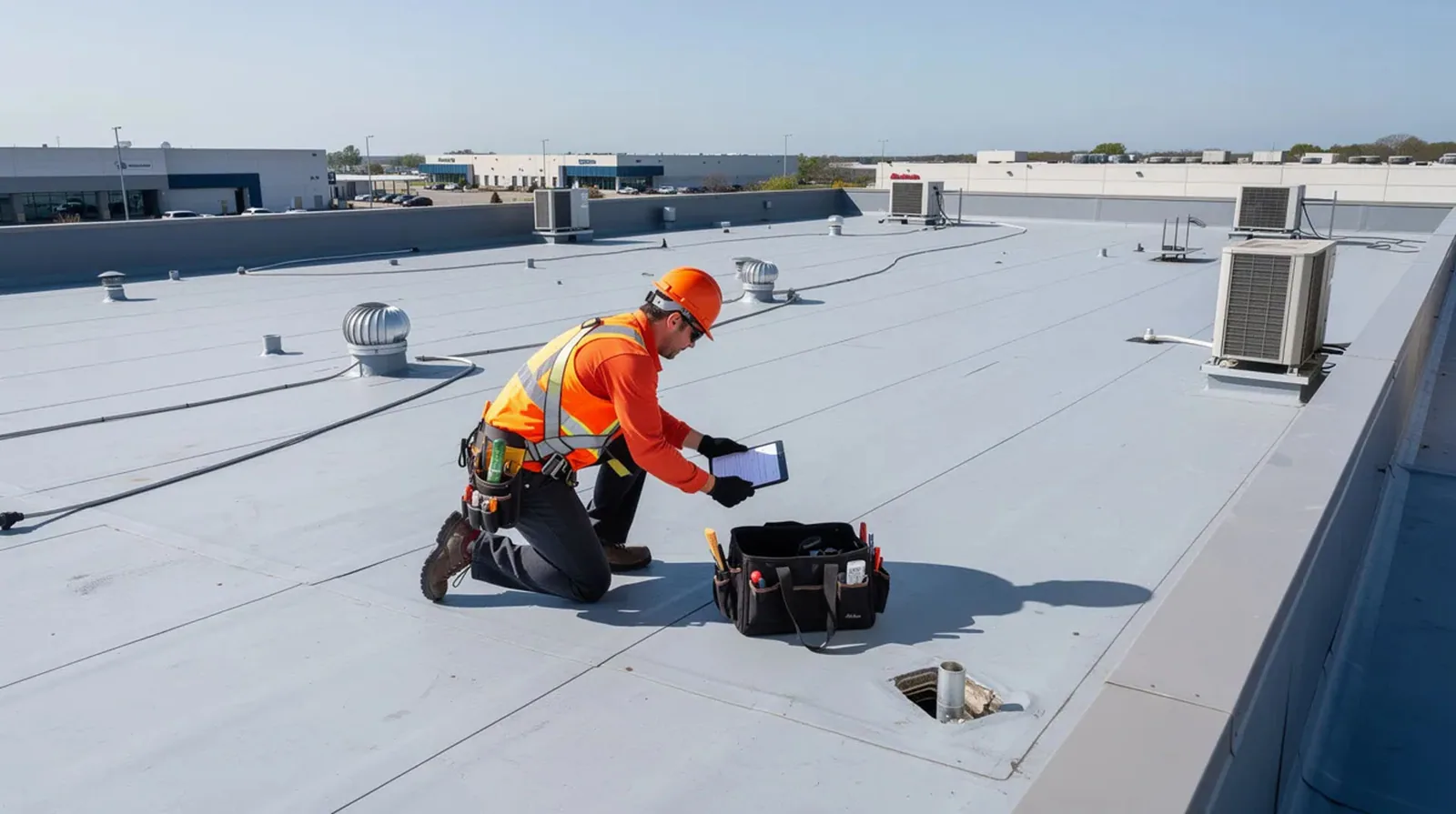
At shift end, the closeout names the completed roof detail, temporary protection left in place, open test, and next condition that must be met before work restarts. Dated images tie those items to a marked plan, including the drain path and material used. The project lead can then hand the next crew a defined work boundary and the approval still needed for access. If weather changes the sequence, the record makes the stop location and restart requirement explicit.
Overton and nearby Troup remain separate markets for condition tracking. The Troup commercial roof area receives a distinct inspection and work plan even if one owner manages both locations. A later maintenance visit can compare current seam, flashing, and drainage findings with the prior closeout rather than rebuilding the history from memory. The owner gets a sequence that shows what is known, what remains open, and which approval moves the next work package forward.
Commercial Roofing Questions
Does Overton's oil history establish a roof system for a building?
No. Overton's 1930 oil well and later refinery construction do not establish the present membrane, metal, or insulation at a commercial property. We inspect the assembly and records, then choose a repair method that fits the verified substrate and roof detail.
What can be handled during an active leak call?
We assess safe access, locate the likely opening, and establish temporary water control for the affected zone. The crew photographs the closeout and records any hidden condition. Permanent repair is defined after the assembly and boundary are confirmed.
How do you keep a storm inspection from turning into a broad replacement scope?
We map each visible condition and distinguish impact from a confirmed breach or moisture path. A test is proposed where its result could change the boundary. The owner receives the evidence and an approval point before quantities expand.
Which findings rule out a recover?
Moisture, weak attachment, excess layers, poor drainage, insufficient edge height, or project restrictions can make another layer unsuitable. We check those conditions and identify any test still needed before comparing recovery with replacement.
What does the general contractor need for a clear shift handoff?
A marked plan, zone photographs, temporary protection status, open tests, and the next access release make the roof state legible. We attach that record to the work package so another crew can resume at the correct hold point.
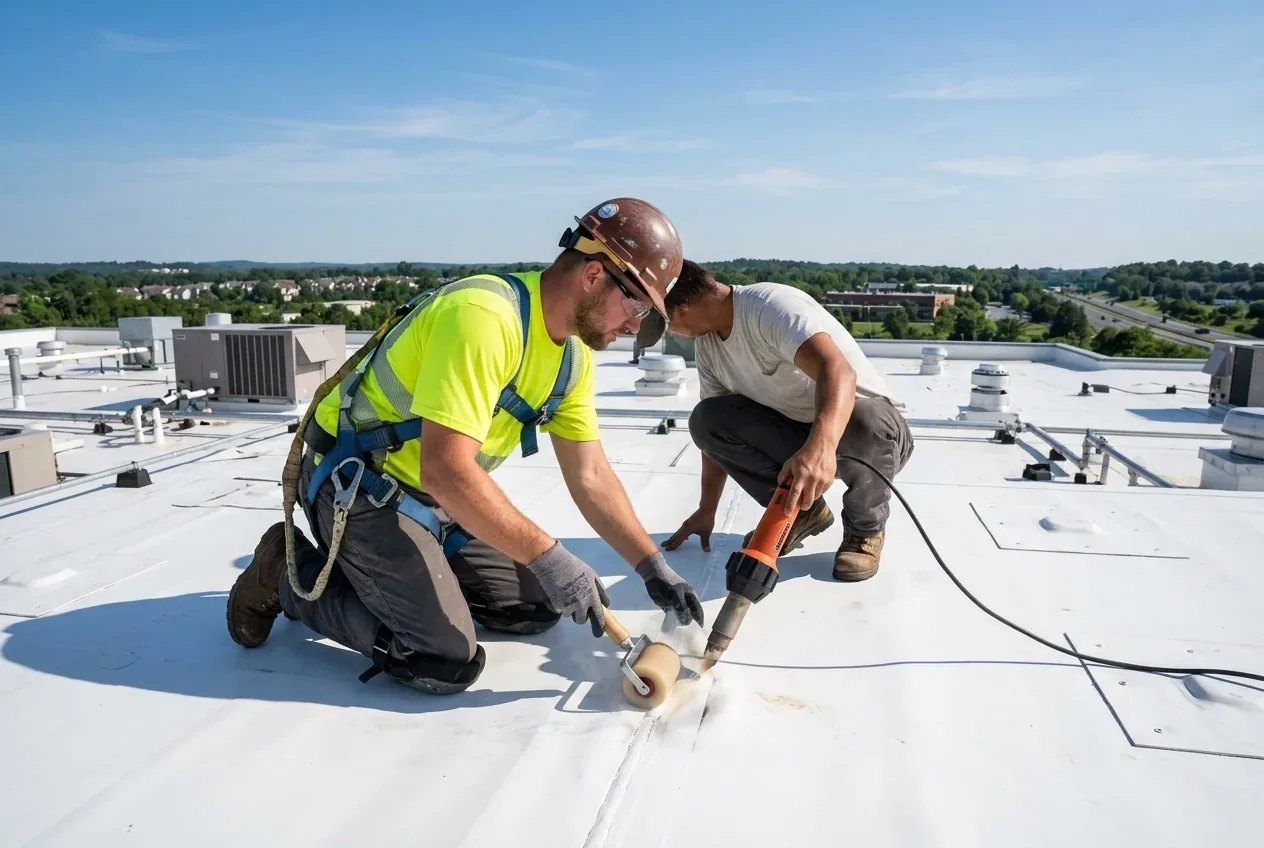
Related Pages
Commercial Roof Inspection
Tyler, TX
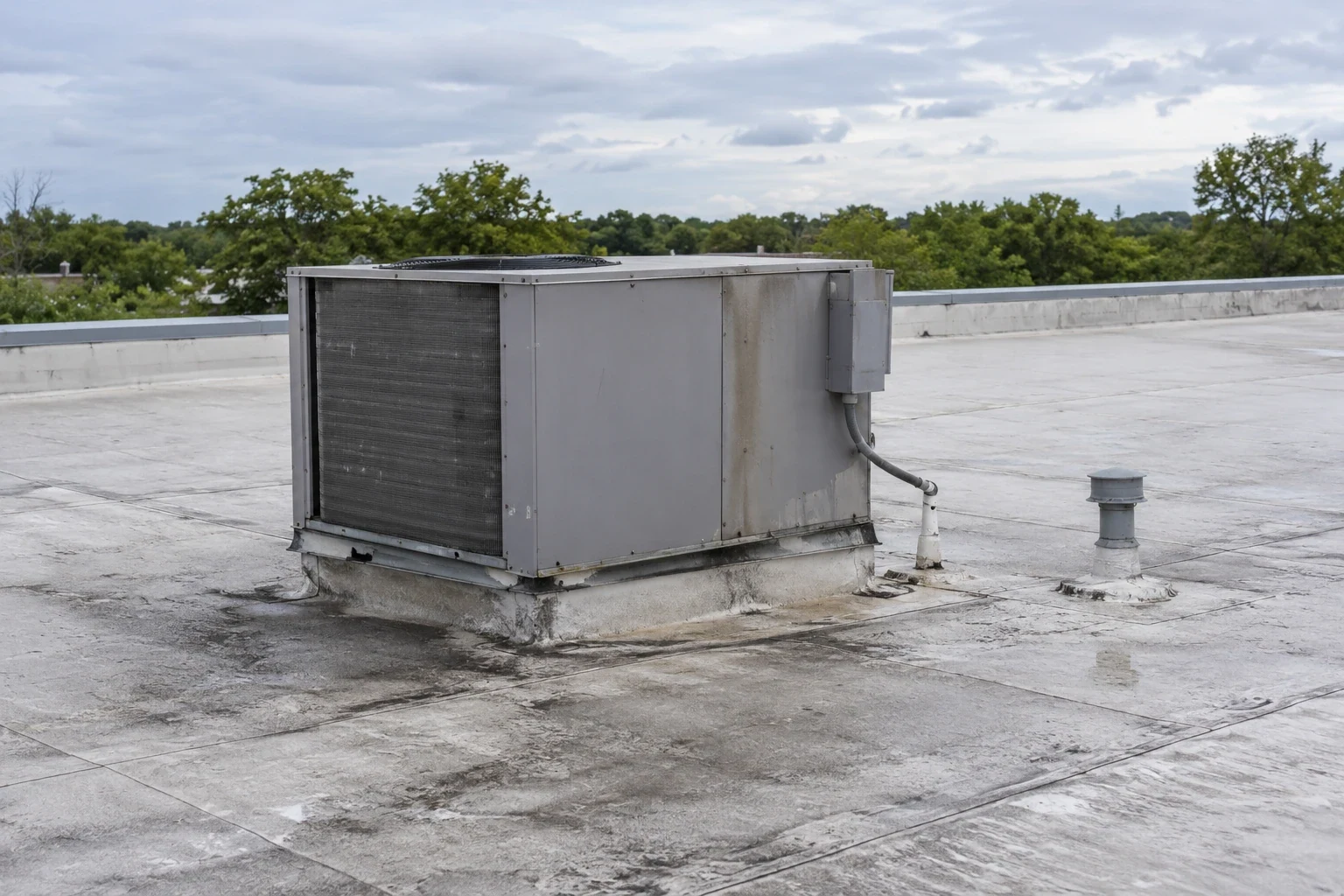
Commercial Roof Condition Reports
Tyler, TX
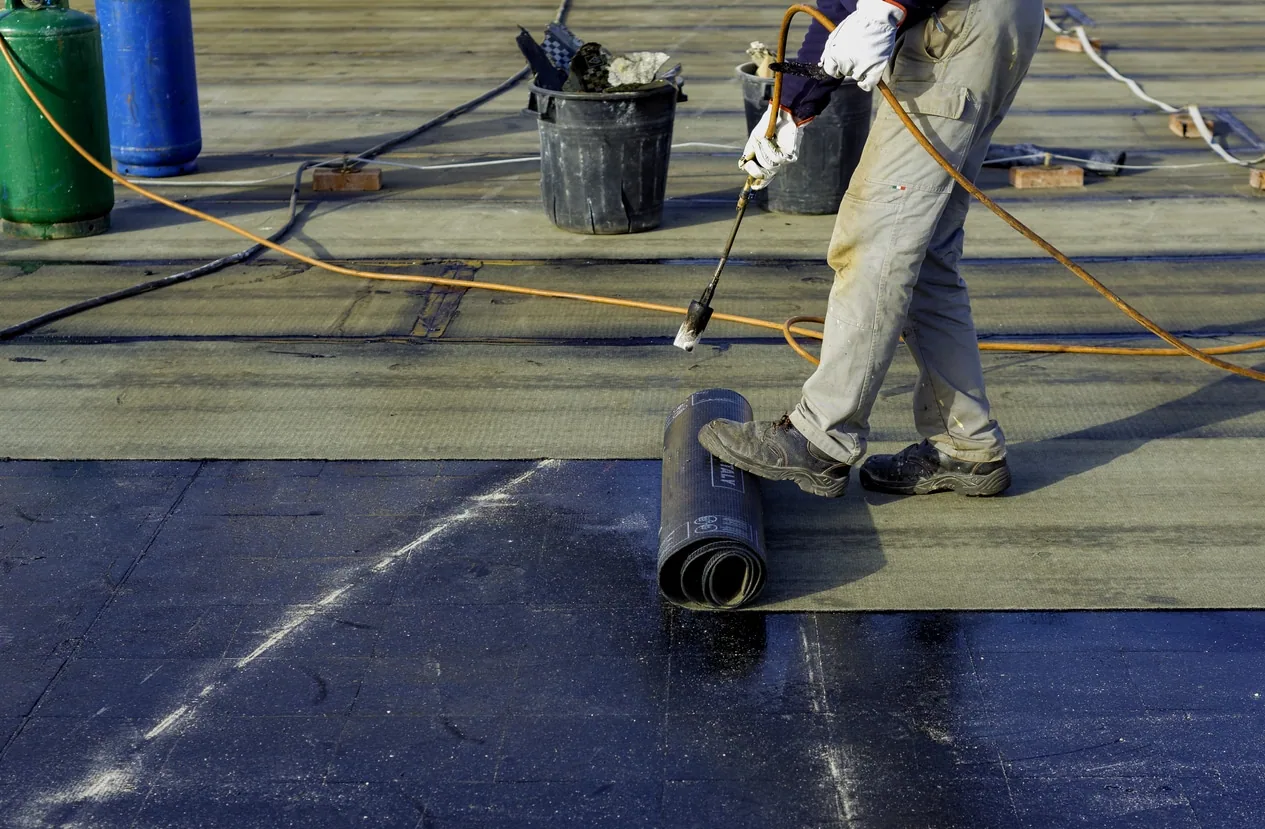
Arp
Tyler, TX
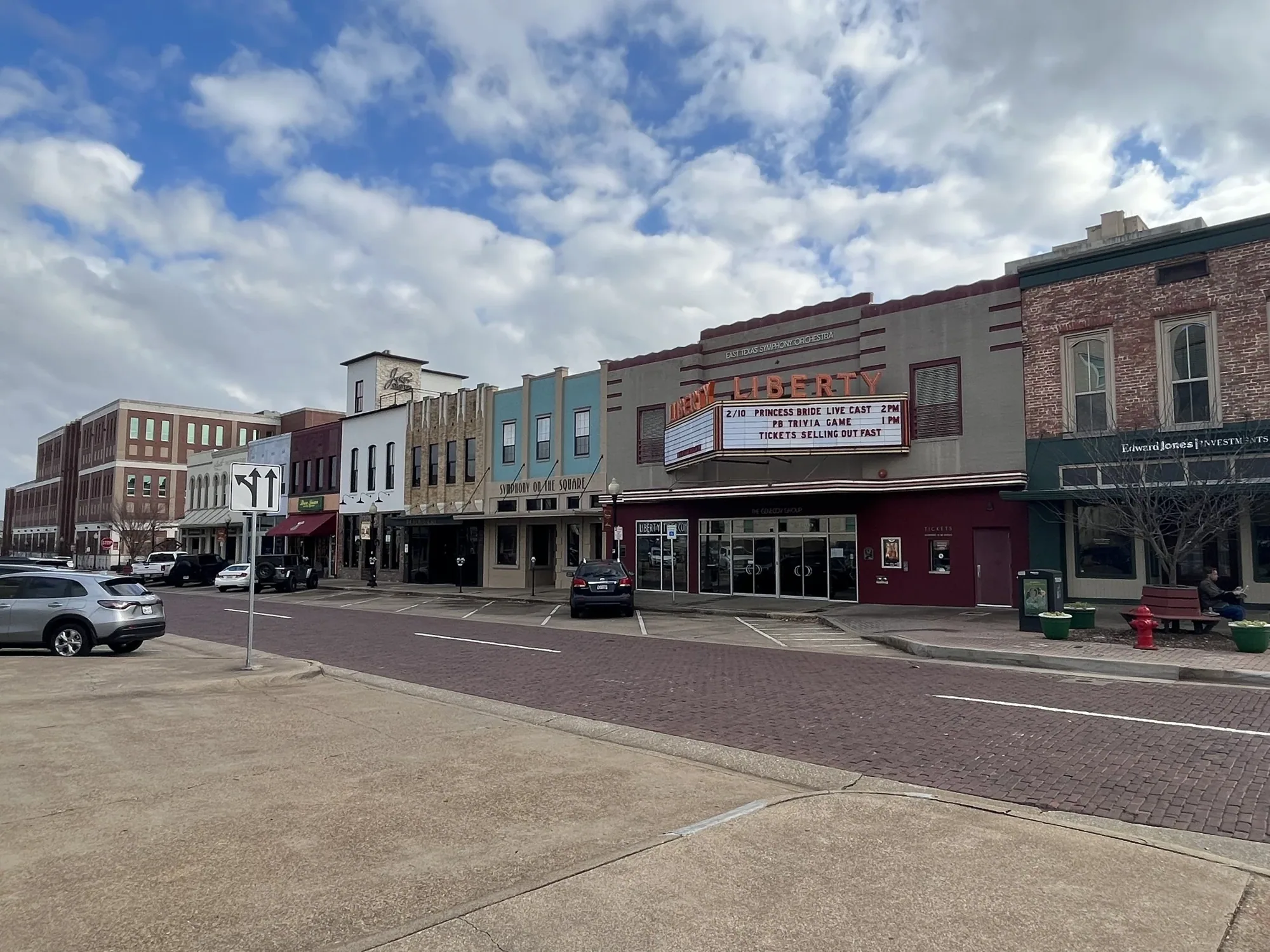
Infrared Roof Moisture Survey
Tyler, TX
Release a defined roof package
Provide the roof plan, assembly records, current condition, access period, and decision date. We will return a sequenced field plan that separates confirmed work from tests and approvals still open.