
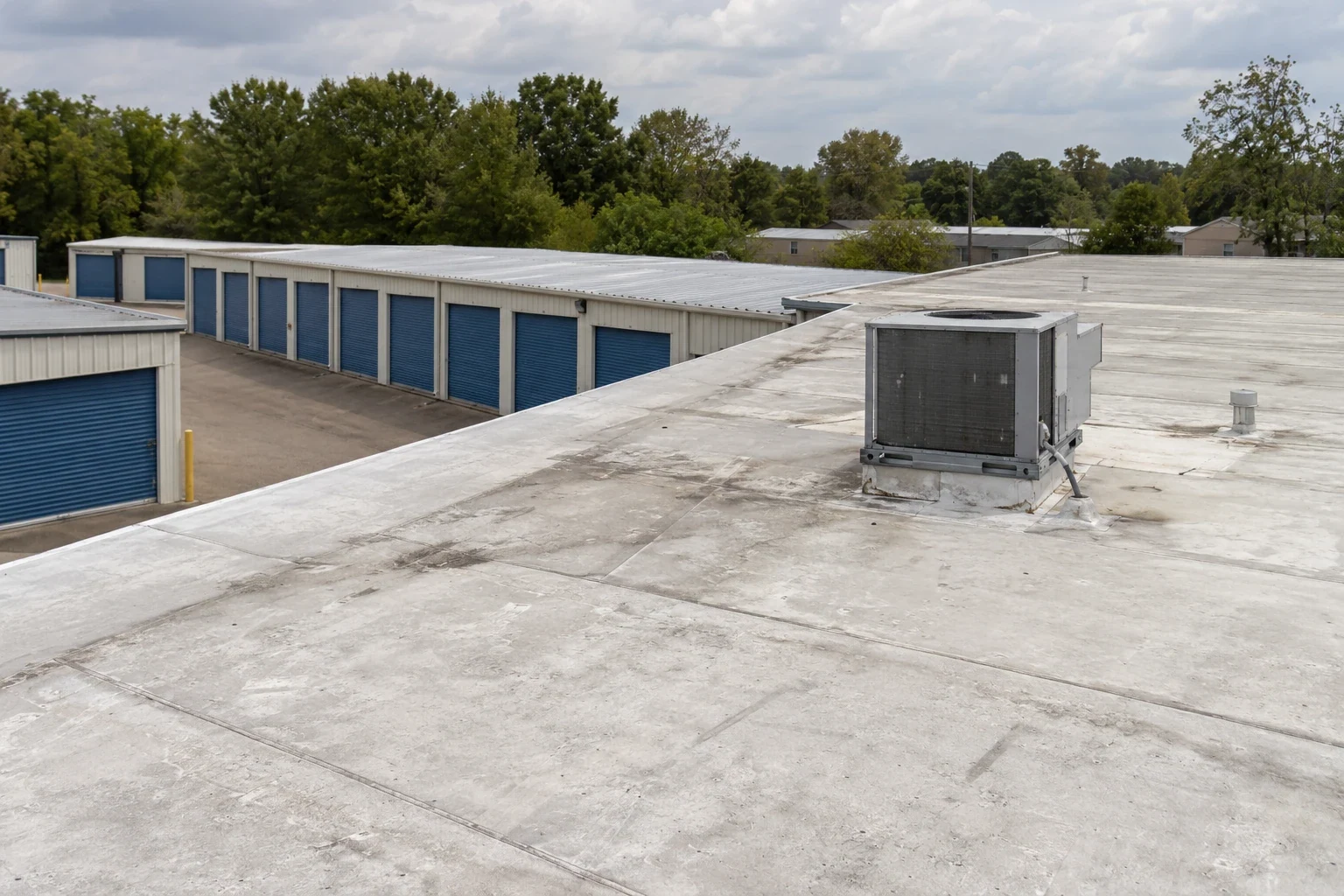
Heat builds across a self-storage roof while a customer is moving belongings beneath it. Tyler’s normal July high averages 94.5°F, so we check the actual substrate and product limits before adhesion-sensitive work. The property plan needs to show occupied units, office hours, drive aisles, gates, loading access, and the roof sections that can be released. We mark each building separately, then sequence work so temporary exposure and access restrictions have clear limits.
Storage properties often place many unit doors and circulation lanes under long roof runs, with offices, covered loading areas, and mechanical rooms in separate sections. The roof still needs inspection at seams, edges, drains, penetrations, and wall transitions; visible staining indoors may be distant from the entry point. Tyler Interstate Commerce Park and Prosperity Commerce Park are separate business parks, so arrival and staging are set project by project for nearby properties. A roof inspection sets the roof-zone map.
Unit rows and work boundaries
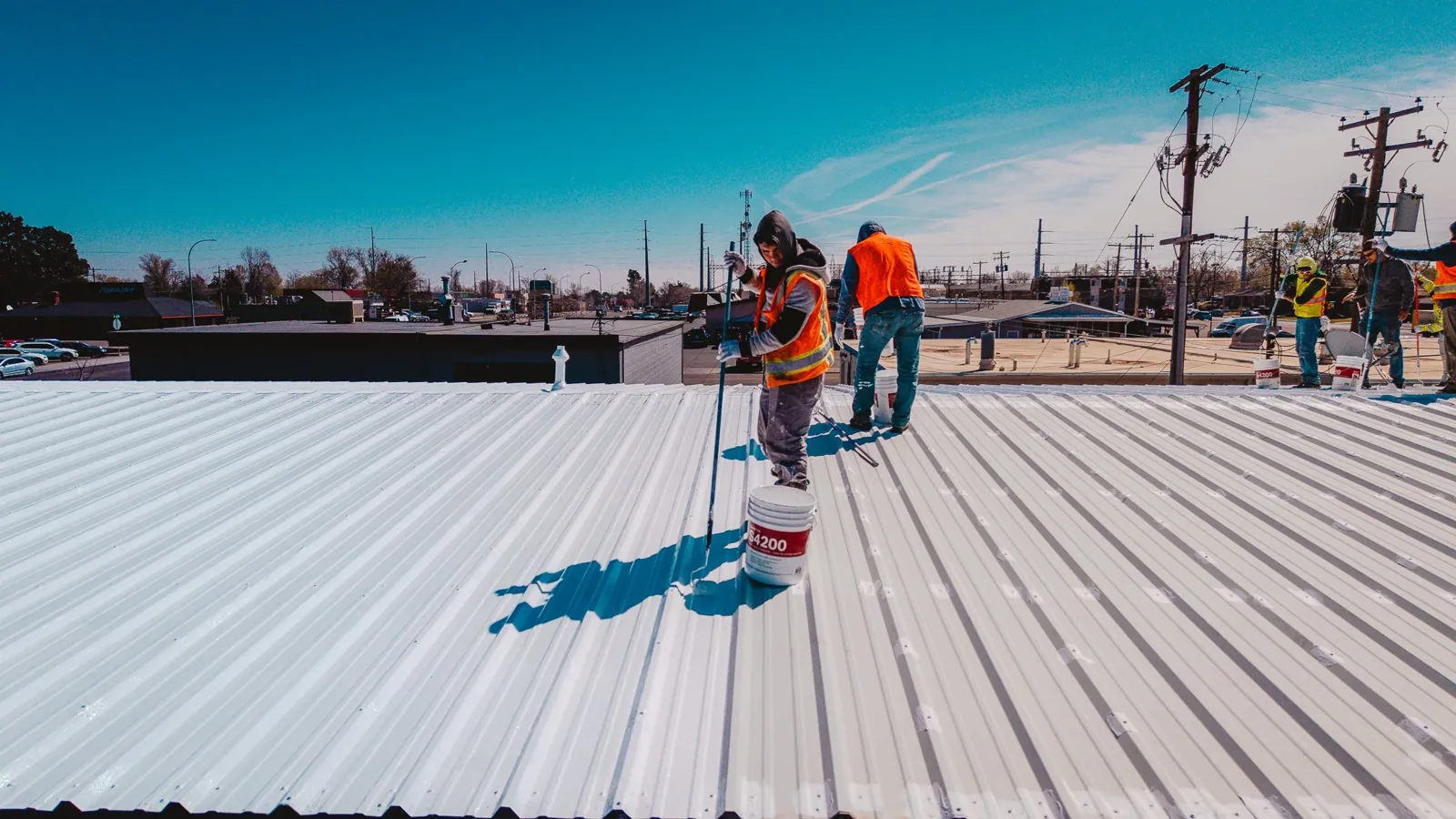
Before crews arrive, we identify which drive lanes and unit rows sit below the planned work zone. The property manager confirms gate hours, customer access, move-in periods, delivery routes, and any unit that needs interior protection. Staging can consume a turning area or block a roll-up door even when roofing remains above the unit line. The daily release lists where materials can be moved, which route stays open, and the time the roof area must be closed and checked.
For properties with several buildings, each roof needs its own assembly note and repair boundary. We number or name the sections from the property plan, record reported leaks by building and unit row, and keep photographs tied to those locations. Similar logistics apply to warehouse roofs and distribution centers, although their loading patterns and interior risks may differ. We coordinate occupied areas through the site contact rather than assuming a building can be cleared.
Leak paths and storage protection
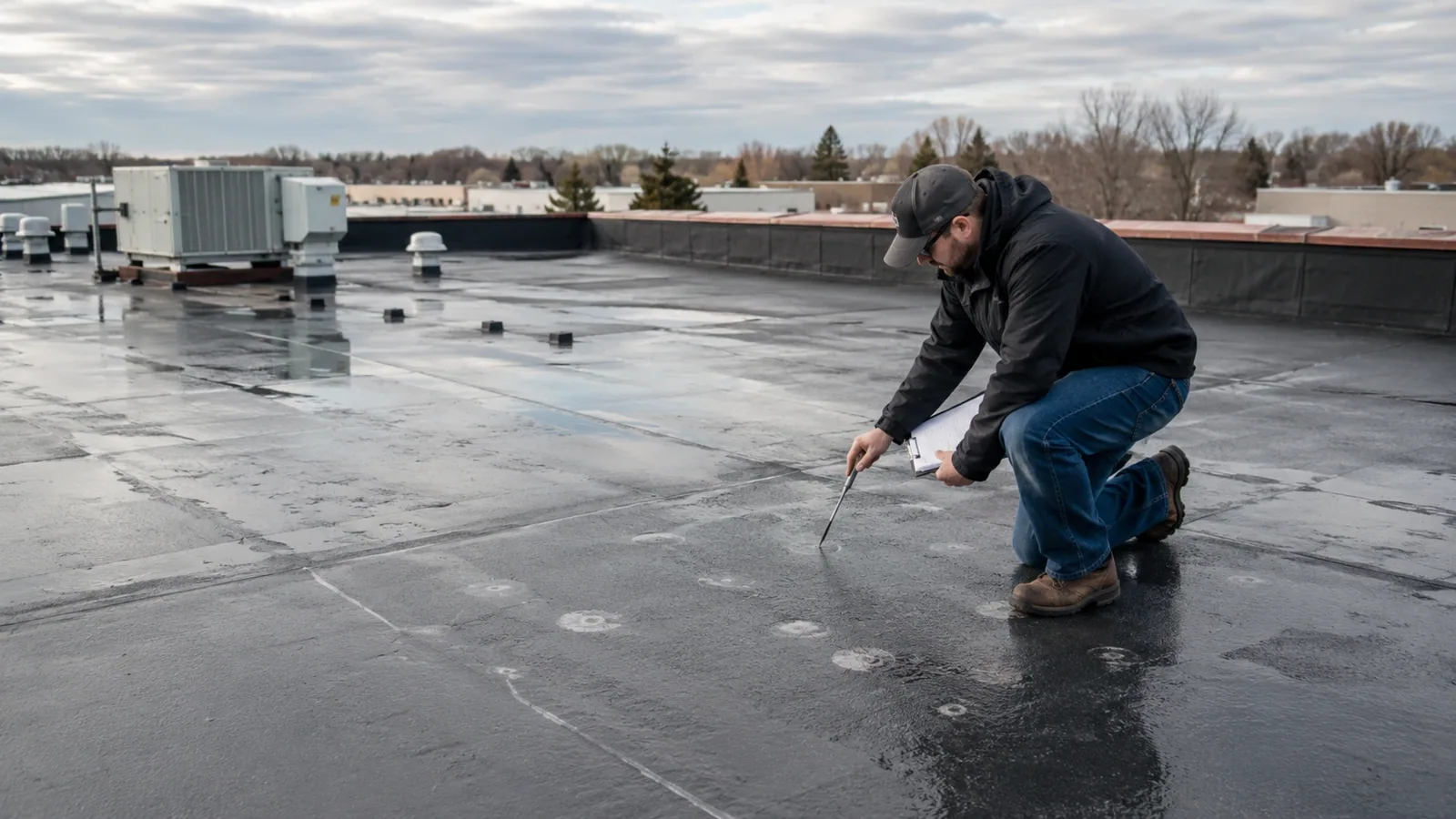
A wet ceiling, stained wall, or damp stored item is a reason to protect the contents and trace the condition, not a complete roof diagnosis. We compare the report with nearby seams, penetrations, drains, curb flashings, and wall transitions. Water can travel along insulation or deck before it appears indoors. The report identifies the unit row, the roof zone above, the visible evidence, and whether a moisture reading or test cut would change the scope.
Temporary protection inside the unit and permanent roof correction are separate tasks. We record what was covered, whether the area remains active, and the next roof access needed. If testing finds wet insulation, we map its extent rather than assuming it continues across a whole building. Infrared moisture review can help select test locations when the surface and weather conditions permit useful readings. Each test opening gets a layer record and a same-scope closeout, so the sampled assembly is not left exposed beyond the agreed work period.
Assembly and drainage decisions
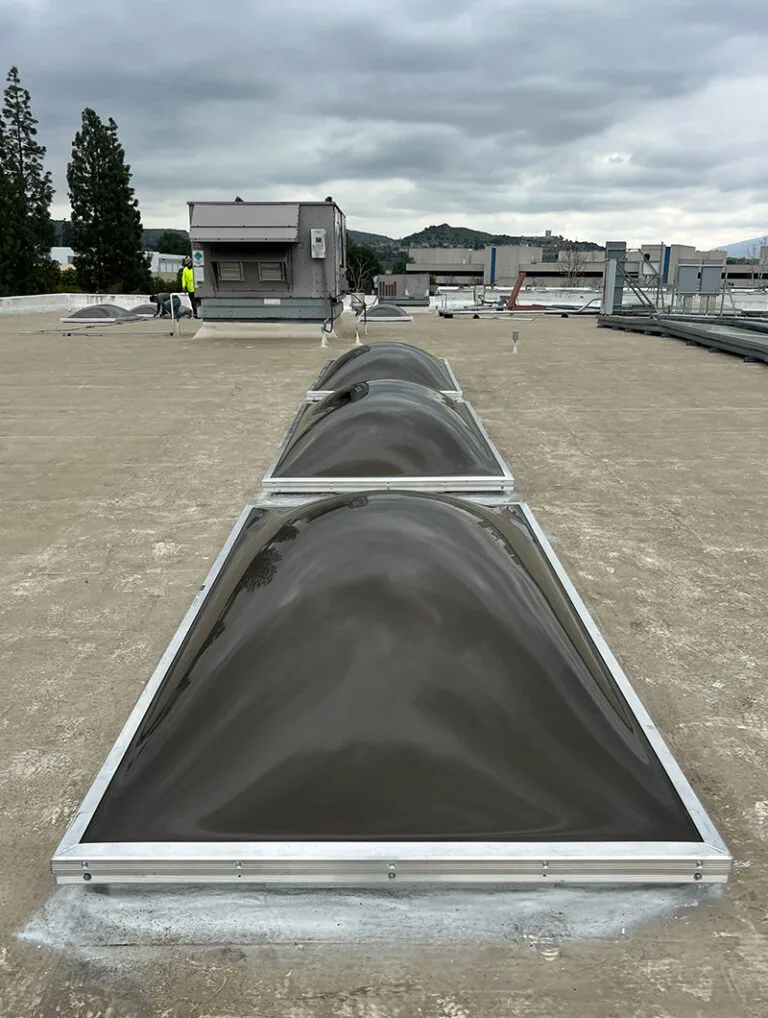
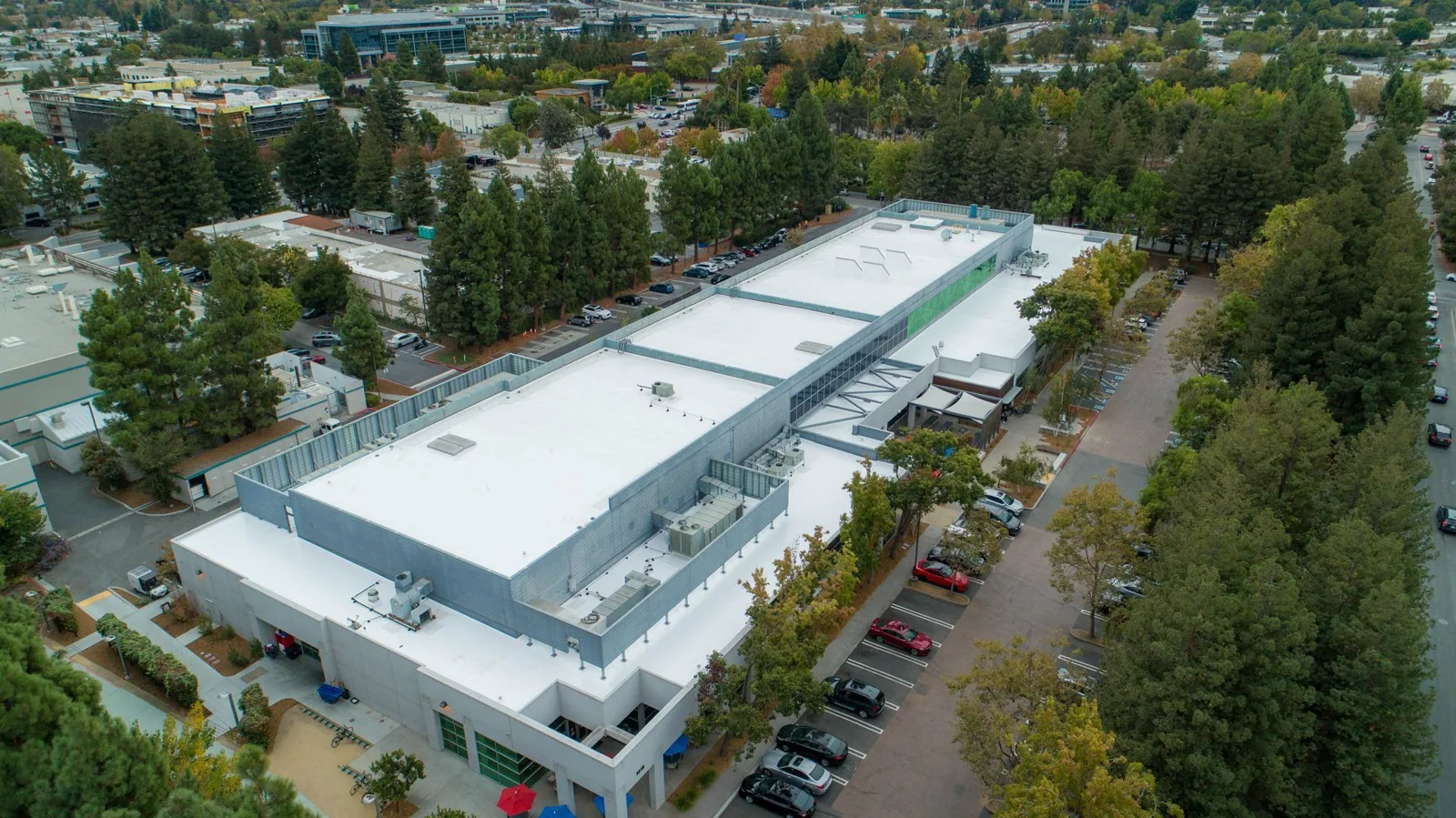
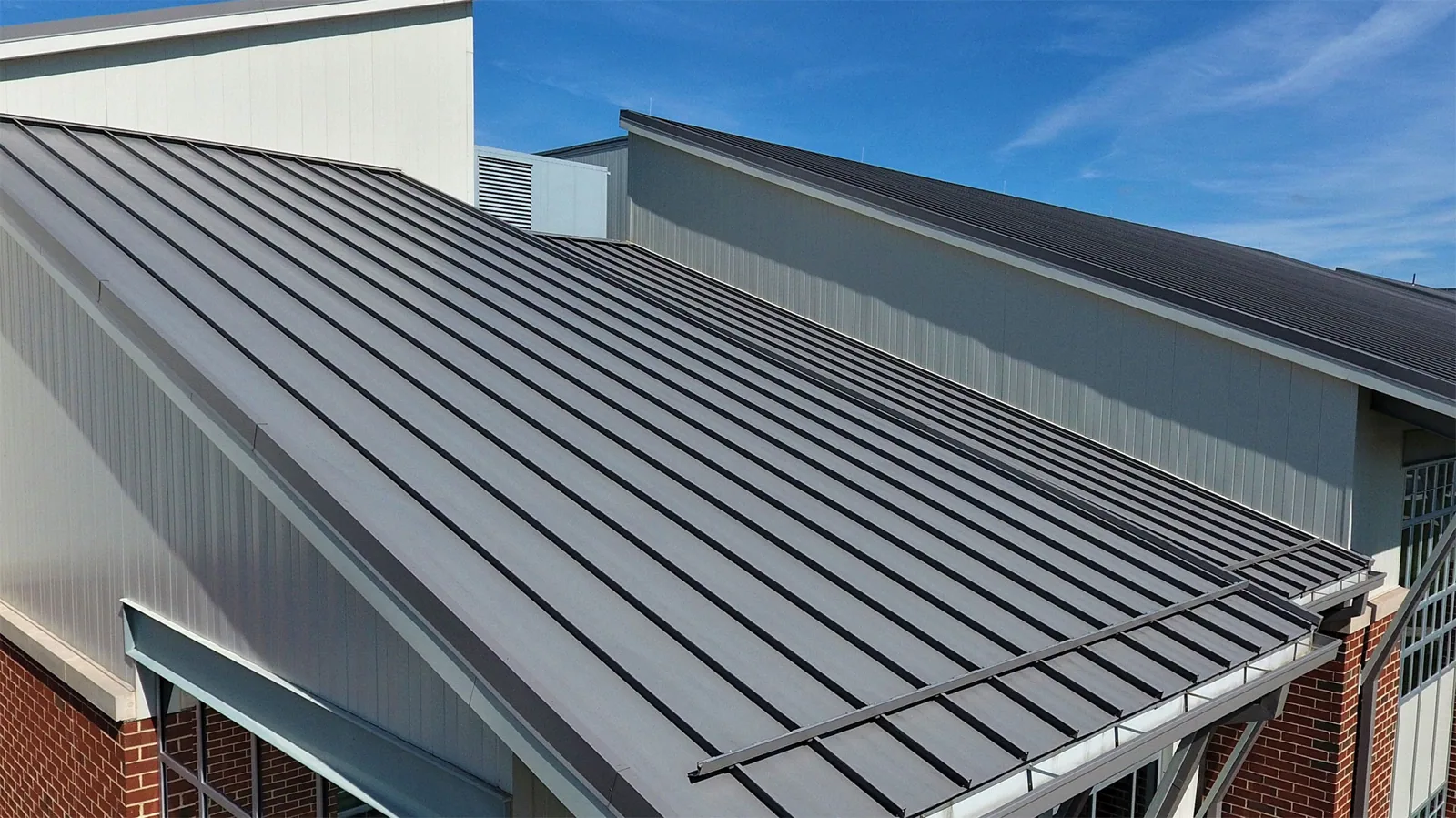
Storage roofs may be membrane, metal, or a combination across additions and repair phases. We identify the system, seam type, edge attachment, fastener condition, drainage layout, and penetrations before preparing a repair. A localized puncture or open flashing may be corrected where adjacent material is sound. Repeated leaks or wet areas across separate zones can justify testing and a comparison with restoration or replacement. The proposal states what evidence supports each boundary.
Roof drains, scuppers, and overflow routes need to carry water without directing it toward unit doors or access lanes. After clearing the approved inlet area, we inspect the bowl and outlet flashing, then map any ponding that persists against the roof elevations. A drainage repair should preserve the designed discharge route. Recovery is considered only when existing layers, moisture, attachment, deck condition, height, and code requirements allow another assembly. If it does not fit, the owner can compare a defined repair with removal and replacement through a recover assessment.
Weather window and storm checks
Tyler’s normal July high is a scheduling signal, not a roof temperature. We measure the substrate at the work point and check the selected product instructions before bonding seams or applying a coating. Sun and shade, moisture, wind, and surface preparation all affect the application window. If a limit is missed, the section remains closed or protected while another released task is considered. The plan sets an end-of-shift exposure boundary for every opened area.
Spring and autumn storms in the region can bring hail and damaging wind. A post-event inspection checks edges, metal details, membrane seams, rooftop items, drains, and the reported interior areas. Tyler recorded a tornado on June 8, 2021, a local hazard marker that does not establish damage at a particular storage site. We document current findings and separate temporary protection from permanent repairs. Wind-related roof work can address confirmed movement, while photographs and test points keep the repair scope traceable.

Customer access and closeout
Customer access can change by building and hour, so we confirm any door, aisle, or gate restriction before setting a lift or debris route. The manager receives the active work area, expected noise or temporary interruption, and the route that stays available. A weather delay or concealed deck issue may shift one building while another remains open for work. Each crew handoff notes the condition, temporary seal, drain check, and release needed for the following shift.
Price and duration reflect the number of roof sections, access, unit protection, tear-off, wet insulation, edge details, staging, disposal, and the hours available for lane restrictions. The final record includes building identifiers, photographs, repairs, tests, and items still held for approval. For water entering a storage building, call us; we settle dispatch and roof access with the site contact, then document safe interim control before permanent work is scoped. Send the roof plan, assembly records, leak log, unit-access limits, staging rules, and decision date. We return a work package with building-by-building zones and closeout points. Tyler Interstate Commerce Park and Prosperity Commerce Park are nearby reference areas for local coordination.

Commercial Roofing Questions
How do you keep customer units accessible during roofing?
We identify occupied rows, drive lanes, gate hours, loading areas, and the lift route before releasing a roof zone. The manager approves any temporary restriction and receives the closeout time. If the planned work would block a door or lane, we adjust staging or sequence another section first.
What should we do about a leak reported inside a storage unit?
Protect the contents and record the building, unit row, timing, and whether water remains active. We trace the report to nearby roof seams, penetrations, outlets, and transitions, then document evidence and next tests. The indoor protection record stays separate from the permanent roof repair scope.
Can we reroof one storage building at a time?
Yes, when the property layout and assembly allow separate work zones with safe daily closure. We map each building, confirm the shared access routes, and identify any drainage or edge detail that crosses a phase boundary. The schedule lists the buildings that can be released and the approval needed to move to the next one.
Does summer heat affect roof coatings in Tyler?
It affects the work sequence when the substrate reaches a product limit. We take a field reading and check preparation, moisture, wind, and installation instructions. Tyler’s normal July high of 94.5°F helps plan the window, but actual roof conditions control the application.
Which conditions can shift a repair into replacement?
Widespread wet insulation, recurring failures in separate zones, weak attachment, damaged deck, or edge conditions that cannot accept a reliable tie-in may justify a larger comparison. We map the evidence and identify selective tests before setting scope. The estimate separates confirmed work from concealed conditions that could change the decision.
Related Pages
Commercial Roof Inspection
Tyler, TX
Warehouse Roofing
Tyler, TX
Distribution Center Roofing
Tyler, TX
Infrared Roof Moisture Survey
Tyler, TX
Map the storage roof work zones
Send the roof plan, assembly records, leak log, unit-access limits, gate and staging rules, and decision date. We will return a building-by-building sequence with test points, customer routes, and closeout boundaries.