
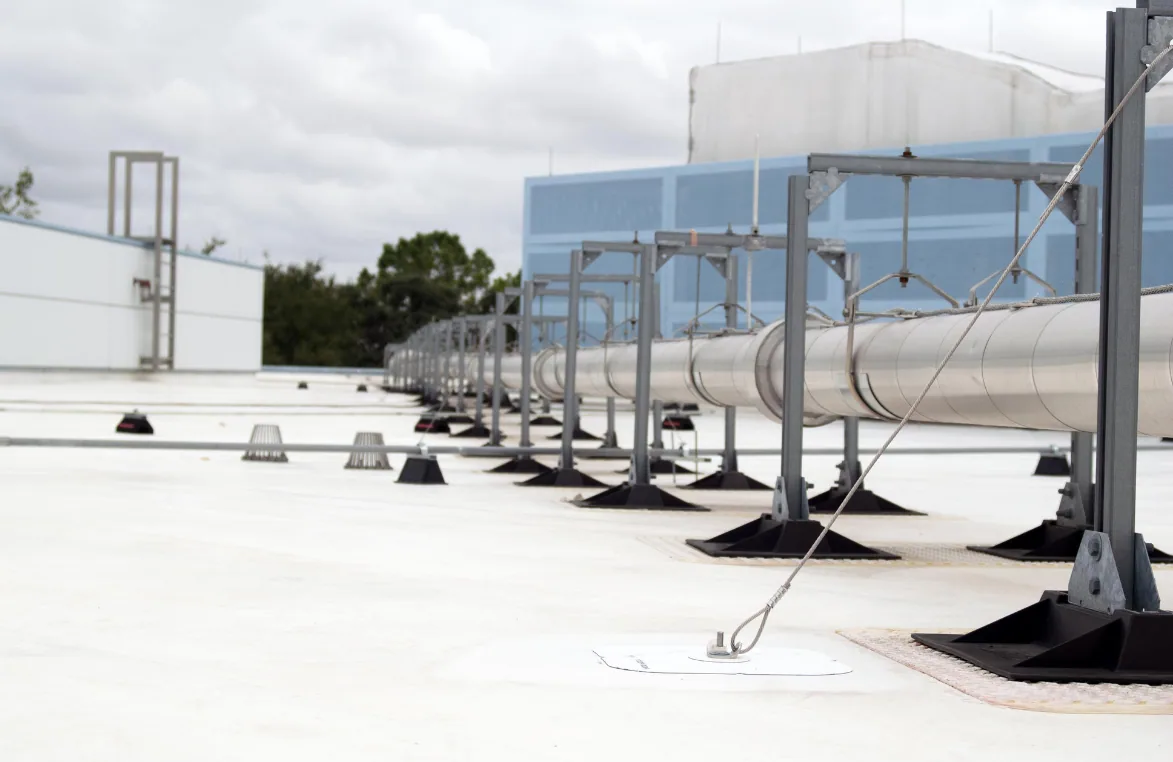
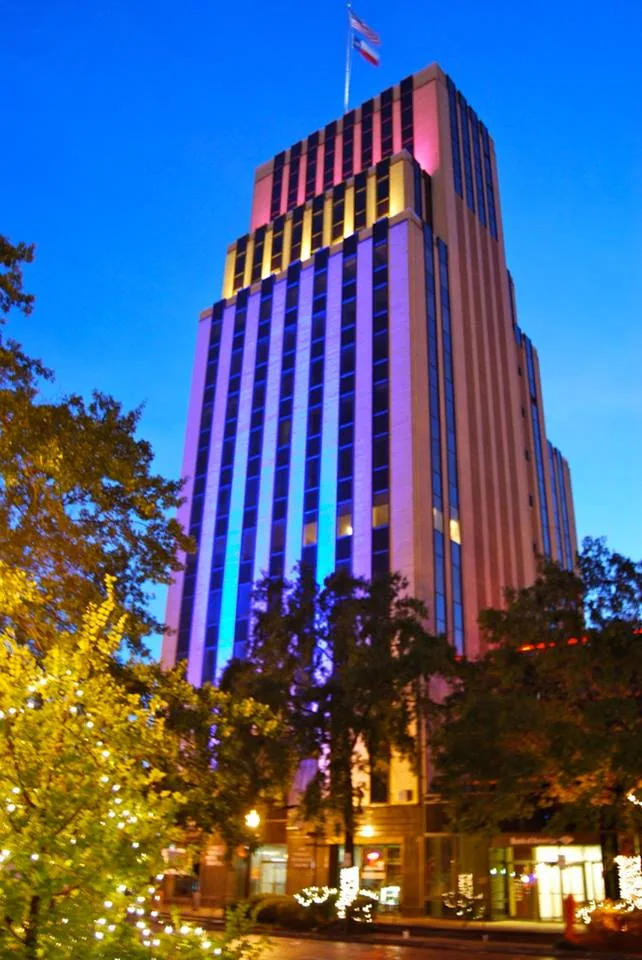
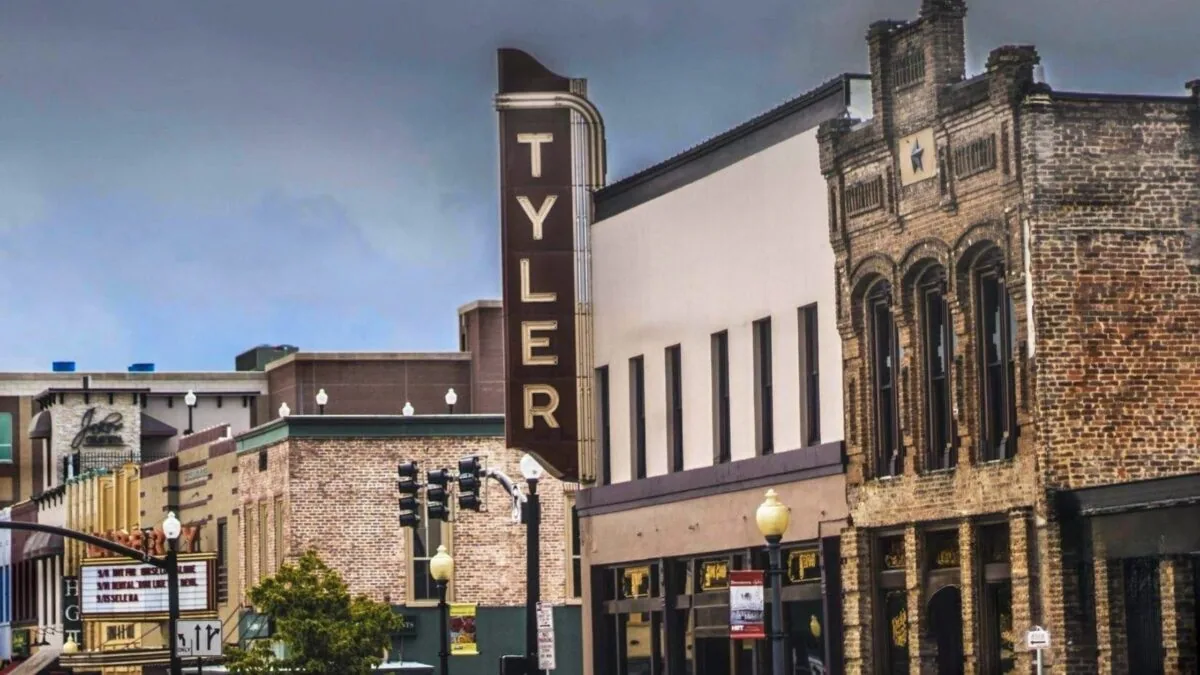
A Tyler roof exposed to July sun needs a field reading before a crew begins an adhesion-sensitive Holcim Elevate detail. Tyler’s normal July high averages 94.5°F, a climate signal rather than a measurement of a specific membrane or deck. We verify the substrate, existing layers, attachment, moisture, and drain path before deciding which work package can be released. Access at Tyler Interstate Commerce Park differs from the multi-property Downtown Tyler Business District, an area spanning about 400 acres between Front Street, Palace Avenue, Gentry Parkway, and Beckham Avenue; staging and roof-zone handoffs still need a property-specific plan.
Holcim Elevate commercial systems can include membranes, insulation, and related assembly components. The selected product must fit the building and the approved project details, with compatibility confirmed at seams, penetrations, edges, and tie-ins. The approved assembly sets the membrane, insulation, and accessory requirements; we record any field condition that could hold up a roof-zone release. A Tyler roof assembly review starts by resolving what the existing roof can support, then identifies tests, approvals, and access steps before material is ordered.
Assembly and substrate conditions
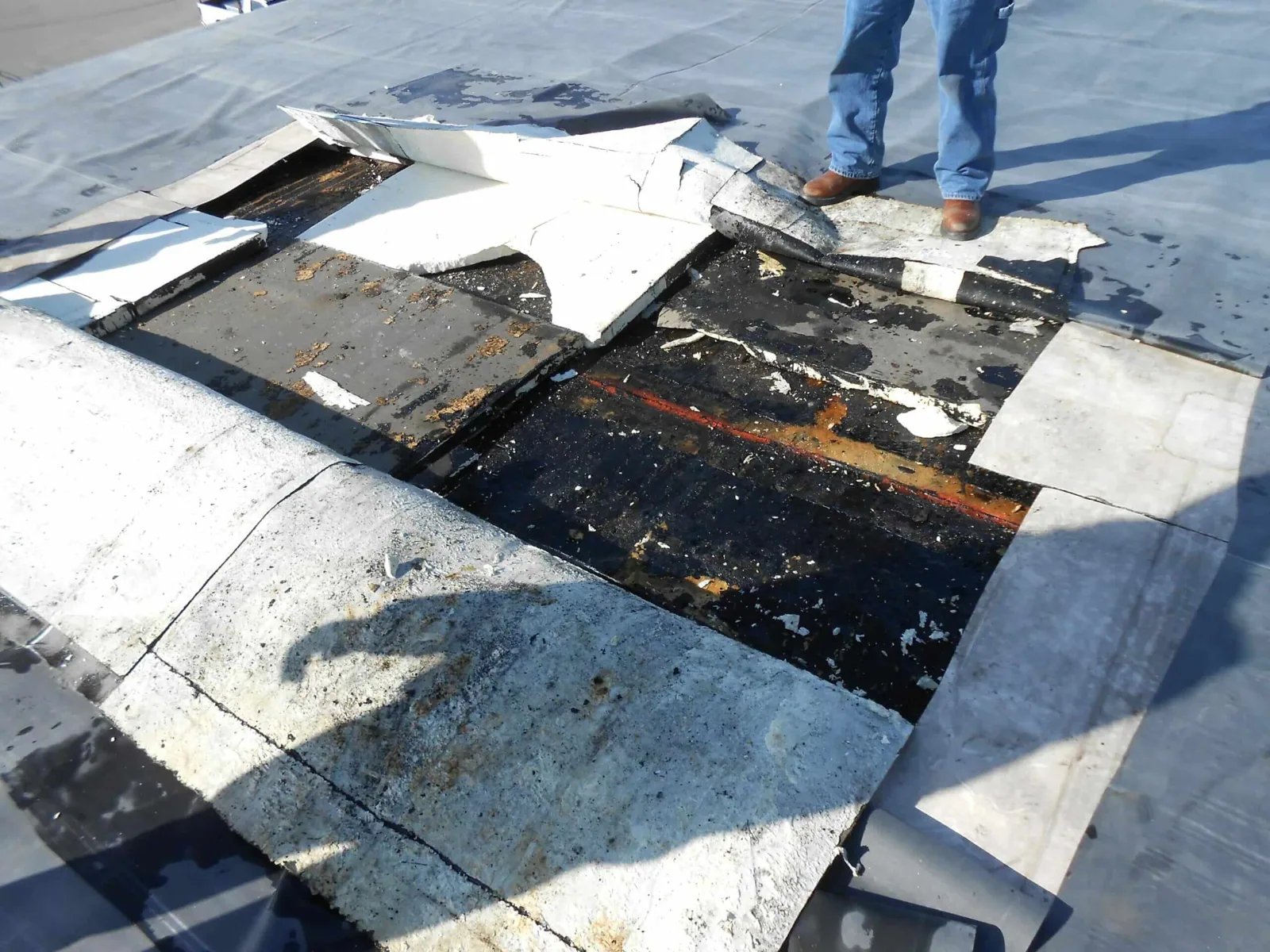
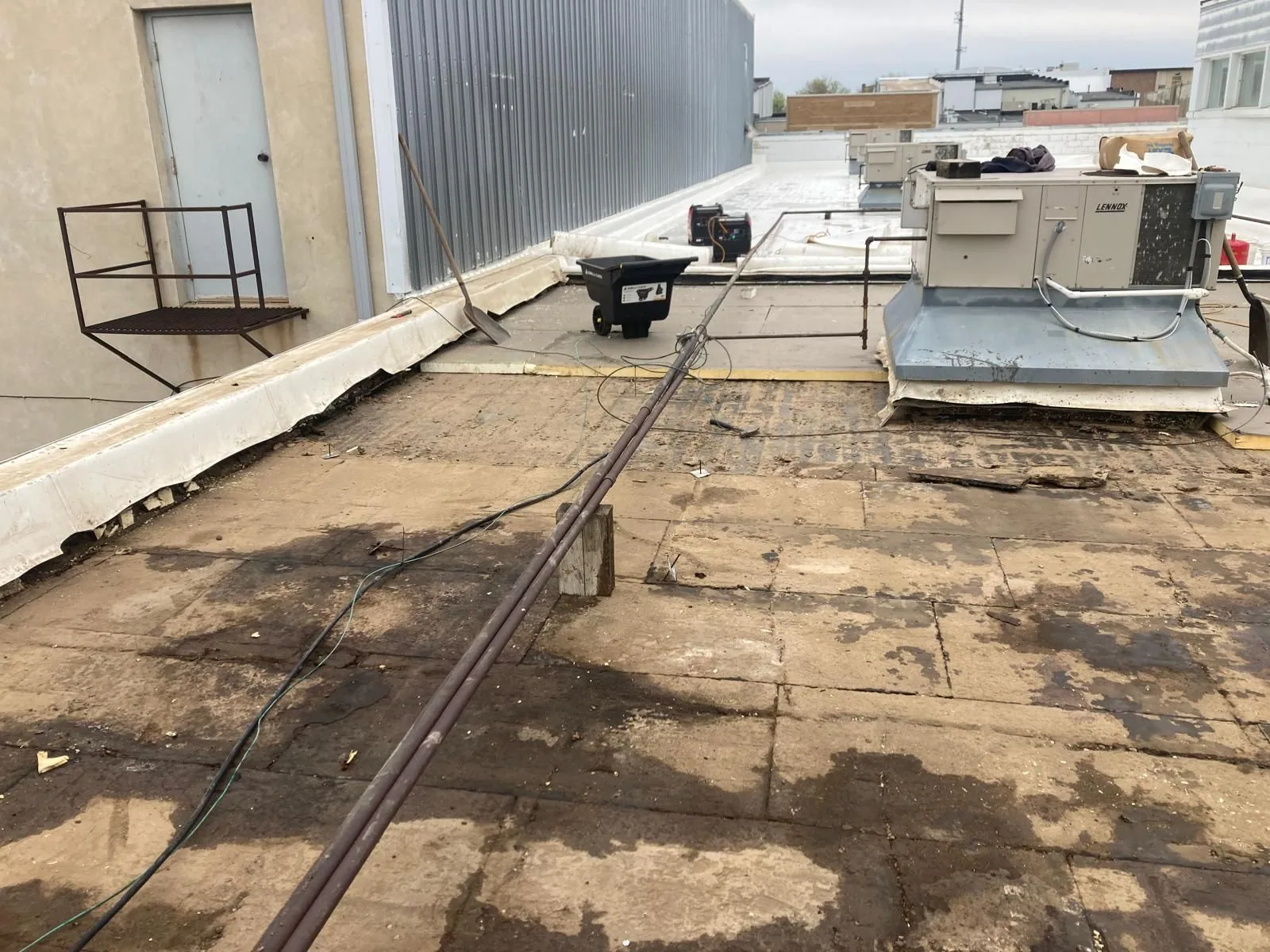
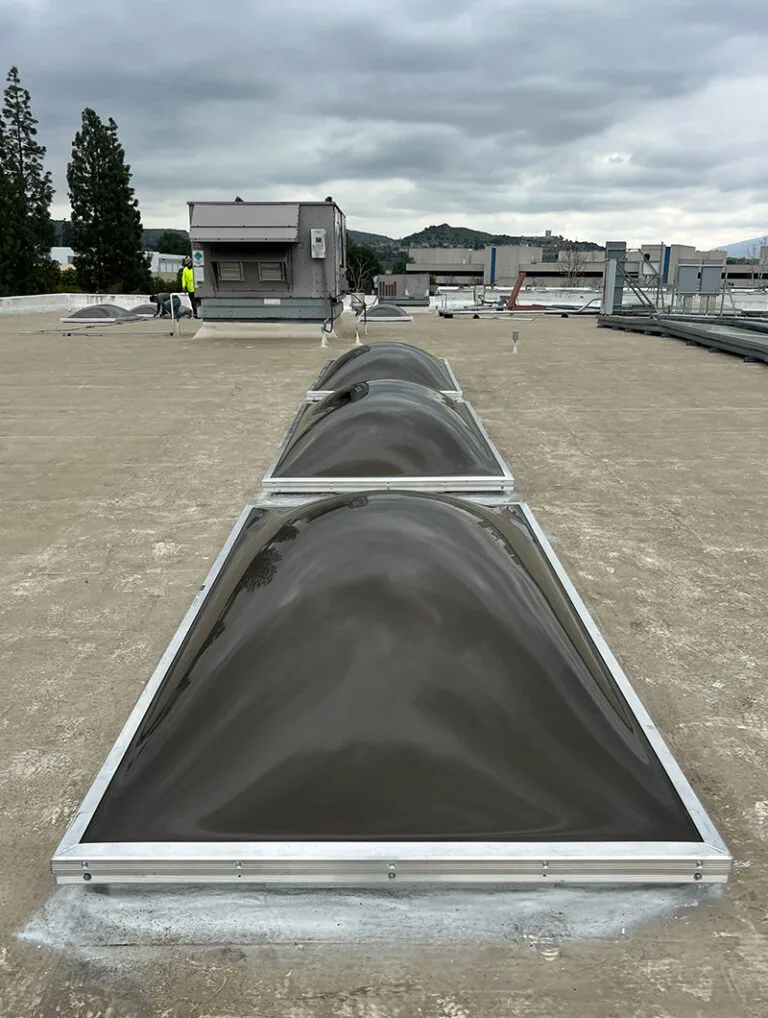
The assembly review begins below the visible membrane. We identify deck type, existing layers, insulation, cover board, slope, attachment, drainage, and rooftop details, then compare those findings with available plans and the proposed Holcim Elevate components. A recover is considered only when the existing roof is sufficiently dry, stable, compatible, and within applicable product and code limits. If those conditions remain uncertain, we mark test areas or selective cuts as decision points rather than treating the open roof surface as proof.
The park’s CR 3344 connection and utility work reached completion in 2025. That regional work does not establish an individual building’s access or roof assembly. Before scheduling, we map the available route, approved loading area, delivery timing, equipment clearances, and roof-zone release with the general contractor. Any lift restriction or occupied entrance appears beside the affected work zone before materials arrive. A commercial roof inspection records findings that could change the selected assembly.
Seams and flashing interfaces
For a thermoplastic sheet, the seam needs clean, dry material and a controlled weld. We verify the machine setup, make a test weld when equipment or conditions change, let it cool, and check it using the project method. The record identifies the roof zone and outcome, while any weak result holds production until correction and a new check. For other membrane types, preparation and joining methods differ, so the crew follows the submitted system details rather than carrying a welding assumption into another assembly.
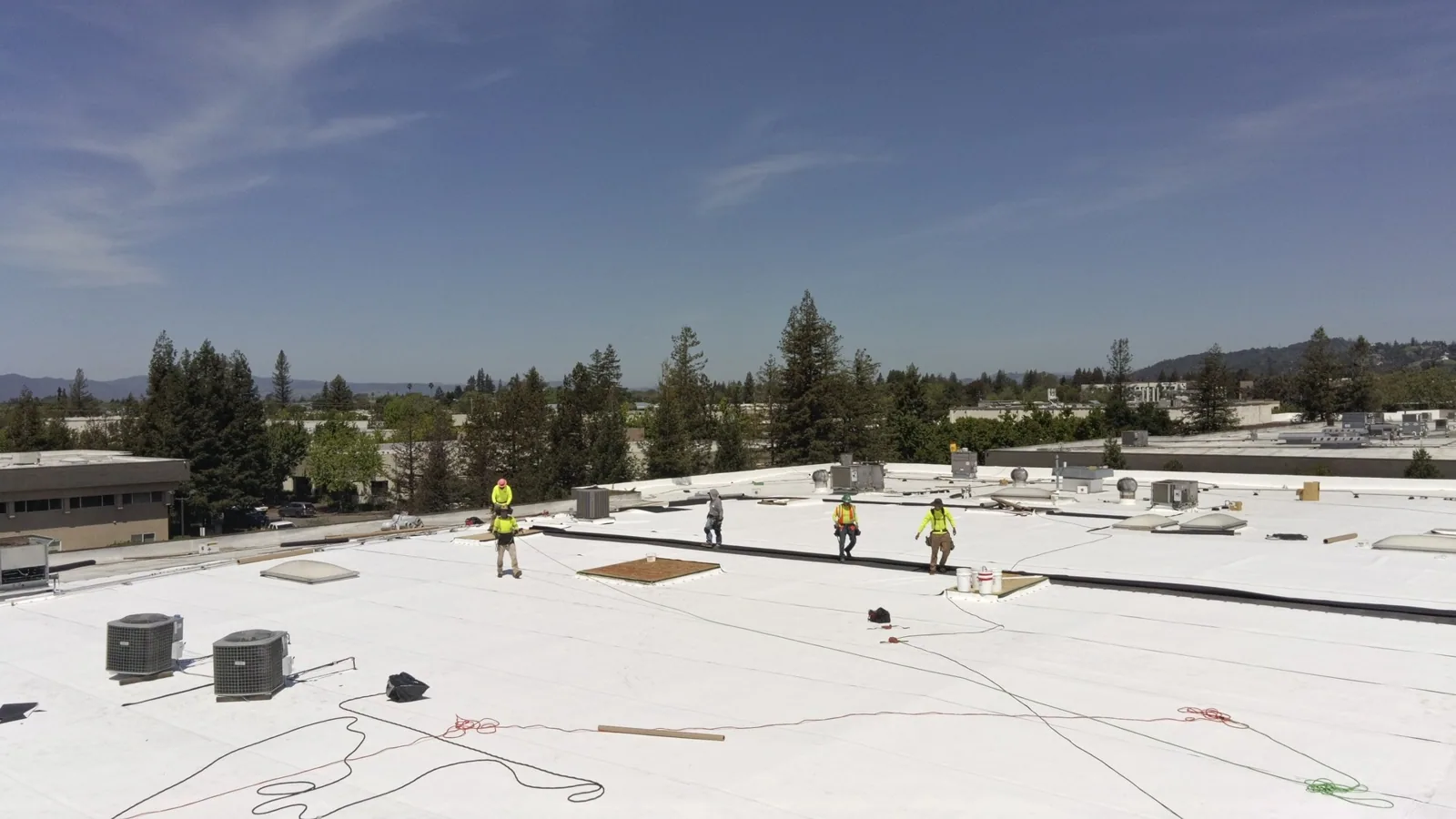
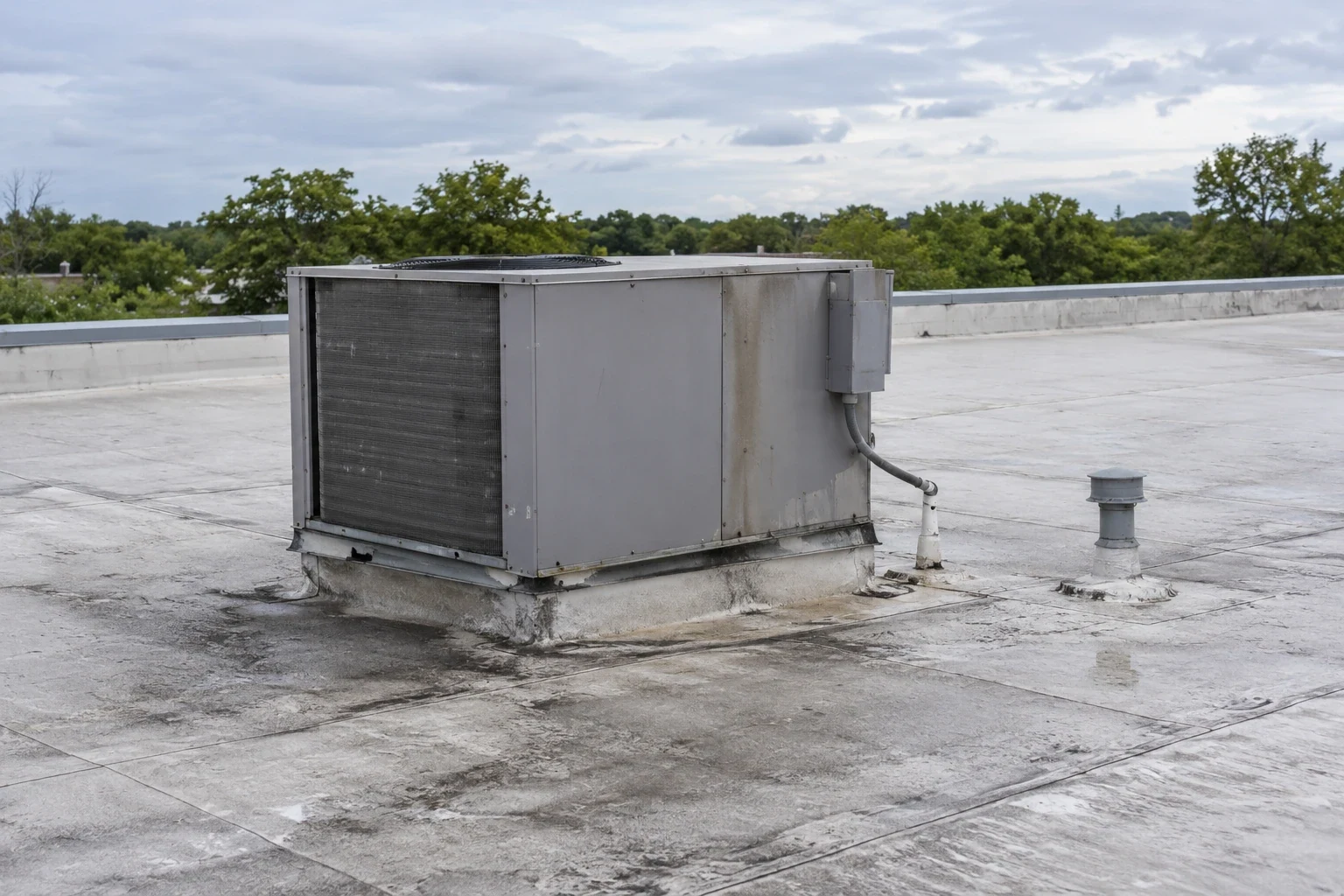
Flashing transitions connect field membrane to curbs, pipes, walls, drains, and equipment supports. We identify each interface before the main sheet closes the area, confirm compatible accessories, and assign inspections to the trade completing the detail. At the Downtown Tyler Historic District, many parcels sit within a compact multi-property area; that fact informs access planning, not assumptions about the age or construction of a particular roof. A penetration and flashing review can mark the details that need separate access or a test point.
Heat window and storm closeout
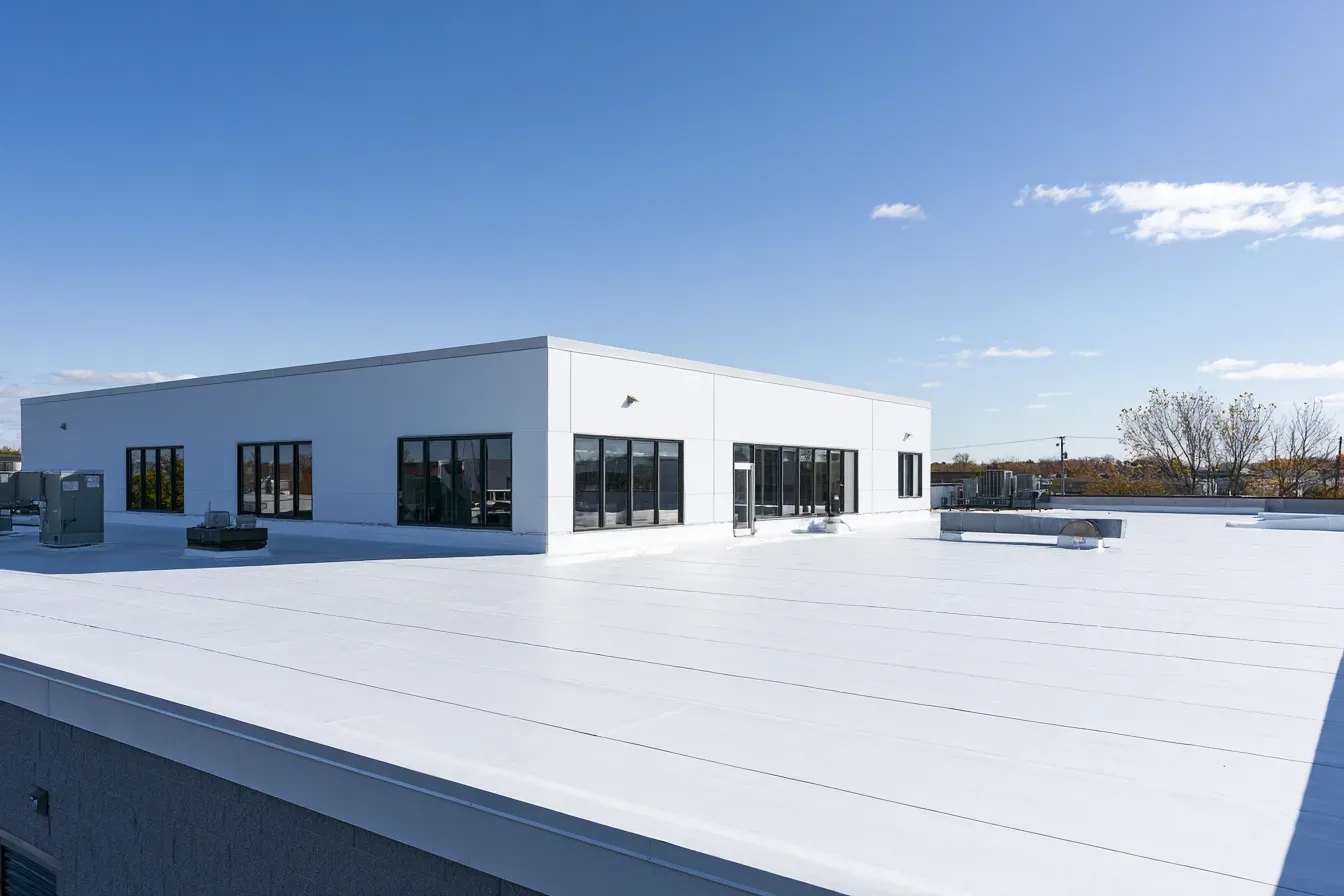
The 94.5°F July normal is useful when reserving a work window, but the actual substrate can differ by roof zone and time of day. We take a reading and check the selected product instructions before primer, adhesive, sealant, or coating operations. A plan identifies which tasks are ready, which require shade or a different sequence, and what needs approval before a crew continues. If conditions shift, the hold point protects the work from an undocumented change in material or process.
Large hail and damaging wind arrive most often with spring and autumn storms in this region. We plan the exposed-section closeout before opening an area: temporary protection, drain clearance, loose-material control, and a named person to confirm release. After a weather delay, the crew inspects the protection and affected details before resuming production. A storm-damage scope can document what is visible and identify follow-up checks without assuming a roof was damaged merely because a storm crossed the region.
Repair, recover, or replace
A puncture or open seam may call for a local repair when the surrounding membrane remains sound and a compatible detail can be completed. We trace the repair boundary, examine adjoining flashing and seams, and note whether moisture or attachment concerns extend beyond the opening. The work record states what was repaired and what remains concealed. If similar defects recur, the owner may need a broader condition map before authorizing multiple patches. A commercial repair scope separates the confirmed item from tests that could change the plan.
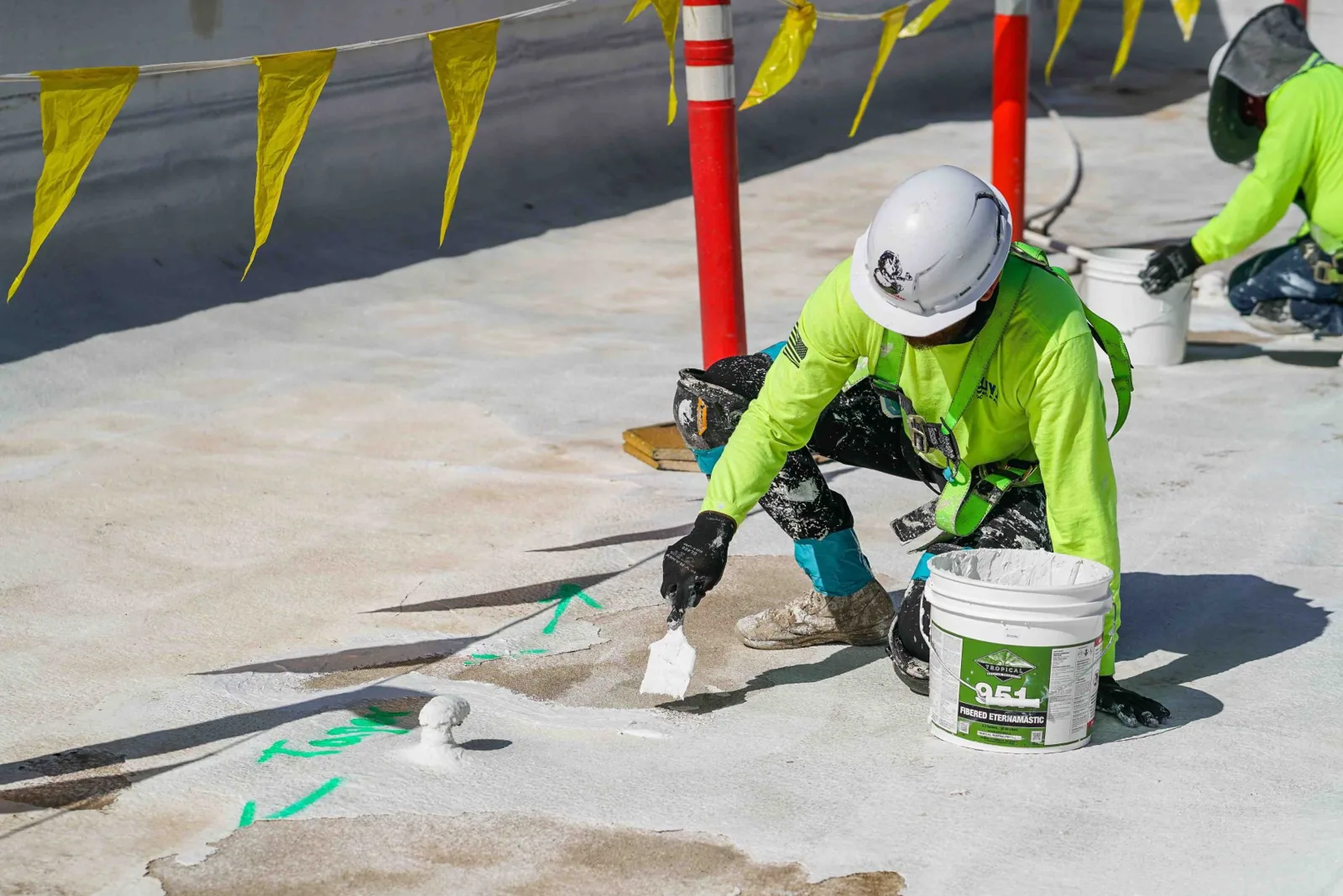
A recover and a replacement carry different labor, removal, protection, and schedule requirements. Recover work requires a suitable existing assembly and compliance with system limits, and tear-off can uncover deck or insulation conditions that change quantities and details. A coating depends on the substrate and its preparation and adhesion results. We compare these choices against the building’s current condition and approved design, then identify open decisions before procurement. An overlay assessment can document the recover gate, while a replacement plan identifies removal and perimeter work.
Field release and closeout
The project team can provide roof plans, prior assembly information, leak locations, access windows, and a decision deadline before mobilization. We return a sequence that identifies selected products, substrate checks, seams, flashing, staging, daily closeout, and approvals. If the roof does not match the drawings, the Diligence Notes identifies the location and stops work at the agreed hold point until direction is received. That keeps a product substitution or added layer from entering the work by assumption.
At turnover, the record should connect photographs and inspection results to the installed roof zones, repairs, and unresolved observations. A later maintenance visit can return to the same area with a clear description of what was tested and what still needs review. We preserve the field record with photographs and inspection results tied to its roof-zone map. When the project allows alternatives, the general contractor can compare GAF system requirements and Sika Sarnafil assembly choices against the same roof findings. The approved design remains the basis for release.
Commercial Roofing Questions
What must be known before choosing a Holcim Elevate assembly?
We need the deck and existing roof layers, moisture and attachment findings, drainage, edges, penetrations, and project requirements. Those details show whether repair, recover, or replacement merits consideration. Any uncertain condition that could change compatibility stays open for agreed testing.
Does Tyler’s summer heat make a particular product unsuitable?
The 94.5°F July normal is a planning reference, not a jobsite test. The crew reads the substrate and works inside the product’s stated limits for that operation. If a zone is outside its working conditions, the sequence can move to an approved task while that area remains on hold.
How are membrane seams checked before a roof zone is released?
The crew prepares the joint, verifies its process, and checks a cooled test weld when the system and conditions call for one. We record the location and result, correct any weak section, and confirm the required inspection before allowing the next zone to proceed.
Can an existing roof receive another membrane layer?
A recover requires a stable, dry enough, compatible assembly that meets project and system limits. We review attachment and moisture, then use agreed field tests to resolve questions. If the existing layers cannot support the proposed work, removal or a different scope goes into the comparison.
What do you need from the general contractor to start?
Send the roof plan, assembly records, access period, current findings, and decision deadline. We will return the proposed sequence with test points, protection steps, hold points, and the person needed for each roof-zone release.
Related Pages
Coordinate the membrane roof-zone release
Provide the roof plan, assembly records, access window, current condition, and decision deadline. We will return a sequenced field plan with heat-sensitive tasks, test points, and open approvals identified.